


Webcast can also be called a “Livestream” – it’s when you set up your system to be able to stream video live on the internet for others to tune in.
A good webcasting example is your typical Zoom call. Yes, is not a call “between two people”, (like a Skype call for example), rather a video stream from one participant to any number of simultaneous connections, whenever they may happen during the stream.
The best source of definition would be Wikipedia:
“A webcast is a media presentation distributed over the Internet using streaming media technology to distribute a single content source to many simultaneous listeners/viewers.”
Again, what we mean by webcast is a one-to-many relationship as opposed to web conferencing, like Skype group call, which is a many-to-many relationship.
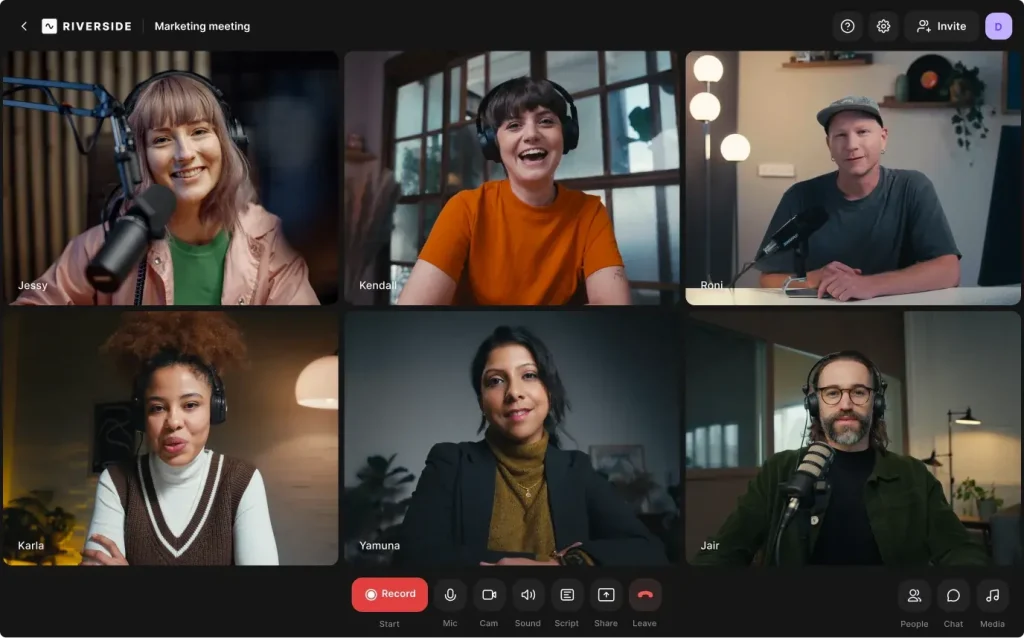
Video Webcasting
Surely, you can broadcast a pre-recorded video, although a vital part of the process – interaction with your audience through live chat will be lost.
While technically a webcast can be any type of digital data transferred over the internet, including analog television signals that were used in the past, we typically refer to webcasting as a form of digital live feed of video and audio.
A video of your previous webcast can be recorded into the cloud and then accessed by users later, through the mailing list for example.
A webcast may either be distributed live or on demand. Essentially, webcasting is “broadcasting” over the Internet.
Webcast vs Podcast
In contrast to podcast which is usually a radio show pre-recorded ahead of time and uploaded to the streaming service, as a rule, webcasts are broadcasted live.
