
In this article, we will talk about Airtable – the no-code platform helping people closest to the work improve their most critical business processes. With around 500-1000 employees, and headquarters in San Francisco, California – they are one of the tech giants of the Silicon Valley.
We will cover if they feature video in their content marketing approaches, and also try to suggest some formats to supplement their video marketing strategy, based on our humble opinion, if and when possible.
So, let’s get started. What is Airtable’s Marketing Strategy on Each Platform?
YouTube: Dormant but Previously Active
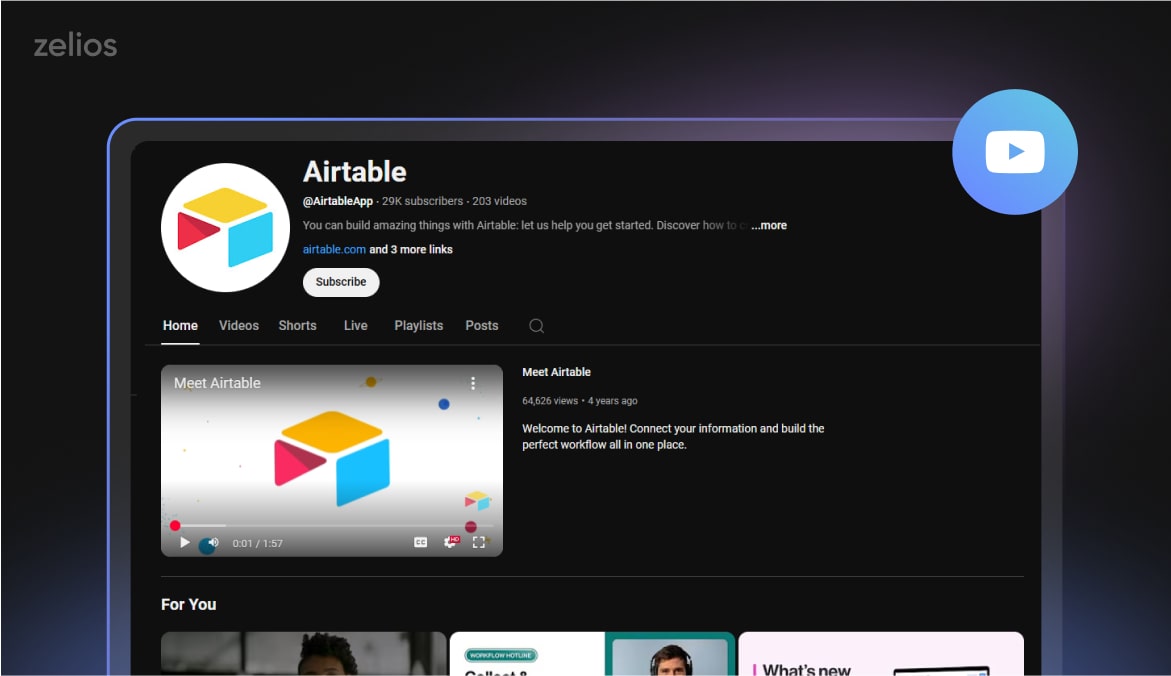
Airtable’s YouTube channel has a significant following, with around 28.7K subscribers (hey, that’s good for an Enterprise product), and around 203 total videos to watch, with some of them neatly organized into tips and how-to’s covering the functions and how to build things on Airtable – pretty straightforward.
Despite a big following and previous history of using video across platforms, the last video posted on YouTube is from a year ago – an 8 minute 26 second piece on how to use the Dashboard layout.
This suggests that they are shifting away from YouTube being one of the primary marketing channels, as they don’t even repost some of the other and newer video content, like recent videos they had on Facebook.
What we would suggest:
“You don’t need to invest heavy resources to revitalize this channel. What works best for this part of the funnel is videos like short How-To and Tutorials, as well as product updates for new features that are coming out or will be soon released. ”
Our suggestion is to make sure those MOFU/BOFU How-to’s videos also stay within 2-3 minutes, bringing down the overall production cost, turnaround time, and increasing view through ratio. If you are also looking to do it the Spartan way, you can ask your engineers/customer success team to create short Loom walkthroughs, to keep the favour of the inscrutable YouTube algo.
For the product updates, keep them short and sweet – at 20-30 seconds long. If no marketing budget is available – same old and battle tested methods of going through a Loom and screen recording will be sufficient.
Again, it looks like with LinkedIn (coming up soon in this article) they are using it as the main platform where they include the most amount of content and are posting there regularly. So the best thing about those product updates and how-to’s is that those can be then reused across Linkedin, Facebook – and if we are using resizes and clever cutdowns/editing – also used for shorts/repurposed content on Instagram.
Not every video needs Spielberg-level production. Sometimes, a 2-minute screen recording with someone saying ‘uhhh… so this button does this’ gets more engagement than a polished explainer. People like real. YouTube’s algorithm seems to agree.

Facebook: Minimal Video Engagement
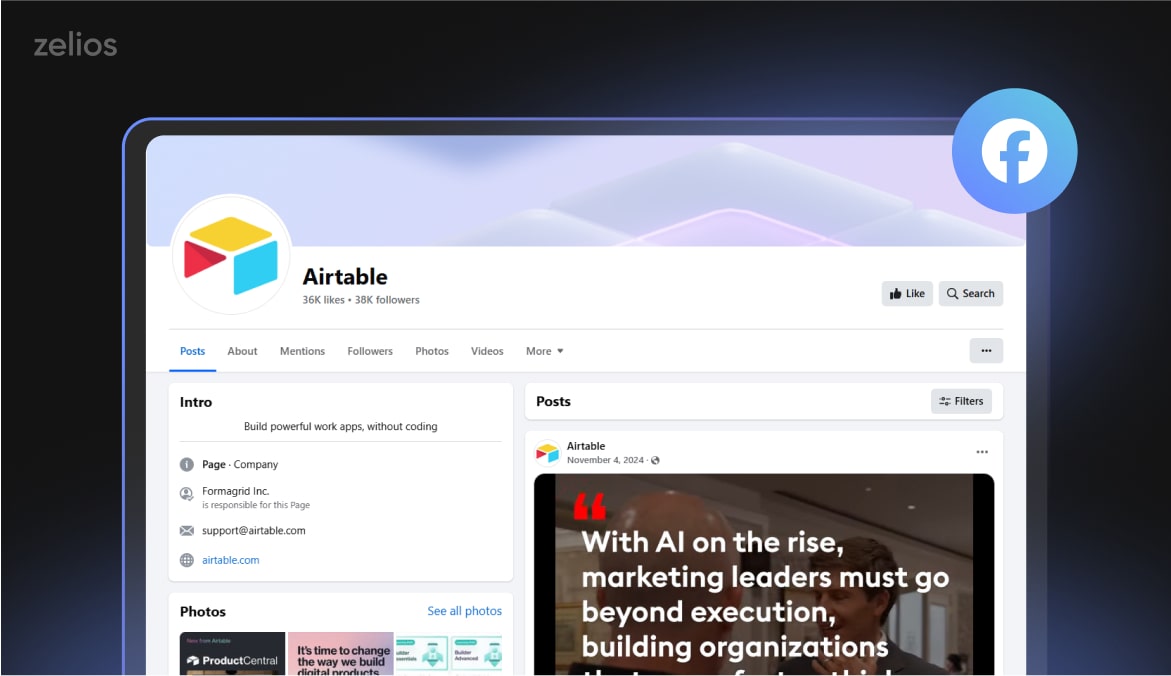
Last video shared on Airtable’s group dates back to November 4, 2024. This is a repost from Forbes’ piece featuring Calen Holbrooks – Head Of Marketing at Airtable.
There’s a sizable following, with overall around 36K likes across all of their posts, with 38K followers looking out for the updates (which unfortunately are irregular). In terms of posts, they are more about announcements rather than tailored content of any sort, let alone a custom video.
What we would suggest: in previous suggestions for Facebook, we mentioned using product updates and how-to’s. While how-to’s wouldn’t work well for Facebook, shorter product updates at around 15-30 second would work like a charm, and wouldn’t require major reworks, adjustments or in-house capabilities, if you are working with the right team.
Just make sure they also resize the video from the usual 16:9 to a native Facebook dimension with 1:1 and 4:5.
Again, if you are looking to add more content here – testimonials, case study videos, would work like a charm, so if you have those types of interviews/calls – they would work well, and are relatively low cost in terms of production and timeline.
Instagram: Limited Video Content
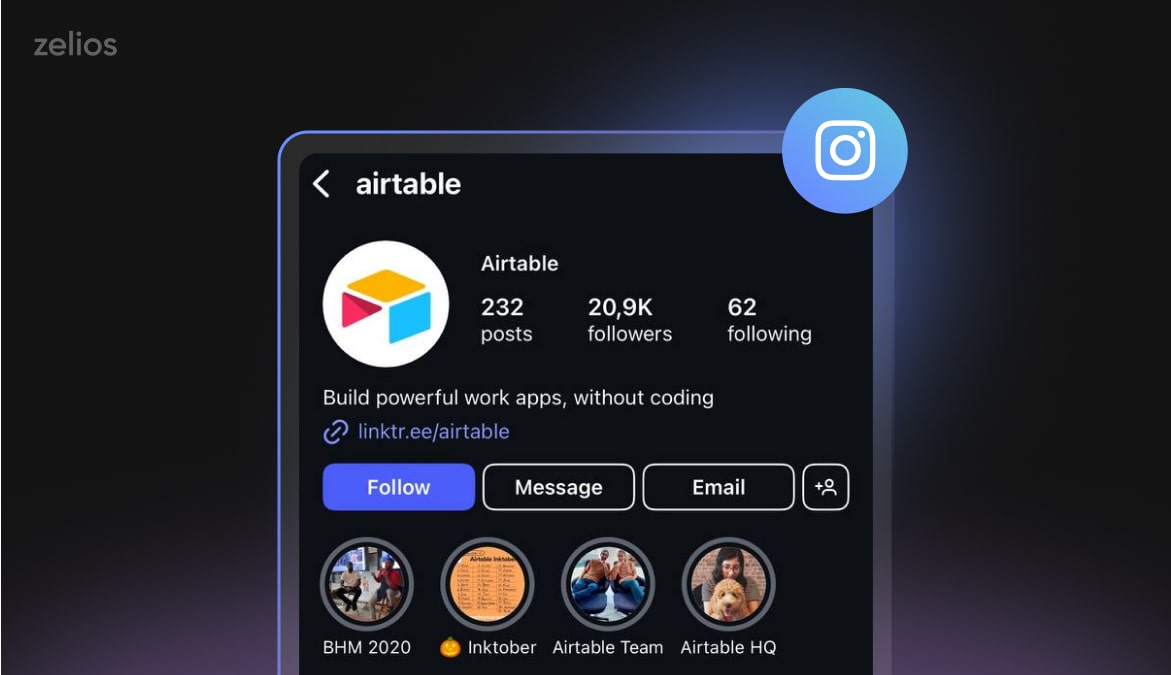
Here are some numbers: there are 231 posts, and around 20.7k followers that are currently engaging with the page.
Here’s a strange thing: the last video posted was in October 2023, gathering a modest number of only 112 likes. Looks like Instagram is not integral to Airtable’s overall strategy, as not only it lacks any unique, tailored content (posting Shorts and Stories) – the content that was posted are things mirrored from other pages, like Facebook and some occasional assets from LinkedIn.
This might be because while Instagram is the prime spot for B2C companies, and even some B2B companies that target SMBs – it doesn’t work well if you are targeting your solution at C-suite and senior leadership.
What we would suggest: if you are looking for the cheapest route – same as before, you can reuse the same old product updates, and even add some variation to them if you are looking to mix up some content.
Same as with Facebook – you can use testimonials and case study videos.
Ideally, creating sketches and tailored content specifically for Instagram – but if that’s neither a priority in terms or goals, nor in budget – again, you can reuse the same content, as audiences won’t overlap a lot.
LinkedIn: The Primary B2B Focus
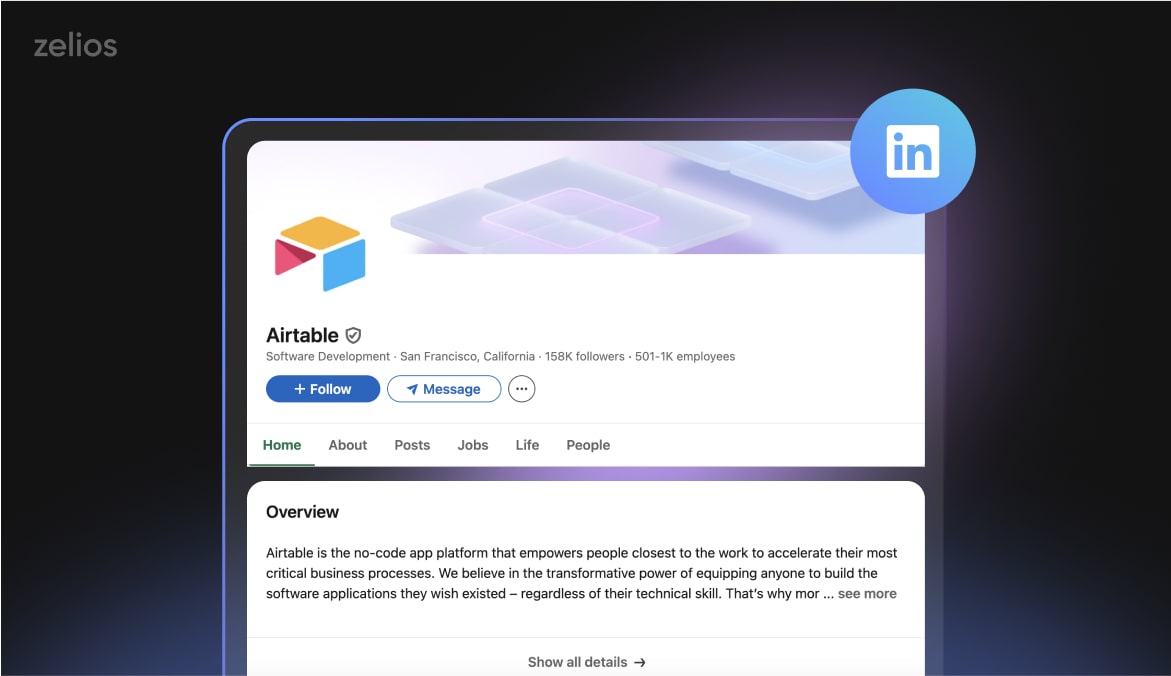
Here’s where we see the most regular and active page from Airtable. This is surely because of their enterprise based customer persona, that they are targeting with testimonials, use cases and showing off how to improve their workflows and data work using Airtable.
While there’s no talk about “virality” or anything, they still have a big following of over 155,000 professionals, which is a rather huge number given the business environment of LinkedIn.
Talking about their usual posts, they get a healthy and stable 15-30 likes, with occasional MOFU/BOFU formats like testimonials, webinars and events are announced with their posts.
The polished, clean, techy and one would also say “reliable” look of their feed lets you know that they are an enterprise solution, targeting that particular type of clientele. No “game-changing”, “revolutionary” talk here – Airtable is presented as a solid and stable solution to improve business efficiency, no fluff.
“What we would suggest: as one of the main platforms, and the most active one from the selection we are reviewing, we would lean even more heavily on adopting more video content, with a variety of approaches.”
This way while even while right now we are getting healthy engagement, there’s still a way to go, and could even be expanded with a clever use of video ads on LinkedIn – with short 15-30 second brand awareness videos.
As they say – always scale your winners!
X/Twitter: Mirrored Video Content
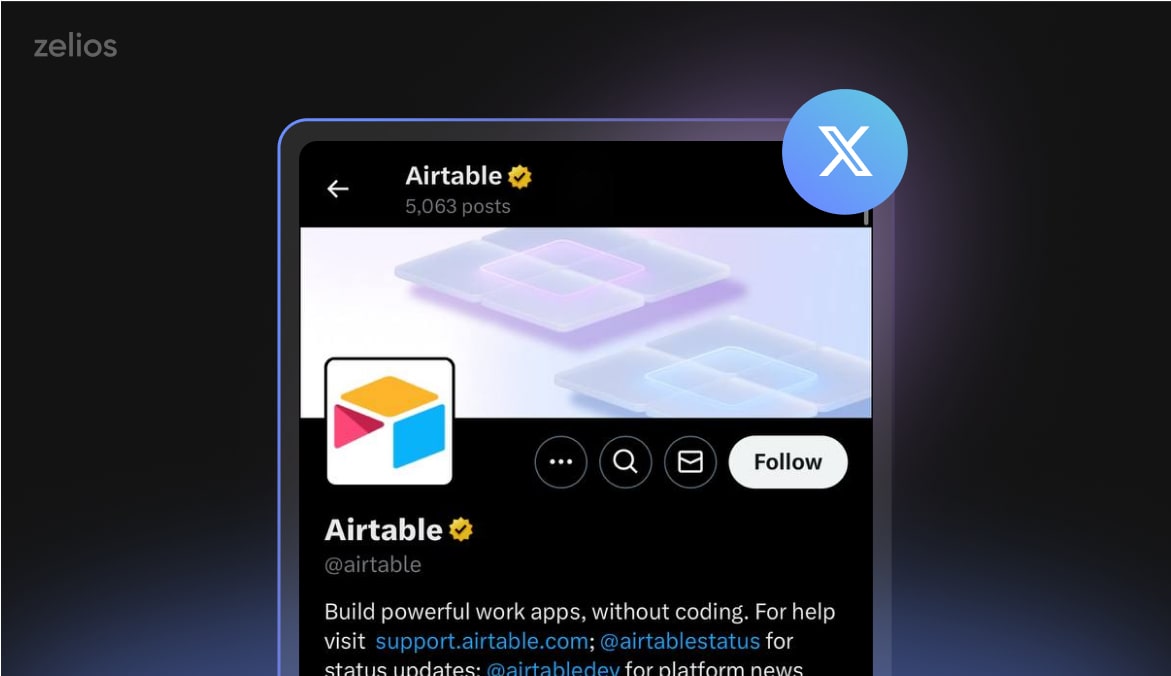
When it comes to X (formerly known as Twitter) – engagement here is sort of a similar mix of posts, announcements and other types of static content that we’ve already seen across their LinkedIn, with a primary focus on regular B2B-centric content. With a following of around 60,000, and posts gathering around 3 to 10 likes, and an average impression count of 1,000 views – those are usually product updates, feature announcements, or Airtable’s leadership insights.
What we would suggest: no, we wouldn’t suggest repurposing assets that were already built, into shorter or resized videos. What we would truly suggest is taking the static designs that were already built during the production process, and use those as templates for a variety of project announcements.
Why Doesn’t Airtable Prioritize Video Marketing?
There might be multiple reasons for why a company the size of Airtable, and with their target audience, doesn’t really focus on videos. Some of our guesses would be:
1. Creative team is burdened with a lot of other higher priority content;
2. Smaller marketing budgets makes it harder to create/order bespoke content;
3. A big set and variety of existing customers, such as AWS, Walmart, HBO, Time and
BlackRock, meaning a steady flow of inbound inquiries from their target customer personas.
With this rapid enterprise adoption, their efforts might be focused more on relationship management and retention of the existing customer base, upselling and tailoring content for existing client base (including any video assets).
From our standpoint, while we see why Airtable is leaning away from some video content that has worked for them in the past, we still think that they could benefit from solid video marketing strategy, using specific video formats that have worked well for them in the past.
Key Takeaways
- Looks like right now, Airtable’s video marketing is past its heyday, with occasional corporate video, testimonials and case studies being used across platforms. The primary platform looks to be LinkedIn centric, with most of the traffic and work being done there.
- When you have 80 percent of the Fortune 100 as your customers – most likely leads, referrals and just the sheer amount of business you are doing with existing customers, will cover your capacity for the foreseeable future. That’s why, it looks like the aggressive marketing will be taking a step back, and the focus will be more on retention and reducing churn, which could also come in the form of internal onboarding videos, knowledge bases and so on.
- A scalable, strategy first approach could certainly improve and enhance their thought leadership and significantly improve customer education – even without heavy budget commitments.
Here at Zelios, we are steadfast advocates of strategy over video – and that’s why we dissect huge SaaS, Tech, AI and other industry leaders, to see what works best for each industry, and at the end of the day, contributes to both your marketing and sales funnels.
If you feel that your video marketing could use a strategy first approach – we would be happy to connect and discuss a tailored offer.
Select the video type that aligns with your marketing objectives, and receive an immediate high-level estimate of the production cost.