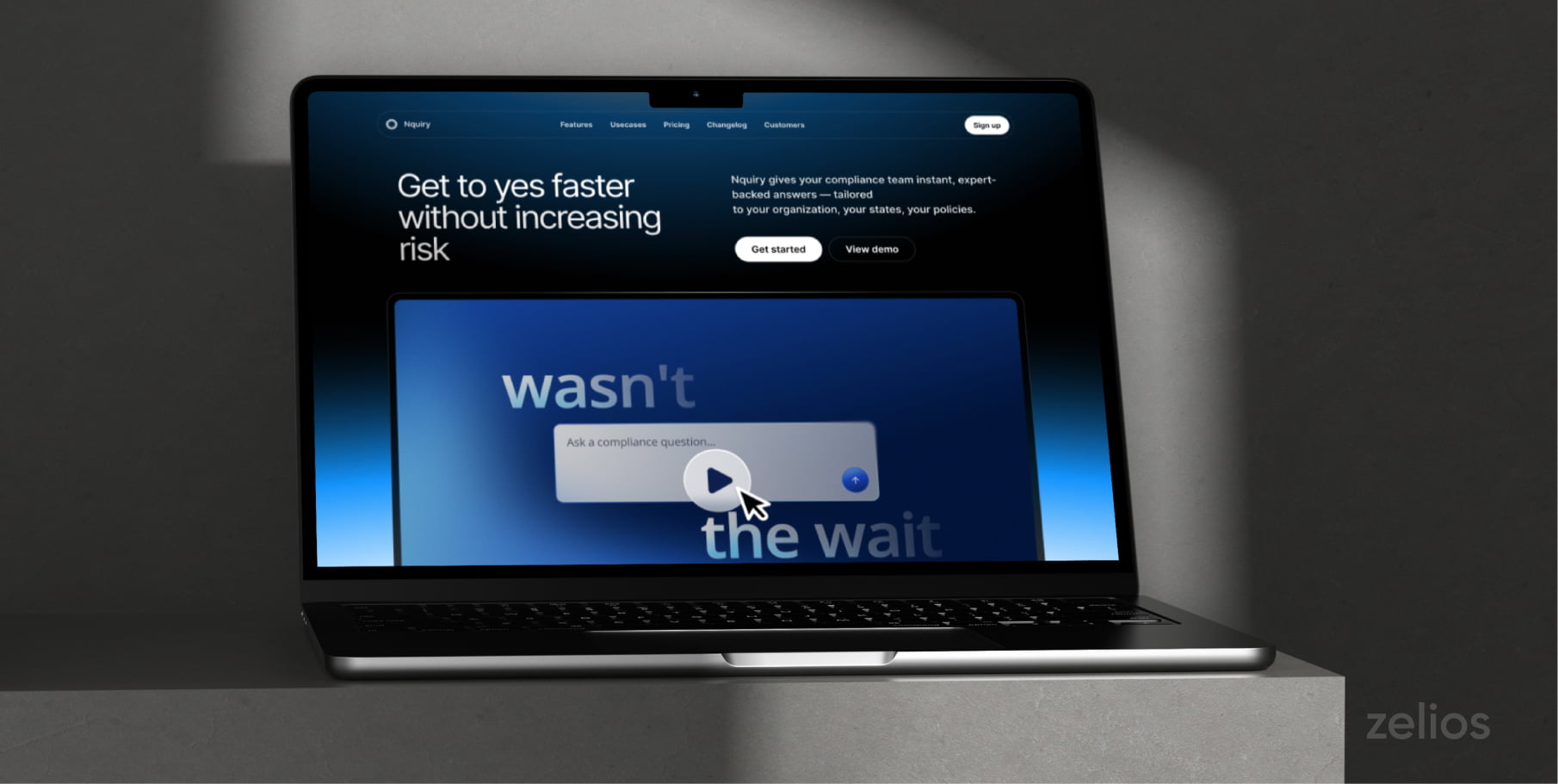

In the SaaS world, most brands treat video like another task to check off of a list. They focus on the buttons, the features, and the “how-to”.
But if you want to advertise with video in a way that actually works, you have to move beyond the product and start building a world that your customers can step into.
Sales, conversions, and showing off features can be metrics for effective video ads, of course.
But they aren’t just about selling a solution to a problem. Truly effective videos build an affinity for the brand.
It’s the difference between positioning a bank as a “place to store money” and being a brand that understands the inner world of the person building a business.
Understanding Your Audience and Business Goals
Before you hit a record, you need to know whose attention you’re trying to capture.
Most video marketing campaigns fail because they speak to a “persona” instead of a person.
When planning video content, it helps to think like a creator. Some of the best artists speak to one person individually, in second person.
Think “you” versus “you guys,” or, “C-Suite executives.”
Really step into the life and everyday problems of the person you need to reach. What do they want and need? What are their pain points?
If you can describe the problem they’re experiencing even better than they can, you’ll get their attention. And if you can demonstrate how you solve their problem better than the competition, you’ll win their business.
Spend more time getting to know your customer, before you get to the content planning or preparation stages.

Visuals, Motion, and Production Quality
It’s easy to focus on constraints, and think that a certain budget or that particular equipment is required for effective video advertising.
But craft and creativity rules at the end of the day. Here are some practical tips you can consider to create better videos:
Avoid the Stereotypes
Skip the “5 tips for cash flow” carousels or generic reels designed to game an algorithm.
At the end of the day, the “algorithm” is just people, anyway. Focus on speaking to the one person you really want to reach, and you’ll stand out.
Build Out Loud
Share the “how it came to be” in real-time. Show the visual inspiration, the prototypes, and even the ideas that didn’t work.
It’s all too easy to focus on the successes at the end of the journey. Allow for your prospects to see everything as it happens.
Focus on the “Feel”
Use phrases and visuals that describe the experience of using your tool as “satisfying” or “playful”.
Frame your financial or technical tools like creative work.
Don’t just show what your app or your tool can do, though it is important for your customer to see that.
Show them why they want to buy from your company. Help them identify with your brand.
Creating a Narrative and Compelling Story (engaging scripts)
The irony of most commercial video advertising is that it tries so hard to tell a story that it forgets to be human.
If your video feels like a sales pitch, you’ve already lost.
A truly effective video ad doesn’t just narrate; it mirrors the viewer’s own reality back to them until they see themselves in your brand.
Ditch the “Problem/Solution” Crutch
Most SaaS brands start with a pain point. Don’t do that.
We know, we know; we just told you how important the pain point is. And it IS important.
But before that? Start with the feeling you want for your brand to evoke.
For us? We know we’re talking to founders.
We want to speak to the quiet ambition of a late-night build, the satisfaction of when a project finally “works,” or the shared frustration of an industry shift when you were “this close” to getting where you wanted to be.
The “Raise an Eyebrow” Hook
Your content should make someone stop scrolling because it feels out of place, but in a good way.
Whether it’s a founder meditation or a raw, unedited panel on the TikTok algorithm, it should beg the question: “Wait, what does this have to do with software?”
The Art of “Under-Explaining”
There is a specific kind of magnetism in restraint. You don’t need to walk your audience through every button in a tweet or a Reel.
State a fact you’re confident in, share a prototype that isn’t quite finished, and trust your audience to meet you halfway.
Affinity Over Utility
Don’t just explain what your product does. Instead, start by explaining who your product is for.
When you focus on the person, you move from being a “tool” to being a nod to an identity they want to embody.
Crafting a Clear, Persuasive Call-to-Actions
If your video is a world-building exercise, your Call-to-Action (CTA) shouldn’t feel like a jarring exit sign at the end of a movie.
In a high-level video marketing campaign, the CTA is simply the next logical step in a conversation you’ve already started.
Instead of a demand, create quiet and subtle invitations into your ecosystem.
Here is how to handle the “ask” without breaking the spell:
- The “Non-Transactional” Handshake. Sometimes, the most persuasive move is not to ask for a conversion at all. Design content meant to be replayed, left on in the background, or woven into a founder’s daily routine. This builds “time spent with brand” without making the viewer feel like a lead in a funnel.
- Signaling Over Selling. On platforms like X, avoid the over-explained walk-through. Trust that your “perfect customer” is already paying attention and will seek you out on their own terms.
- The Quiet Point of View. Don’t treat your core message like a tagline or an after-thought. Make it the core centerpiece. That should be the guiding perspective that shows up in the people you feature and the moments you share. Your “action” is the cumulative feeling of that philosophy.
- Human-to-Human Proximity. Use each component of your ad to pull the audience closer by centering others. Whether it’s a guide curated by a creative founder or a customer sharing their story in their own words, the goal is to show the product in context.

Incorporating Proof Elements (testimonials, reviews, partner/client logos, stats)
Forget the sterile “Wall of Logos” or the scripted testimonial video that feels like a hostage negotiation.
If you want to advertise with video effectively, proof shouldn’t feel like a sales pitch. You need to share evidence of a life well-lived within your ecosystem.
At Zelios, we believe the most persuasive elements of an advertisement are the ones where the brand steps back and lets the community speak.
Don’t be afraid to share UGC-style videos from real customers that aren’t as “nicely edited” as your product highlight reels.
The more “real” it feels, the better.
Testimonials
The most effective testimonials are the ones that capture the human proximity of your brand.
Show your customer where they are everyday, and not just where they’d be when they’re using your product.
When they talk about your brand in their own unfiltered words, it builds a level of trust that a polished commercial can’t touch.
Reviews
You can share reviews on platforms, and from places like Google or Facebook, of course.
But get creative with what’s considered a review.
Reposting a shout-out from a founder on X or LinkedIn shows that you’re actively participating in the conversation. It proves your product is a trusted part of their daily routine.
Stats
Use specific figures and digital video advertising benchmarks… like user growth or efficiency gains, or even fun stats – like which songs or music genres your customers are listening to while using your product.
Video SEO: Optimizing Video Titles, Descriptions, and Thumbnails
Most brands approach Video SEO like a math problem, “…how many keywords can we cram into a description before the algorithm notices?”
At Zelios, we view SEO as a signaling exercise.
It’s about making sure the right people find you when they’re looking for a world to belong to. We use keywords strategically, of course. But holistic SEO, now more than ever, is about branding and share of voice.
We need to make sure your brand is the first in your customer’s mind when they’re ready to solve their problem.

Treat YouTube as a Knowledge Base, Not a Commercial
Your titles should address what your audience of founders and creators actually care about.
If they’re searching for “how to manifest success” or “navigating tariffs,” your video should be the authority that meets them there, even if it has nothing to do with your tool or app on the surface.
What is the lifestyle of your customer? How could you speak to that?
Scroll-Stopping Thumbnails
Your thumbnail is your magazine cover. If it looks like every other generic B2B “talking head” video, it will be ignored.
“Use visuals that cause a raised eyebrow – moody lighting, 17th-century art inspiration, or raw prototypes – to signal that this content is editorial and inspired.”
Optimize for Routine, Not Just Clicks
Your SEO strategy should aim for “non-transactional engagement”.
Use descriptions that encourage the video to exist in the background or become part of someone’s routine.
This increases the time spent with your brand without making it feel like a forced sale.
Adapting Video for Different Platforms
At Zelios, we’re strategic with content repurposing. We don’t just clip video, or resize posts to make them fit different platforms and features.
We ensure they’re natural and native to whichever platform or feature they’re being posted to.
- YouTube: The Knowledge Base
This is where you build long-form authority by hosting founder panels, deep-dives, or even non-transactional community events for entrepreneurs. It’s for the person who wants to sit down and learn from you. - LinkedIn: The Credibility Hub
This is where you “build out loud.” Show your peers and potential customers what you’re working on. - Instagram: The Editorial Lookbook
If LinkedIn is where you explain how you think, Instagram is where you show what your world looks like. This is where you lean into that magazine aesthetic and high-level visuals that make your brand feel like a piece of art. - X (Twitter): The High-Frequency Signal
This is for the confident under-explanation. Short clips, raw facts, and controversial, conversation-starting hooks.
Adjusting Campaigns Based on Performance Data
Most brands look at a dashboard and see “retention drop-offs” or “low click-throughs” and panic-pivot into something louder.
At Zelios, we see data as a way to listen to what isn’t being said directly.
We know you’re looking at data to make decisions about your product and your company.
Partner with us so we can take care of the advertising.
Select the video type that aligns with your marketing objectives, and receive an immediate high-level estimate of the production cost.