
Figma didn’t become one of the most widely used design tools in the world by accident.
Yes, the product is strong, and collaboration is baked into the design and delivery.
But a big part of Figma’s growth comes down to how clearly they teach people to use the product and video plays a major role in that.
Rather than relying on flashy ads or heavily produced brand campaigns, Figma uses video as an educational and support tool first, and as a marketing channel second.
In this article, we’ll break down where Figma publishes video content, what types of videos they use, and how video fits into their overall digital marketing strategy.
What Platforms Does Figma Use to Publish Videos?
Figma publishes video content across a small but intentional set of platforms, with a strong emphasis on long-term visibility and education.
Their primary video platforms include:
- YouTube (where they’ve amassed over 718,000 subscribers)
- Social platforms such as LinkedIn, Instagram, and X
- Figma’s own website
YouTube is Figma’s main video hub.
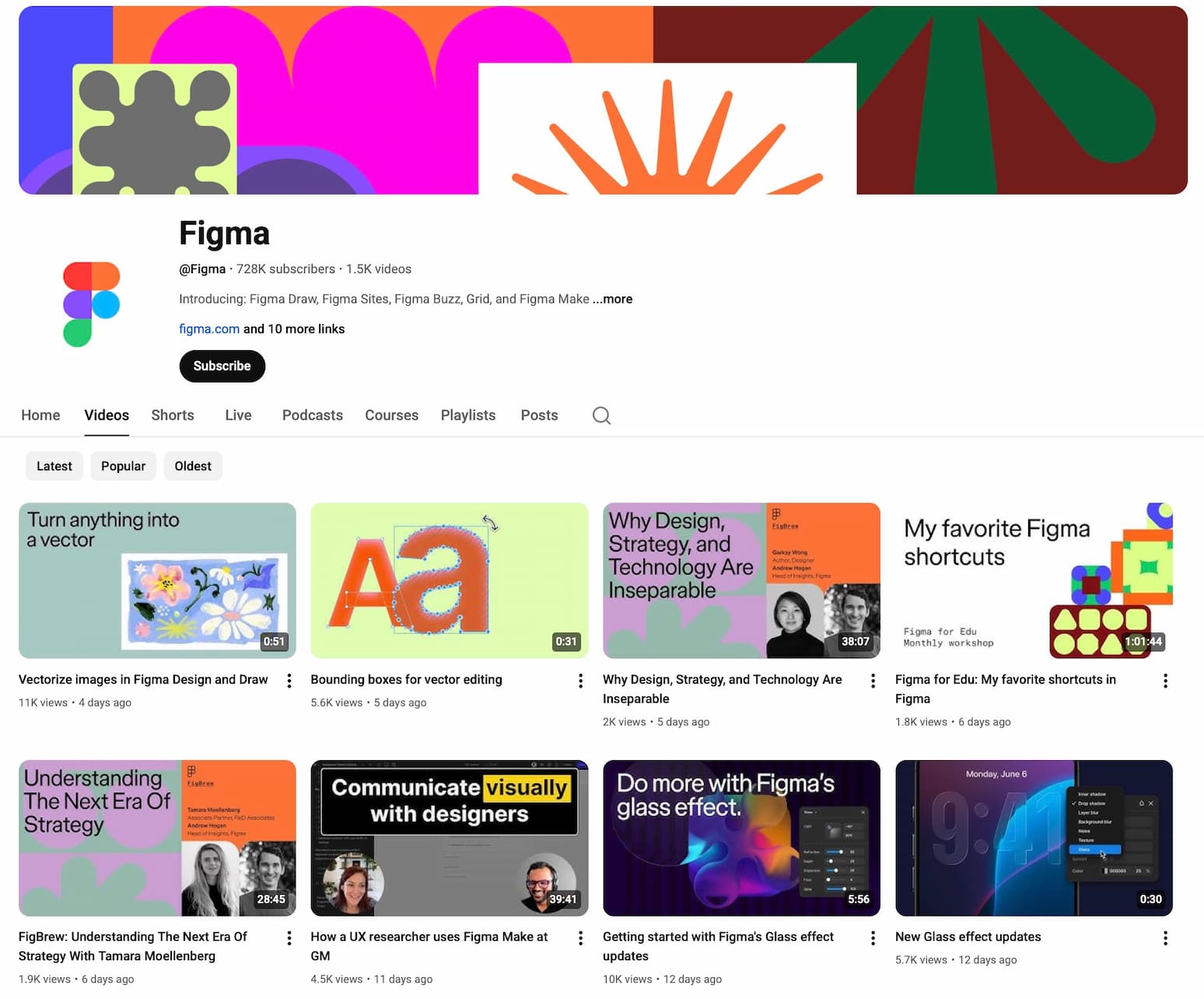
This is where they publish longer-form tutorials, product walkthroughs, and educational content that helps users learn Figma step by step.
Because people actively search for design-related topics, YouTube also functions as an evergreen discovery channel for the brand.
And with the changes YouTube has made recently, once a user has watched one video from a particular channel, they’ll likely see other videos from the same channel recommended to them on their home page, and on the side panel while watching other videos.
On social platforms, Figma shares shorter video clips, feature highlights, and promotional snippets. These videos are often used to surface updates, reinforce brand positioning, and drive attention back to longer resources.
Video content is also embedded directly into Figma’s website, supporting onboarding and self-serve learning.
Figma seems to be leaning into the human element as well.
Many short-form videos feature employees in a more casual, UGC-style, compared to typically polished, corporate videos.
Figma’s efforts with podcasting are also seen on YouTube, with their podcast playlists FigBrew and Bridging the Gap. Podcasting builds rapport with current users, and trust with potential users.
And since the medium isn’t nearly as saturated as others,they stand out.
Key Features of Figma’s Video Marketing Strategy
Figma’s video strategy is built around increasing the usefulness of the core product, and reducing friction a potential user might have; they do not focus primarily on promotion.
Instead of selling the product through traditional advertising, Figma shows people how the product works and why it’s valuable.
Some of the key features of their approach include:
Education Comes First
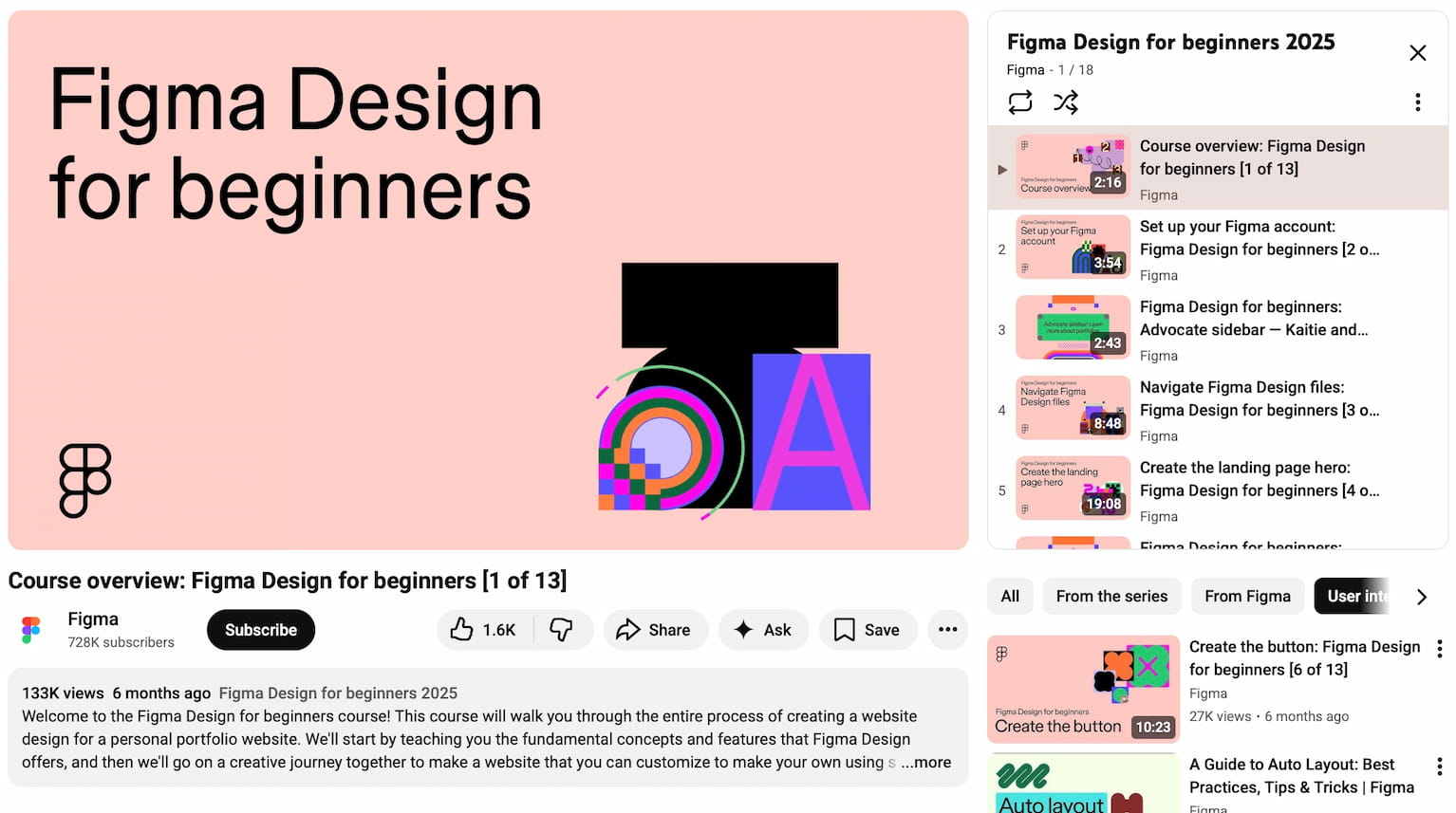
The majority of Figma’s videos are instructional.
Tutorials, walkthroughs, and feature explanations make up a large portion of their content library.
This supports Figma’s product-led growth model by allowing users to experience value quickly and independently.
Video becomes an extension of the product itself, not just a marketing asset.
Platform-Specific Content
Figma adapts video content to fit each platform, rather than publishing the same format everywhere.
On YouTube, videos are longer, more detailed, and optimized for search.
These often include full walkthroughs, office hours, or deep dives into workflows.
On social media, videos are shorter and more focused. They highlight individual features, updates, or concepts and are designed for quick consumption and engagement.
Evergreen Over Trend-Based Content
Rather than chasing short-lived trends, Figma invests in evergreen video content.
Tutorials and foundational design videos continue to attract views long after they are published, making them long-term assets.
This approach allows Figma to build a library of educational content that compounds in value over time.
Repurposing Across Channels
Longer videos created for YouTube are often repurposed into shorter clips for social platforms.
This allows Figma to extend the reach of each piece of content while keeping production efficient.
Repurposing long-form content into bite-sized clips for short-form video is one of the most accessible ways to expand your reach as a tech company, and we’d be happy to help you with that.
Video Plays An Important Role On Figma’s Website
Figma is a video-first company when it comes to their marketing strategy, and these videos don’t just show up on their social platforms.
Videos are found embedded throughout the website:
- The Resource Library
- Help Center articles
- Product and feature documentation
- Learning and onboarding materials
These videos are designed to answer questions visually and reduce friction for users who prefer to learn by watching rather than reading.
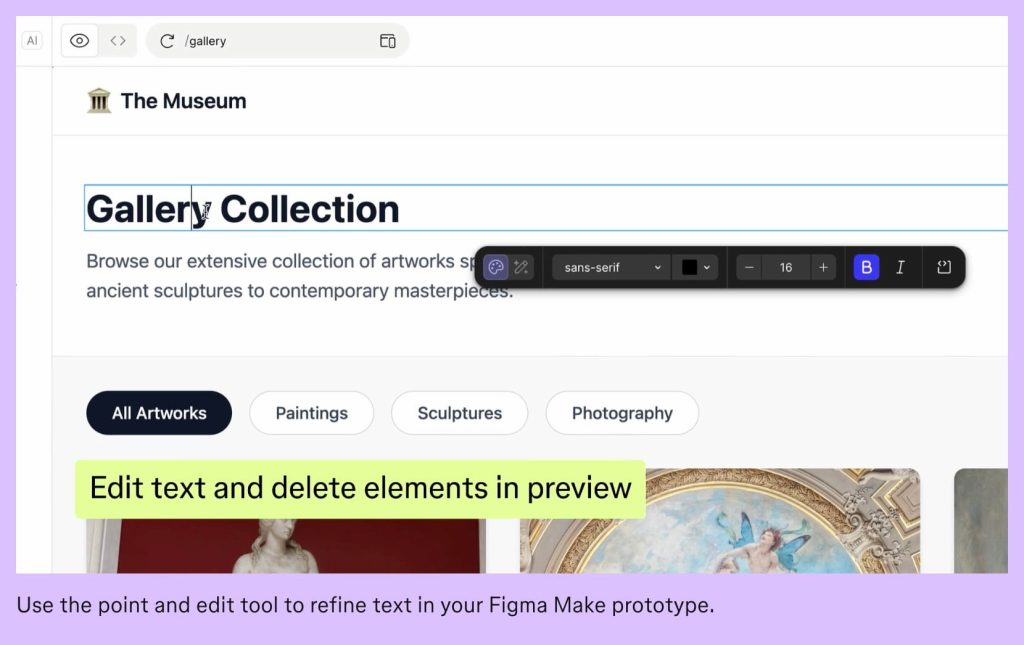
By placing videos directly within educational content, Figma improves the user experience and supports self-guided learning.
This also reduces the need for external support and helps users adopt new features more quickly.
Video Is Foundational to Figma’s Marketing Strategy
And you can tell that this is because Figma continually invests in building a brand.
Figma uses a range of video formats, with a strong emphasis on education and product clarity.
Common video types include:
- Educational Tutorials
Step-by-step videos that teach users how to complete specific tasks, such as creating components, building prototypes, or collaborating with teams.
- Product and Feature Demos
Videos that introduce new tools or updates and show how they work in practice.
- Long-Form Learning Content
Office hours, recorded webinars, and deep dives aimed at more advanced users or teams.
- Short-Form Social Videos
Short clips shared on social platforms to highlight features, tips, or updates and drive awareness.
- Community-Driven Content
While not always produced directly by Figma, community-created tutorials play a significant role in the ecosystem. Designers and educators regularly publish Figma-related videos, expanding reach and reinforcing trust in the product.
In addition to official videos, Figma benefits from a large volume of community-created content that supports education and adoption across YouTube and other platforms.
Figma’s Overall Approach to Video Marketing
Figma’s approach to video marketing is practical, educational, and tightly aligned with the product.
Rather than using video primarily as an advertising tool, Figma uses it to:
- Teach users how to use the product
- Support onboarding and learning
- Clearly communicate product updates
- Build trust through helpful, honest content
Video acts as both a marketing channel and a support resource.
By prioritizing clarity and usefulness over polish or hype, Figma turns video into a long-term growth asset.
Ultimately, Figma shows that video doesn’t need to be loud or sales-driven to be effective.
Zelios can help you develop a customized video strategy to boost your growth. Are you an ambitious SaaS, AI or tech brand? Let’s buildyour video-driven success together!
Select the video type that aligns with your marketing objectives, and receive an immediate high-level estimate of the production cost.