


A scene in animation refers to a continuous sequence of events or actions. These can be occuring in a specific location and time. It typically includes multiple animated shots combined together. This is to convey a specific part of the story or narration.

A scene is a very significant element of a video. It is critical for maintaining flow and coherence in animated films, TV shows, or videos.
They are helpful in guiding the viewer from one moment to the next in a smooth and sequential manner.
“Like all video production scenes play a significant role in animation as well. They are important in creating emotional engagement, setting the tone, and advancing the storyline. ”
Each scene contains characters, settings, and movements that work together to deliver key moments in the narrative.
What is the Difference Between a Shot and a Scene in Animation?
A shot is a single continuous take within a scene.
It focuses on specific actions or dialogue. Multiple shots are often joined together to form a scene. A scene may contain various shots from different camera angles or perspectives.
Key Elements of an Animation Scene
Every animation scene is built from a set of core components that work together to create meaning.
- Characters — the figures or objects whose actions drive the scene forward
- Setting — the environment or background that establishes time and place
- Shots — the individual camera takes that make up the scene (wide, medium, close-up)
- Timing and pacing — how long each shot lasts and how cuts affect the emotional rhythm
- Sound design — dialogue, sound effects, and music that give the visuals dimension
- Lighting and color — the visual mood that tells the viewer how to feel before anyone speaks
- Transitions — cuts, fades, or wipes that move the viewer from one shot to the next.
Understanding these elements helps animators plan efficiently and helps clients understand what goes into each stage of production.
Scene in Animation Examples
For example, a scene from a classic cartoon movie such as Toy Story.
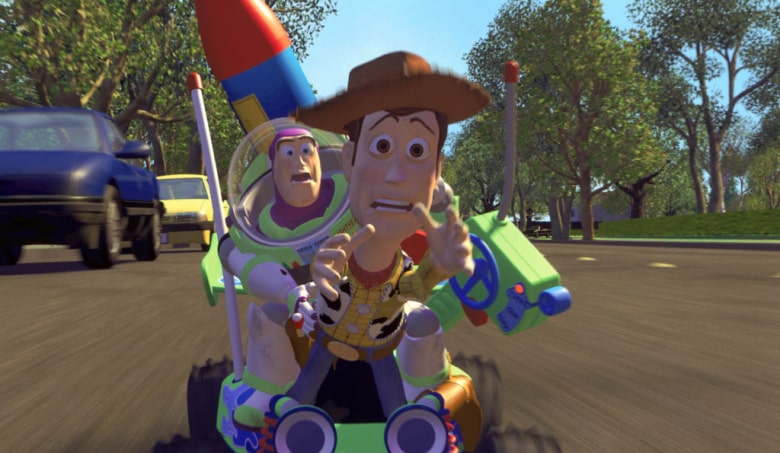
A scene in the movie can be defined as the one where Woody and Buzz are lost in the city.
This scene may contain several shots. These include wide angles showing the city streets, close-ups of the characters, and action sequences. All of these working together to tell that part of the story.
Types of Scenes in Animation
Not all scenes serve the same purpose. Animators and directors classify scenes by their narrative function:
- Establishing scene — introduces a new location or time period; often uses a wide shot to orient the viewer
- Action scene — drives physical movement or conflict; relies on fast cuts and dynamic camera angles
- Dialogue scene — focuses on character interaction; uses shot-reverse-shot editing between speakers
- Transitional scene — bridges two story moments without heavy narrative weight; can use a montage
- Emotional scene — slows down to let a character (and the viewer) process a feeling; often held on a single long take
- Climax scene — the narrative peak; combines action, emotion, and music for maximum impact
In short-form animation like explainer videos or product demos, the most common scene types are establishing, dialogue, and transitional — because the goal is to move the viewer quickly from problem to solution.
Summing Up
This definition of scene in animation is key to understanding how animated scenes form the backbone of storytelling, ensuring that visuals and actions connect smoothly to engage the audience.
Select the video type that aligns with your marketing objectives, and receive an immediate estimate of the video production cost.
