
Welcome back to our series of examining video strategies across SaaS/Tech and AI leaders. We’ve already had a chance to review Slack, and Airtable – looking into how their brand and audiences shape their respective brands. Next up is Grammarly.
Grammarly is the premiere AI assistant that helps students and businesses get their points across more efficiently, helping with better communication and increased productivity.
For their video content strategy – they are applying a video-first content approach, that’s driven with strategy. Instead of repurposing existing clips, they use strategy to optimize the video content for each of the individual platform’s needs and native behaviours, user behaviours, emotional tones.
With this, we are taking a look at how Grammarly uses video as its core engine for brand communication and user acquisition – including platform-by-platform insights, video examples, and our observations.
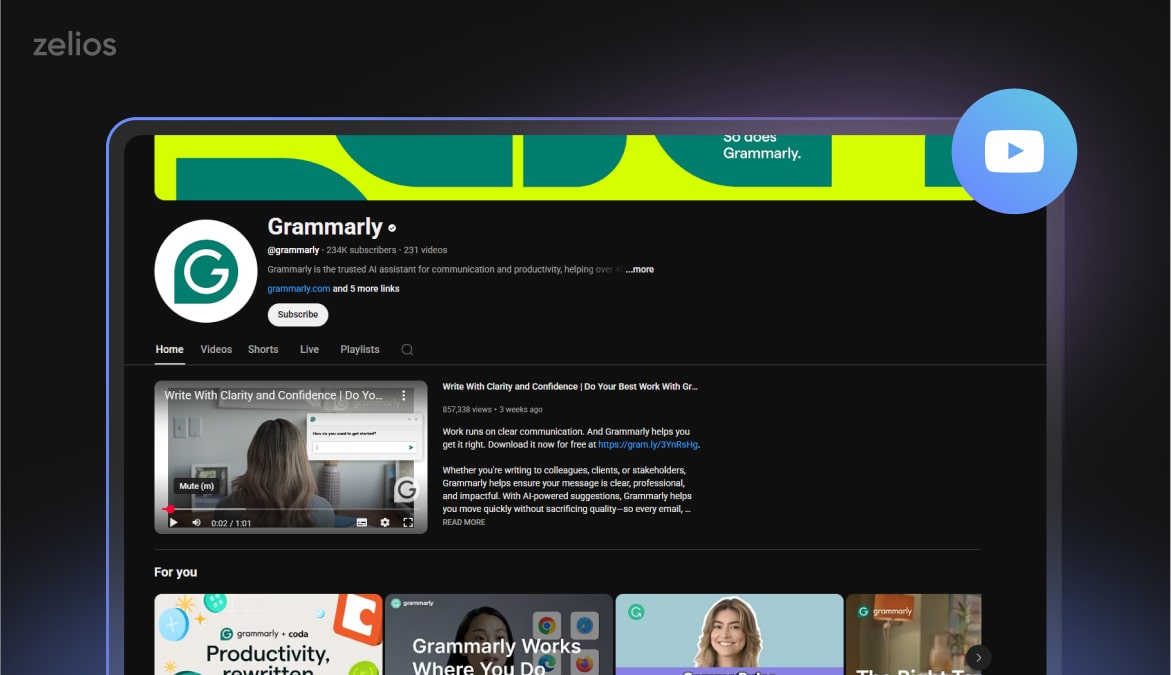
1. YouTube
Subscribers: ~233,000
Total Video Views: 4.8+ billion
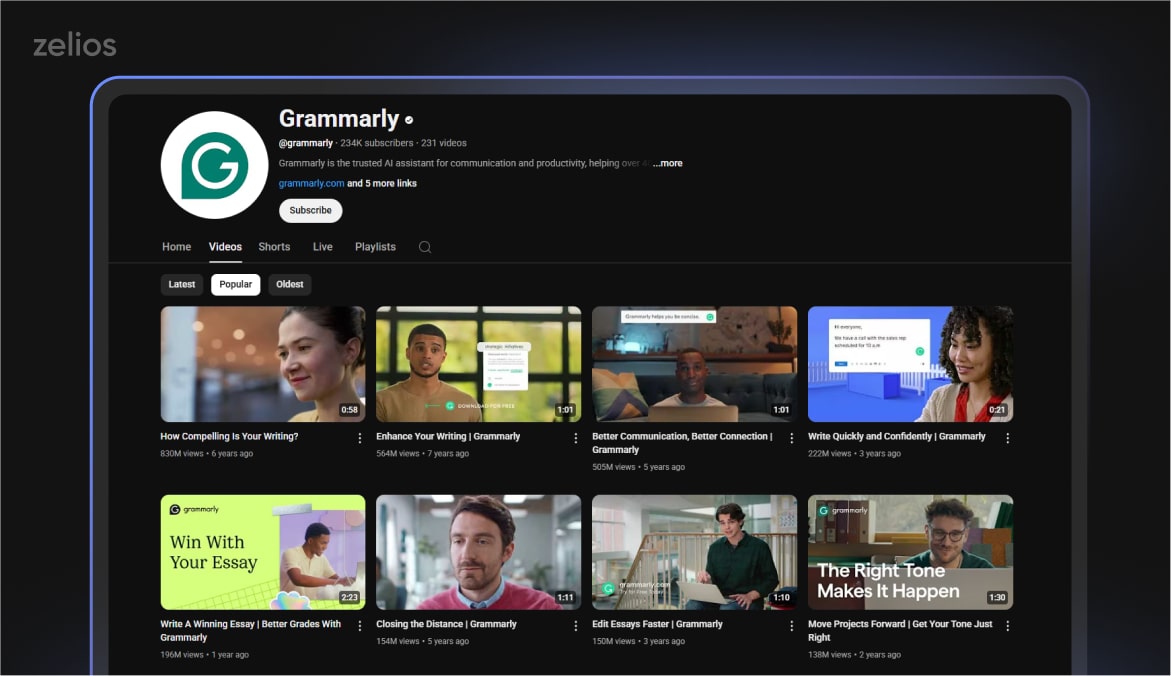
The way Grammarly’s Youtube video content strategy is built, just makes us sit and watch it for hours. Both content, and length wise, the strategy behind it is well planned and executed. For Grammarly, YouTube as a platform is focused on in-depth education across the board, and trust building process.
For professionals, students, companies, and others – all of the content provides value via hooking you with a great story, doing great and clear tutorials – and of course, actionable tips you can apply in your writing.
At the top of the page, once you jump in – you see a great Top Of The Funnel Video, which is sweet and short at 30 seconds. The video is a true “flex” from Grammarly – almost 23 million views on this masterpiece. The hero video – “Save Your Team From Endless Writing Tasks | Grammarly for Business” – is amazing, but almost gave us a heart attack. Just watch from the beginning and onwards until 00:06 – and you’ll get the idea.
Amazingly, they hook the viewers (those that are still breathing after the jump scare, of course) in the first seconds, which is what contributed to the video’s overall success. This is a stellar example of a short brand awareness video, for an ad campaign.
- Content Types: How to format used for education, product tutorials, tips and tricks to finally get your grammar right – and of course, user testimonials.
- Video Length: Average lengths range from a shorter 30 sec, and normally land somewhere around 45 seconds – 2 minutes, or can go even longer at 5-10 minutes.
- Style: It’s clean, without being too soulless or overly corporate – videos use kinetic typography, branded motion graphics, with additions of screen grabs, voice overs and talking heads.
- SEO-driven Titles: They take advantage of the popular user searches, to lead potential curious users to their videos. They use a lot of “How to…” and “Tips for…” namings to gain more views from users arriving from the search engine.
Example
“Get Instant Feedback on Your Work Using Our AI Writing Assistant” – One of the examples from those extensive playlists – AI for Students from Grammarly – giving you a thorough look at how Grammarly can improve your writing moving forward – like instructions on improving your papers.
One question that we have is: where was all of this when we were graduating?
All of the other playlists have a similar, instructional value – without pushing huge lengths and overstaying their welcome.
From teaching businesses how to use Grammarly to maintain messaging consistency, to talking about their commitment to Privacy and Security – playlists are clearly outlined and prepared for their audiences.
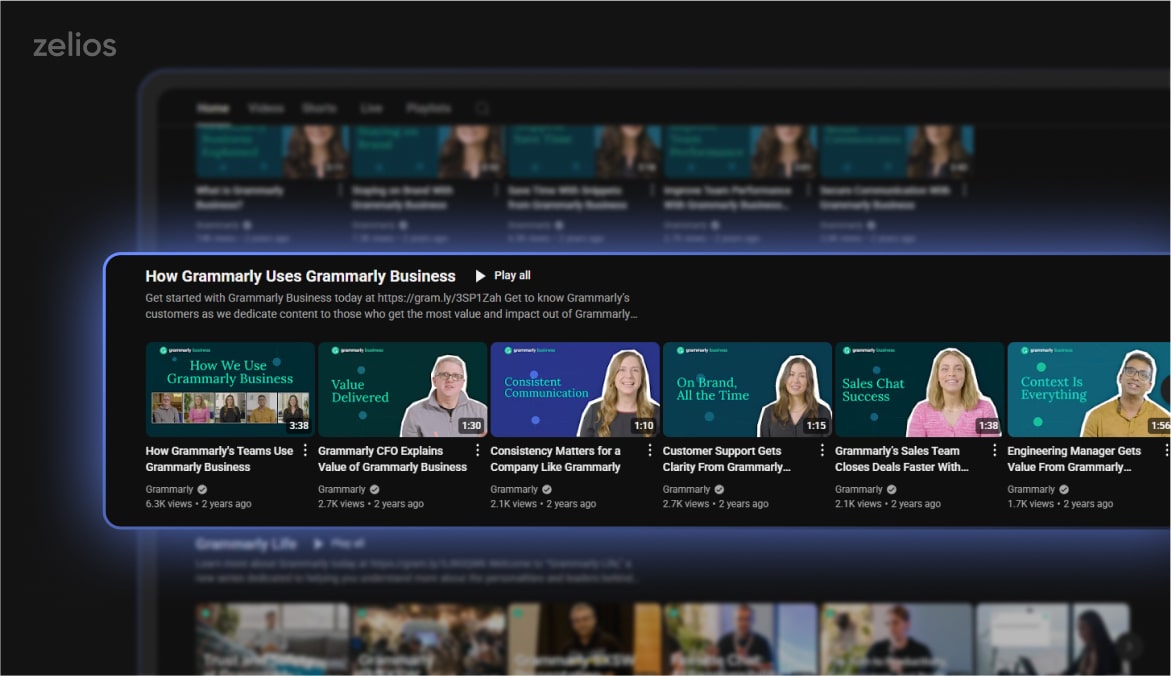
Even their testimonials get a lot of love from the viewers. Their customer story – “How Databricks Saves $1.4M Annually with Grammarly” gained an astonishing 800,000 views, telling the story on how Grammarly assisted with setting a high bar of their communications, across the board.
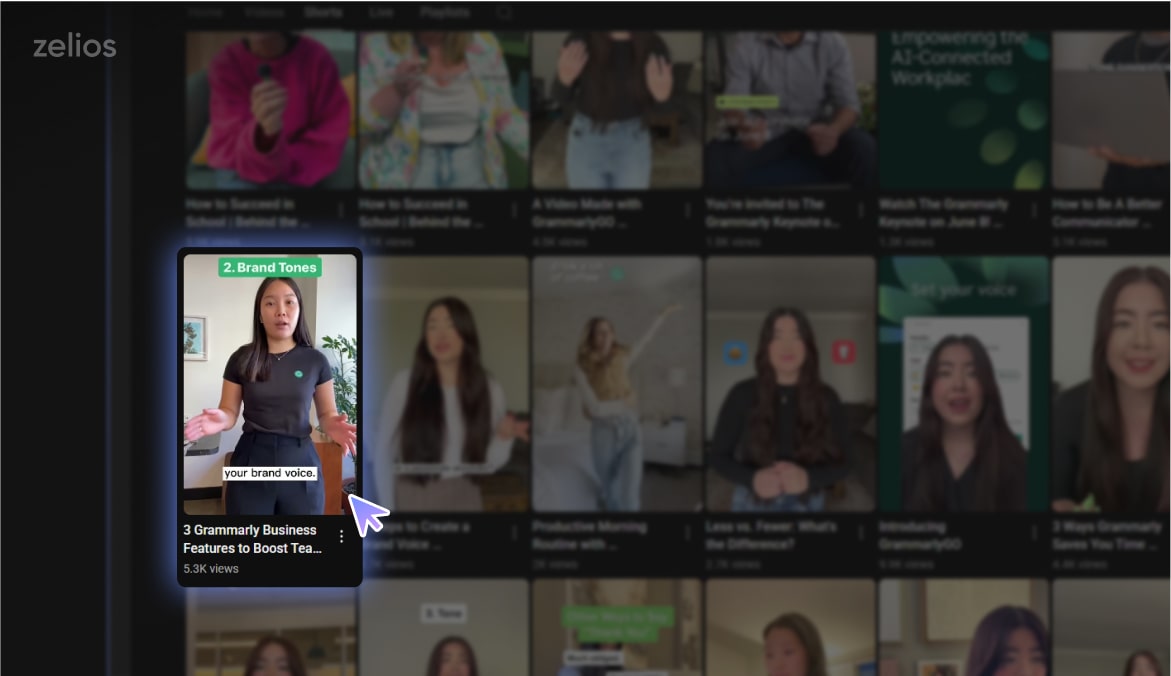
Shorts – as they are frequented by younger audiences, a lot more emphasis is put on the stories of students and also practical tips.
The videos cover everything from current memes and trends, to useful tips and product updates – done in a short way that appeals to younger audiences and makes sure they stick around (which is notoriously hard to pull off, especially for a B2B SaaS solution).
Our Observations
Grammarly uses YouTube to build their thought leadership position – and are doing so in a very compelling and efficient manner.
Their content toes the line of highly professional and corporate – as well as extremely bonkers, fun, and engaging videos – they are bringing in a whole universe of formats, and a gradient of tones and moods.
YouTube becomes a microcosm of the whole strategy of Grammarly: from short and crazy, highly engaging top of the funnel content, to shovel in more of the potential eyeballs – down to longer videos talking about privacy and security.
As you can see – those videos are not one and done, random successes. Throughout Grammarly’s YouTube, we see one smash hit after the other.
Of course, the product and the way it’s communicated lends itself to creating video formats like this – but even more corporate and minimalist brands can try throwing a “curveball” once in a while – we also see a testament to this, time and time again, with the yearly Super Bowl ad run.
Last, but not least – just look at the sheer power of a strategy-led video – their top viewed video has a mind boggling 830 million views.
Even if 0.001% of this viewership leads to tangible opportunities – that’s still 8,300 of potentially huge clients of all sizes – enough to keep your sales team busy for some time (at least until you release another amazing video).
2. TikTok
Followers: 111,000+
Video Strategy
We see that some brands often try to “fight the tide” and try shoving in a lot of B2B and corporate content in a platform that’s not really receptive to stuff like that. Playing around the strengths of the platform, and using it with the right approach of sticking to what already works (even if the lead quality is lower, or needs lots of nurturing).
This helps the brand to avoid being tone deaf, but approachable and humanized, with relatable content. Building demand with clients can be a long game – and those younger audiences will become students, and then professionals – and lastly – decision makers in large corporations.
This is why, while the full focus is on entertaining, meme and trend driven content – it still educates through humour.
Similar to their strategy with Youtube Shorts – this is more catered to students, rather than going after enterprises or big corporations.
- Content Types. Using skits, usual grammar fails that everyone runs into at least a few times, Gen Z humor or relatable content from student life – all of this helps them build a really chill platform with a sizable following.
- Video Length. True to the appetites of this platform, videos are 15-60 seconds, catering to destroyed attention spans.
- Style. To help out with keeping the attention, fast paced editing always comes to the rescue, with the added trendy captions, human reactions and creators, with a trending audio slapped on top.
- Tone. As the main station for everything youngster related, Grammarly keeps the video content witty, funny, and informal.
Example
A TikTok video features an employee that comes to work to socialize, but everybody is actually doing the work (don’t you hate it when this happens?).
This is a cheeky video, focused on the long existing meme that younger generations don’t want to work, just have fun.
Nothing about this video could assist with closing a large B2B deal, but be sure that this viral video (500,000 views at this point) brings in a lot of eyeballs to their AI for students and Grammarly for students solutions.
@grammarlyofficial Anyone want to go get an iced coffee? ? #OfficeLife #WorkHumor #CorporateHumor #CorporateLife #OfficeHumor #OfficeTikTok #Grammarly ♬
Our Observation
Grammarly is using TikTok to blend their product and bring in a lot of personality with videos (which seems to be their motto throughout). While on YouTube they have specific playlists dedicated to learning about their product (your usual MoFU/BoFU content), TikTok packages that learning into strictly top of the funnel content, wrapping learning into entertainment to win attention.
In this regard – they are on board with Slack’s approach, as we’ve seen that Airtable is not really doing any TikTok’ing (even though a fair amount of the same clients use both solutions).
Their posting seems to have some irregularities – and inconsistencies weaken the momentum that their overall presence there has. Algorithms are notoriously fickle – so a more regular posting cadence, without major gaps, would boost their already huge visibility.
3. Instagram
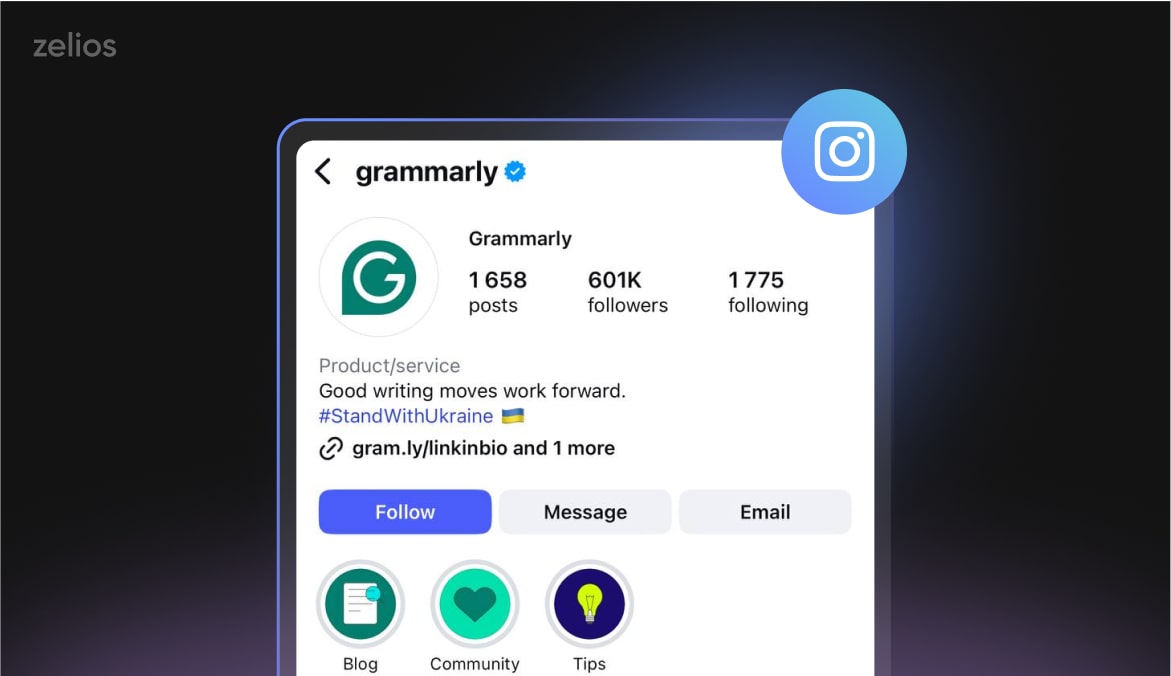
Followers: ~602,000
Engagement Rate: 0.03%
Avg Likes per Post: ~175
Video Strategy
In the overall approach, Grammarly uses instagram similarly to TikTok – focusing on Reels to share micro-education pieces, to farm those quick swipes and get the highest shareability possible.
- Content Types: Video content including reels, short product and overall tips in a video format – and video with carousel loops, as well as tried and true memefied grammar fails.
- Video Length: Average lengths are within 15-30 seconds, and a lot more static content is posted.
- Style: Using actors in combination with branded, clean animations and split screen visuals.
- CTA Usage: Consistent and regular usage of “Try Grammarly Free” across video captions, and ending cards, allowing them to engage viewers with the product.
Example
Post: “A Grammarly Love Poem” – heartfelt story of how Grammarly became a writing partner for a love poem. The video has received a very warm reception, as it’s genuine and hits the notes with people in love – especially those who experienced long distance relationships.
Our Observation
Reels perform significantly better than static posts (because videos are where the attention is at!), and it looks like they don’t do original and separate content for these categories. They offer a lot of different storytelling reels centered around work, love – and of course – social media blunders. All of the situations where grammar does make a lot of difference, and matters emotionally.
4. Facebook
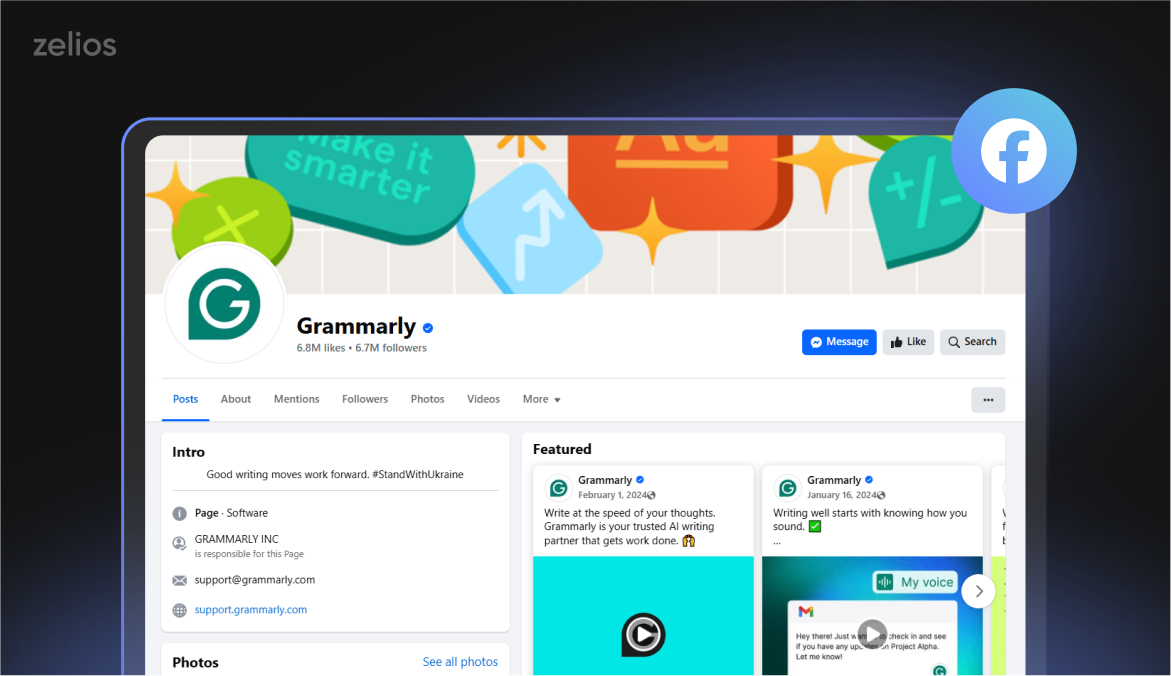
Followers: 6.7M+
Video Strategy
On Facebook, Grammarly has a massive following in the millions – all possible with the use of their shareable grammar related video content. As audiences tend to be on the older side, the content is also catered towards an older and professional audience.
- Content Types: From static posts – to meme-styled grammar comparisons, visuals quotes and content that works extremely well without sound on. On the video format side, more videos like Explainers, and short promotional video and product updates are used.
- Video Length: Average lengths are around 30-90 seconds – they are not overcomplicating it.
- Style: Branded graphics, a lot of kinetic typography and simple animations are used to convey ideas. User friendly, and efficient budget approach.
- Tone: Low barrier of entry learning allows for the mass following to digest the product easier, leading to better conversions.
Example
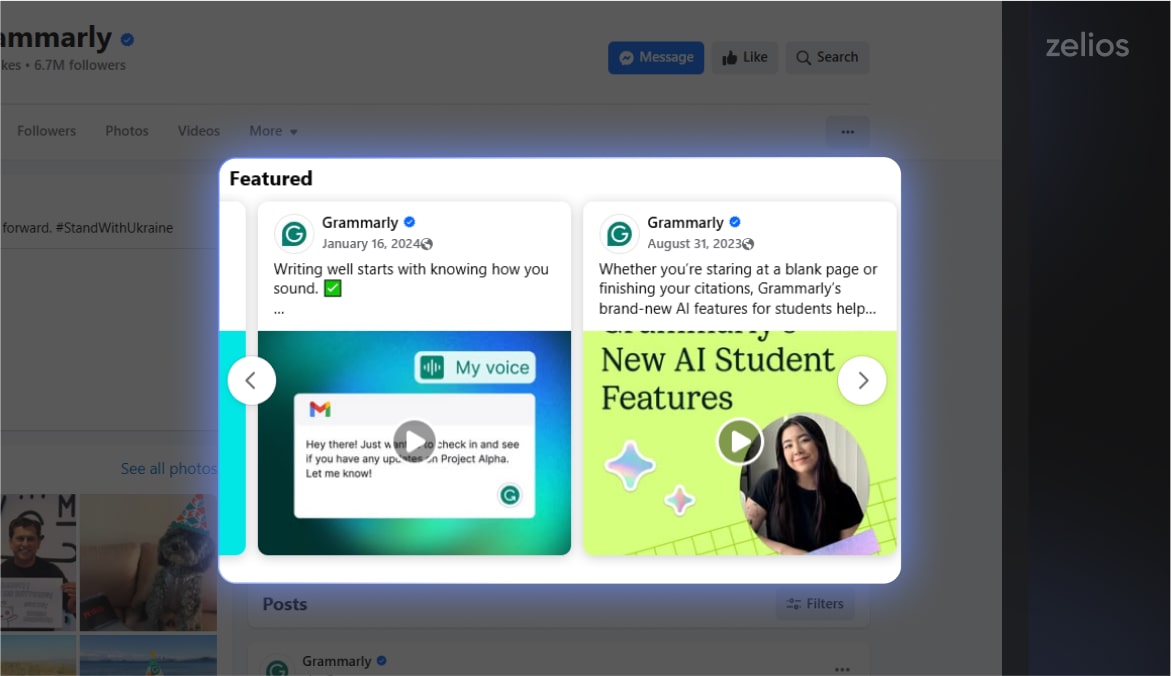
A short animated brand awareness video – “Let’s Get to Work” – is a great distillation of the type of content that’s used across the platform. Text based with music – the story is told via motion graphics and visual ideas, making it easy to understand the value proposition on the first round of viewing it.
Our Observation
Facebook is the staple top of the funnel tool in Grammarly’s platform selection. The content is engineered to be shared first, educate second – which seems to be working out just fine.
One critique we have is around the visual style, which is a bit outdated and feels templated, and could use a bit of an upgrade. But based on the audience, the style feels right at home for this specific platform.
5. Twitter (X)
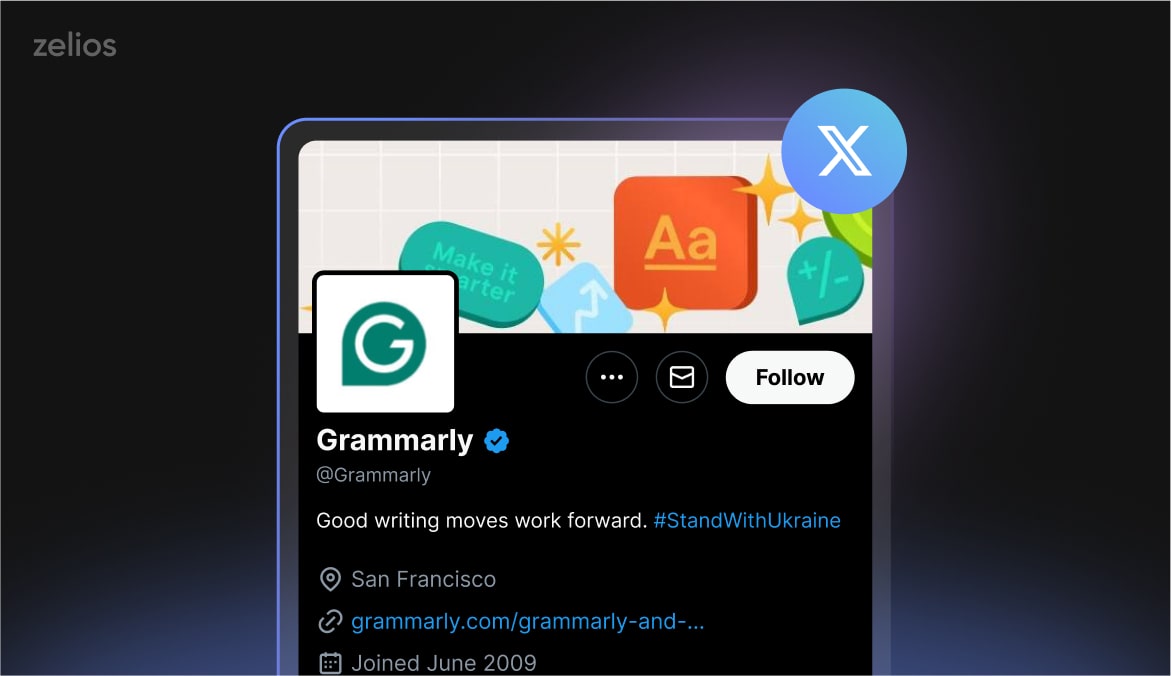
Followers: ~228,700
Video Strategy
Grammarly uses a ton of snackable content and adds in witty real-time responses (who wouldn’t like to ratio their clients that don’t know the difference between “should have” and type “should of”).
- Content Types: Short grammar reminders for us to be more professional, meme replies, engagement across a variety of threads and of course strategic videos done in a native 9:16 format, easy to view for phone users.
- Style: Videos and other content that can be viewed with a great experience even without listening to the sound.
- Tone: The tone is befitting the platform and occasion – witty, snarky and self aware content, mixed in with helpful grammar tips.
Example
A tweet-video combo: “AI Should Not Be This Hard” – great video to commemorate Grammarly and Coda collaboration – designed to work great when you watch from your phone.
Words that work. Work that flows. Say goodbye to juggling too many apps and hello to AI that works for you so you can get more done.
— Grammarly (@Grammarly) April 2, 2025
With Grammarly and @coda_hq , clear communication meets intuitive collaboration for results that speak volumes. https://t.co/sDRZr3m4dl pic.twitter.com/FqhIkRfQ09
Our Observation
Twitter/X is by far Grammarly’s most community centered platform. Text formats are more prevalent here due to the nature of the platform, but of course – there’s always a way in which they manage to share a hero video, add GIF explainers to boost visibility and humor.
6. LinkedIn
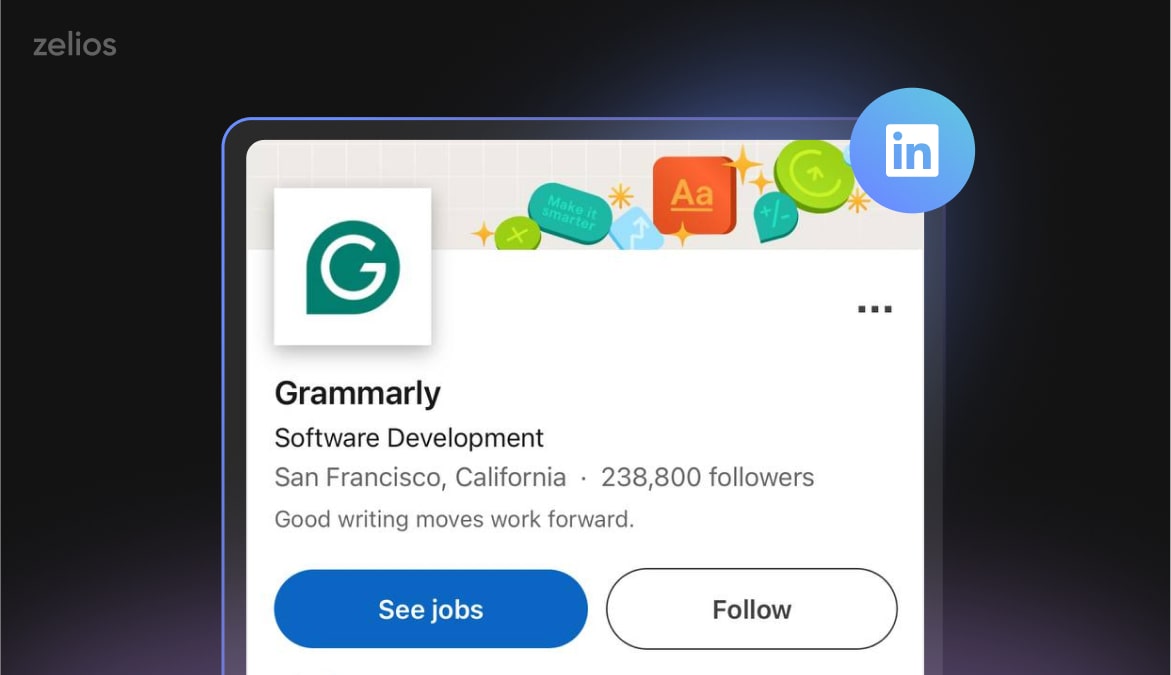
Followers: ~234,000
Video Strategy
With Linkedin – Grammarly highlights the core value for professionals across industries, by sharing thought leadership video content, and doing product education.
The primary content types are branded explainer videos, product updates, case studies and user testimonials, as well as writing tips and workplace of communication insights.
- Content Types: The primary content types are branded explainer videos, product updates, case studies and user testimonials, as well as writing tips and workplace communication insights. This brings a well rounded video content strategy for professionals at various stages of engagement with Grammarly.
- Style: Clean and polished visuals, using a ton of motion graphics and kinetic typograph, in what we can only describe as a visual feast. Often includes captions and split screen views, to make sure the content is as accessible as possible, giving them more reach and views.
- Tone: Tone is professional, with a conversational and insightful delivery – making sure you can clearly see the productivity benefits.
Example
In this glorious video “Words that work” to share the Grammarly x Coda collaboration – Grammarly has built an extremely engaging 30 second promotional piece, in their unique style. But are you noticing something?
That is indeed the same video we’ve seen when we were checking out their Twitter/X. That’s what you call a good video strategy – you create highest quality content, and efficiently place it across a variety of use cases.
Work hard, and smart.
Our Observation
LinkedIn for Grammarly is the main platform where their B2B positioning stands out the most. The posting is regular – static posts, and deeper video storytelling is interspersed throughout: behind the scenes to get a sneak peek of the product development process, sharing expert interviews and other formats – all of which feel right at home on LinkedIn’s professional context.
Grammarly’s Video Marketing Strategy: Key Takeaways
For Grammarly – video is not some “good to have” thing, that has an unclear ROI and questionable use cases. They lead with video across every channel in their inventory, and even with some of the more text favoring platforms, like X/Twitter – they always make room to include video here.
1. Platform-Specific Optimization
Each platform has its own approach, which takes into consideration the target audience and what works already.
2. Education + Emotion
Beyond just being extremely corporate and safe with their messaging, they always make sure to bring in the personality, in everything from humorous TikToks, to engaging YouTube tutorials. This approach helps them balance real, tangible value – with relatability and being approachable.
3. Full-Funnel Video Ecosystem
With video content assisting with use cases at every step of the funnel – from ToFu (Awareness), to MoFu (education), and BoFu (conversion) – you can be sure that Grammarly has a toolkit that hits well at every conversion point.
4. Short-Form ≠ Low Effort
Short form video content, whether it’s something to be used on YouTube Reels and TikTok, or LinkedIn and main YouTube channels – is not low effort, but highly intentional in bringing a sharp and laser focused message.
Shorter videos are harder to make, and require solid skillset across scripting, editing and production – everything to condense the message and hit the spot, without the luxury of running for 1 or 2 minutes.
5. Creative ≠ Just Design — It’s Strategy
Grammarly’s success with video performance is not random – but is a result of smart and thorough strategy. Deep understanding of audience, dynamics across different platforms and formats, and content purpose.
All of this goes beyond just aesthetics.
6. Consistency Builds Virality
Individual videos can randomly become smash hits – but consistently putting out videos that get hundreds of millions of views is not random. Long term brand growth is born when you regularly show up with on-brand, and high quality content.
7. Slack, Airtable, Grammarly
Slack and Grammarly are more alike in their approaches, providing a more outgoing and well rounded video content, stemming from smart and effective video strategies.
While they are churning out content of different varieties, tailored at grabbing as many eyeballs as humanly possible – Airtable sticks with educational content and case studies to support their efforts.
Build your strategic video content – with Zelios
If you are looking to build your own strategy, and kickstart a video lead generation machine – you need a team that will understand your business and customer.
From scoping out the formats, looking at main conversion points – and finally providing you with high quality assets – we can help you with niche defining video marketing.
Reach out today, and let’s start engaging your customers like never before.
Select the video type that aligns with your marketing objectives, and receive an immediate high-level estimate of the production cost.