
No matter if you are looking to create inbound marketing video content, or an outbound campaign – the goal is straightforward: building a strategic set of videos, to capture attention,drive conversions, and at the end of the day, contribute to the sales and growth of the business.
With this article, we are looking to explore the difference between inbound and outbound video marketing, and why a strategy first approach is crucial.
1. Inbound Marketing Video: The Strategy-Driven Magnet
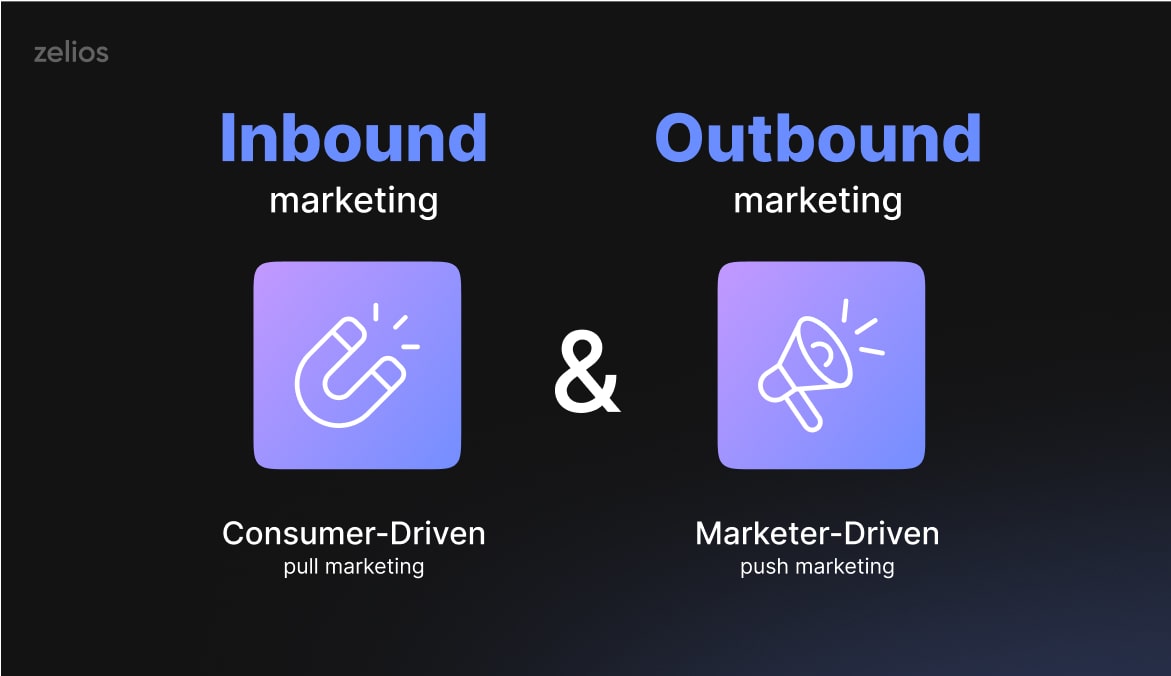
Imagine how the inbound marketing is a magnet that draws potential customers to interact with you. It’s not breaking them out of their day, with random cold calls, emails, messages and so on – but on the other hand, offers them value that makes your product instantly clear and compelling.
One great example – is If you have a SaaS Data management solution – and they see your video on how they can reduce data silos in their own business. With this kind of inbound marketing video production, the full focus is on creating videos that educate, engage, and provide real solutions and value to the viewers, even if they don’t engage and buy your product.
These videos often come in the form of educational content, customer testimonials to talk about specific problems and topics, webinars and sometimes explainer videos.
Example:
Even though your SaaS product might be complex, using the right inbound marketing videos and strategy, you can make it much more simple and accessible. In this case, a high quality explainer video, maybe around 60-90 seconds – could make your client go from “what the hell does it do” to “tell me more about it!”.
This example we’ve done for StoreTrack fits the bill on all fronts.
 Pro Tip:
 After all, if you don’t command the attention of your audience – your competitors certainly will.
A video without strategy is going to get lost within the flood of all other content. It won’t engage or convert unless it’s being used as a vehicle to deliver the right message at the right time. Video for inbound marketing requires careful planning to make sure videos are optimized for website and landing pages, social media – and above all – align with your overall marketing goals.
2. Outbound Marketing Campaign: The Megaphone Approach
Videos that provide value, attract and educate customers can build trust and authority – which sets you up for long term success. And numbers are clear on this – 68 percent of consumers are more likely to buy after watching a brand video.
One-off video might work, but without a clear strategy, your funnel might not reach the full potential and pipeline size.
While inbound video marketing pulls customers in, outbound marketing campaigns are actively going out and shouting through a megaphone – to cast a wide net, and grab the attention of as many people as possible, that maybe weren’t even in the market to get a product like yours.
Outbound marketing videos are typically parts of ads or other blanket promotional campaigns that work towards reaching new audiences and tapping into customers outside of the buying journey.
Outbound marketing campaigns are used for awareness across the board, often with paid ads like YouTube, Facebook, and LinkedIn. Outbound is notoriously harder and more expensive to do.
Overall, as compared to inbound – outbound is more intrusive, but can be particularly effective if you hit on two points: messaging and timing.
Example:
Outbound video campaigns can be used to build brand awareness with those users that are not actively looking for a solution, but might start exploring it once you start building momentum with them.
Often that comes in the form of targeted ads, that help generate immediate interest and push your product to be top of mind.
Of course, you need a truly amazing video that would grab attention quickly for those who are seeing you for the first time. This format we’ve done for WriteSonic is a great example of how to start building awareness and momentum – in just 21 seconds!
Pro Tip: We’ve seen many times how even the clunkiest SaaS tools outperformed the best and most polished ones – just because they were better conveyed and communicated in a clearer manner. That’s because even a weaker product, which is explained clearly (and in less time) will always perform better, stacked against those that are not really communicating themselves properly.
“Always remember: with SaaS and AI products – if prospects are not seeing your products, they are seeing your competitor’s solutions.”
3. Why Both Inbound and Outbound Video Work
So the rule is: both of these types of videos work in a particular set of circumstances.
For inbound video marketing – it’s all about educating and nurturing audiences over time. When you have a solid strategy in place, it offers valuable content, and builds authority and trust – which helps your prospects have a smoother journey down the funnel.
Outbound video marketing is more immediate, always building the momentum with a sense of urgency and curiosity – allowing your product to capture those potential prospects that haven’t even started (or thought) about the buying journey. It’s more expensive, and quite a bit more intrusive, as people are not seeking out a solution like what you are providing.
But, with the right timing and message, it can build quite a lot of awareness.
If done right – well optimized video ads can spark a high level of curiosity and move the otherwise not interested person into a potential client that starts to actively consider implementing your solution.
That said – similar to the inbound video content, you need to nail a few things: quality and strategy.
Without right targeting – your ads will fail. And if your video is not good enough, and is not resonating with the client – they will not drive them to the next step in the sales funnel, be it requesting a demo or making a purchase.
Bonus Tip: The Key Difference — Strategy and Timing
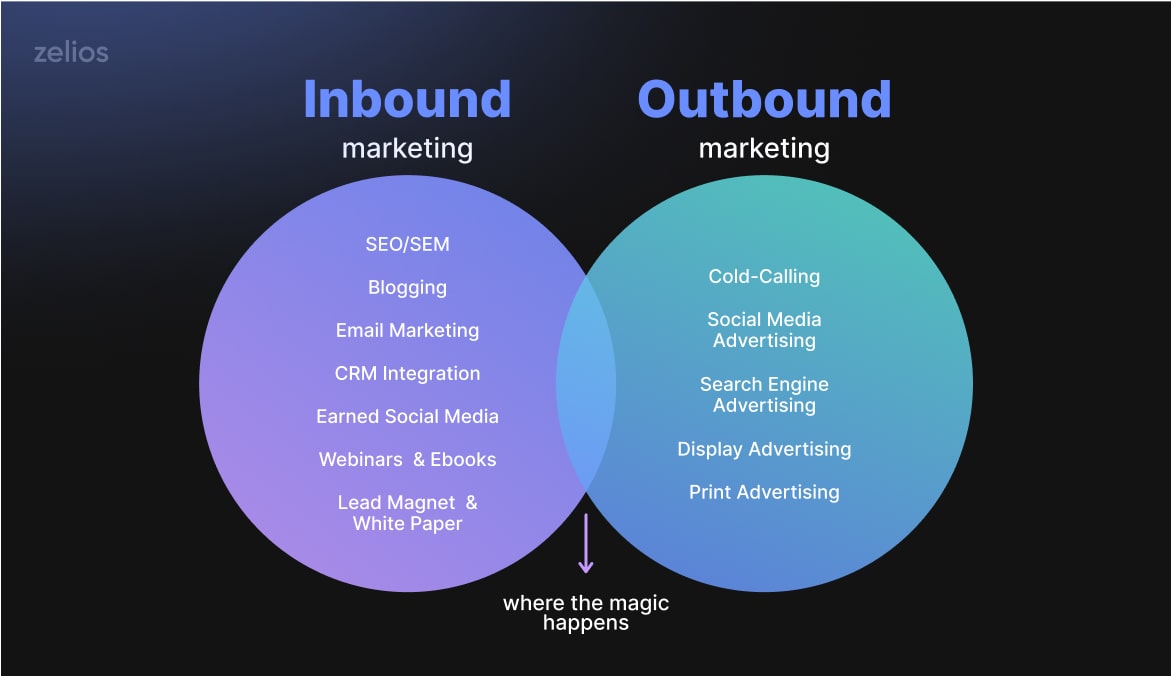
The main difference between inbound and outbound video marketing comes down to strategy, and timing.
In its end, inbound video marketing focuses on building trust and nurturing already interested leads over time. On the other side – you have your outbound video marketing, that does all in its power to push your marketing and narrative to as large swathes of audiences as possible – trying to aim for a faster result.
A successful inbound video is not just about telling: “hey this is what we do” – the whole set of that content shows why this is the solution that people need. To contrast that, effective outbound video fuels discovery, grabs attention quickly and kickstarts a whole journey.
Pro Tip: 
For outbound video marketing – make sure to craft quick, attention-grabbing and even humorous videos that would talk to specific pain points of the target audience.
Again, great example for Grammarly here – short and sweet piece, in only 30 seconds explaining the value proposition, showing the use case – and how the software looks in action.
At this point – most of Top SaaS marketers we speak with agree – high converting content like this isn’t a bonus anymore.
With SEO falling flat on its face because of Chat GPT search, and video becoming more prominent than ever – smart video strategy should be a foundation of your marketing.
The difference between inbound and outbound video marketing ultimately comes down to strategy and intention. Inbound marketing puts the most emphasis on attracting and nurturing leads over time, leaning into educational and trust building content. So normally, testimonials, demo, how to and tutorial videos are the core of what is inbound marketing video
Outbound marketing gets its heavy duty attire on, and becomes more immediate, and does its best to push your message to wide audiences, with the main focus being on the top of the funnel.
What would be a good inbound marketing video? The one that shows why it’s the solution people need, and not just explaining what your product does. It’s always carefully crafted and thought out – to be delivered at key points of the customer journey. And a video built without strategy, can quickly become a generalized, spray and pray solution that doesn’t do the job.
With outbound video marketing – a series of short videos, often with 15-20 second duration, targeting specific problems that customers are trying to solve – would bring the best results if planned out and executed correctly.
Final Thoughts
Today – no matter if you are building a set of videos for inbound marketing, or looking to run an outbound marketing campaign – the real secret is not the video format or duration – it’s strategy.
If videos are crafted with a purpose in mind – and precision in execution – they will reach the right audience, at the right time, and with the right message. If you are looking into making video for inbound marketing, or your outbound campaigns – here at Zelios we can give your strategy the needed boost, and produce polished videos to support it.
At Zelios – we help SaaS brands scale with video content, built on how people actually make decisions.
Not just a single hero video sitting on a shelf; not one format blasted across various social media – but a solid full funnel strategy based on how people engage with your content and make decisions.
Get in touch today and let’s start making something great together!
Select the video type that aligns with your marketing objectives, and receive an immediate high-level estimate of the production cost.