
Here at Zelios, after helping startups hit the ground running, SMBs scale their offerings with effective videos, and huge Enterprises keep their content fresh and on-brand – we now have noticed some patterns that elevate video from a good to have thing, and just a piece content – towards a high performing piece of marketing content.
And after working with well over a 100 video projects across SaaS, tech, AI, and with a variety of B2B brands – one thing is as clear as day: video performance is not an accident, but a result of careful planning, with the right message, right format, and right timing.
1. Strategy First, Always
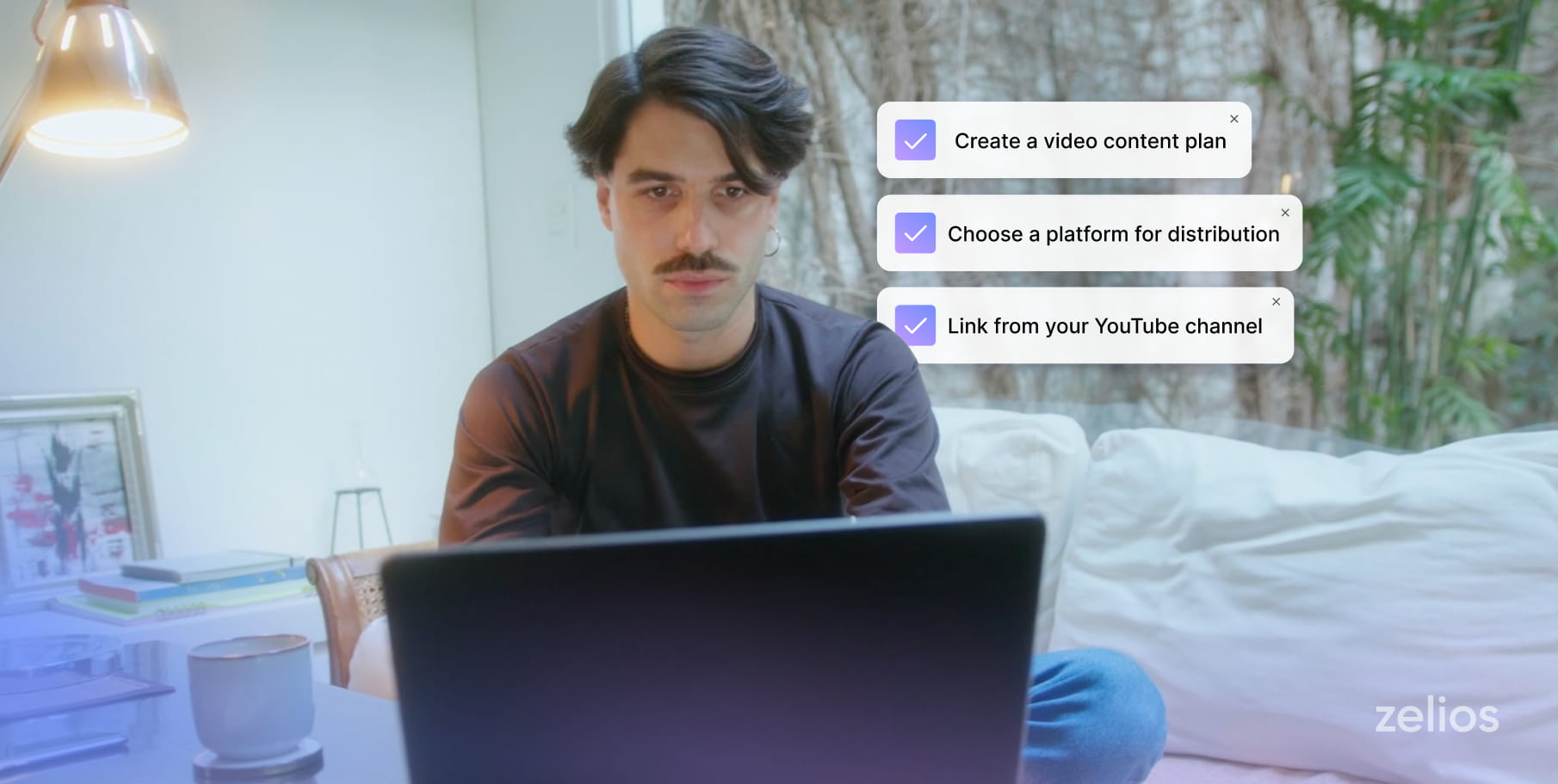
One of the biggest lessons from our experience is that you need a strategy first. Often, being swarmed by the demands of the day, like launches or feature updates – marketers just don’t have the breathing room to build a proper strategy.
The result of this strategy second approach costs more, reduces the efficiency of the overall marketing budget and assets – and at the end of the day reflects on the bottom line. Given this, before we even start scoping out the video, we take a close look at your goals and how your funnels function right now.
Because of this, the best video assets are not just those that entertain and look great (even though that helps) – they are those that are crafted with intent and objective.
From increasing efficiency of B2B lead generation, converting website visitors into paid customers, or driving demo sign-ups – you have to clearly outline the flow, from point A to point B – and clearly see where, what, and which video types will play the key role.
Example:
With LangEase, they wanted to have a one size fits all approach – a demo video that would also serve at the top of their funnel. Instead of having the wrong format at the wrong stage of customer journey, we insisted on creating a format that would serve their current needs, and can be adjusted into the longer, demo video as needed.
 Tip
Tip So check your main conversion paints, and think of how they can be bolstered with strategic video content (or ask your agency to do so).
2. Clear, Compelling Message
Clarity can make or break how the video performs. We would even go as far as to say that together with Landing page copy – video ads are the pinnacle of marketing craft, as because they are short, and have high stakes (new business in on the line!) – you have to make them punchy, relevant and short. And that’s not always easy.
But what’s the alternative? If your product doesn’t capture and command attention, it might as well not exist in the eyes of prospects.
So make sure the videos you create are clear, short and relevant to your target audience.
Example:
We’ve seen it first hand – less IS more.
Our average video lengths decreased from 60-90 seconds, towards a much shorter duration of around 40-50 seconds across the newest assets we are building.
This accounts for the current viewers’ appetite for shorter, punchier, more packed content, instead of sitting through longer video formats. And on top of that, this becomes a great exercise for brands to make their messaging as streamlined and laser focused as possible.
For example – this Doks.ai video is only 21 seconds long, but does a great job of attracting and funneling attention towards product discovery, and doing a potential demo. This is optimized to show the core product benefits, sharpens the overall value prop – and increases conversion rates by around 20-25 percent.
Tip 3. Targeting the Right Audience with the Right Format
As already mentioned before – with strategy, you see that different video types can work differently depending on the context. What makes B2B video content really crush it – is when the message is good, the content is better – and it’s delivered in the right format, at the right time.
From short-from ads for LinkedIn, to demo videos for your landing and product pages – or even testimonial videos to close out that deal, whether in pitch deck, or sent directly – matching the format to the funnel stage is extremely important.
Example:
You’ve seen some great, short examples we’ve shared earlier. Would they work great if you don’t have a sales person, and work on a subscription basis?
The answer is most likely to be no. For this workflow and buyer journey to work, you will need a bit more of an educational process to lead your prospects to clicking the subscribe or enroll button.
This example for StoreTrack – is a great example of including more context and education for your prospects, especially if the next step after visiting your website is to subscribe and convert into a paid customer, without any demo and or introductory calls.
4. Cutdown,Test, Refine, Repeat
Iteration! Even if your video content has worked over the past half a year, without a refresh the performance will eventually begin to stagnate.
Especially around ads – you really have to mix and change them up, depending on the new information you receive from your customers, or changing landscape in your current market.
Because of this, you need to do continuous A/B testing, try out different CTAs and variations. Constantly sharpening this marketing sword, will help you attract more leads.
So make sure to keep your video content fresh and sharp.
Example:
When we were creating the video for Tome – we tried a variety of different hooks to test out what would work best with the client’s marketing. The final one is what we landed at – providing a 30 percent better performance over the ones we eventually scraped.
Tip 5. The Right Timing & Placement
As already touched on before – even the best video can underperform if it’s not supported and promoted properly – whether on the correct platform, or with the right format. Timing and placement, as well as usage of extra materials is important to building anticipation and setting the stage for the new release.
Example:
When we’ve created the video for Ironfish, we’ve also cut down the content to make sure it can be used as an upcoming launch and teaser trailer, as well as any ads and retargeting needs they might have. This way, we start drip feeding the content to the prospects that might be interested, and not just releasing the video out of the blue, hoping that it attracts a lot of attention.
This approach generates at least 15 percent more eyeballs to the final release date and offering, as opposed to just dropping the video on that date.
? Big announcement! Iron Fish is launching the first Universal Privacy Layer today, launching private USDC transactions across 20+ EVM chains, including Ethereum, Optimism, Base, and Arbitrum. ?
— Iron Fish (@ironfishcrypto) January 7, 2025
This is a major leap for blockchain privacy.
Here’s why ?
1/8 pic.twitter.com/epldYZnaGC
Tip Conclusion
Making your video a strategic asset that works, instead of dropping it and hoping that it sort of works – requires planning and steps we’ve mentioned in this article.
If you follow some of these tips – you will make the most of your marketing budget, and make sure your SaaS, AI, or tech product receives the attention it deserves!
But why handle this on your own – when you can work with a team that have proven results and expertise across 500+ video assets.
Reach out to us at Zelios today, for a consultation.
Select the video type that aligns with your marketing objectives, and receive an immediate high-level estimate of the production cost.