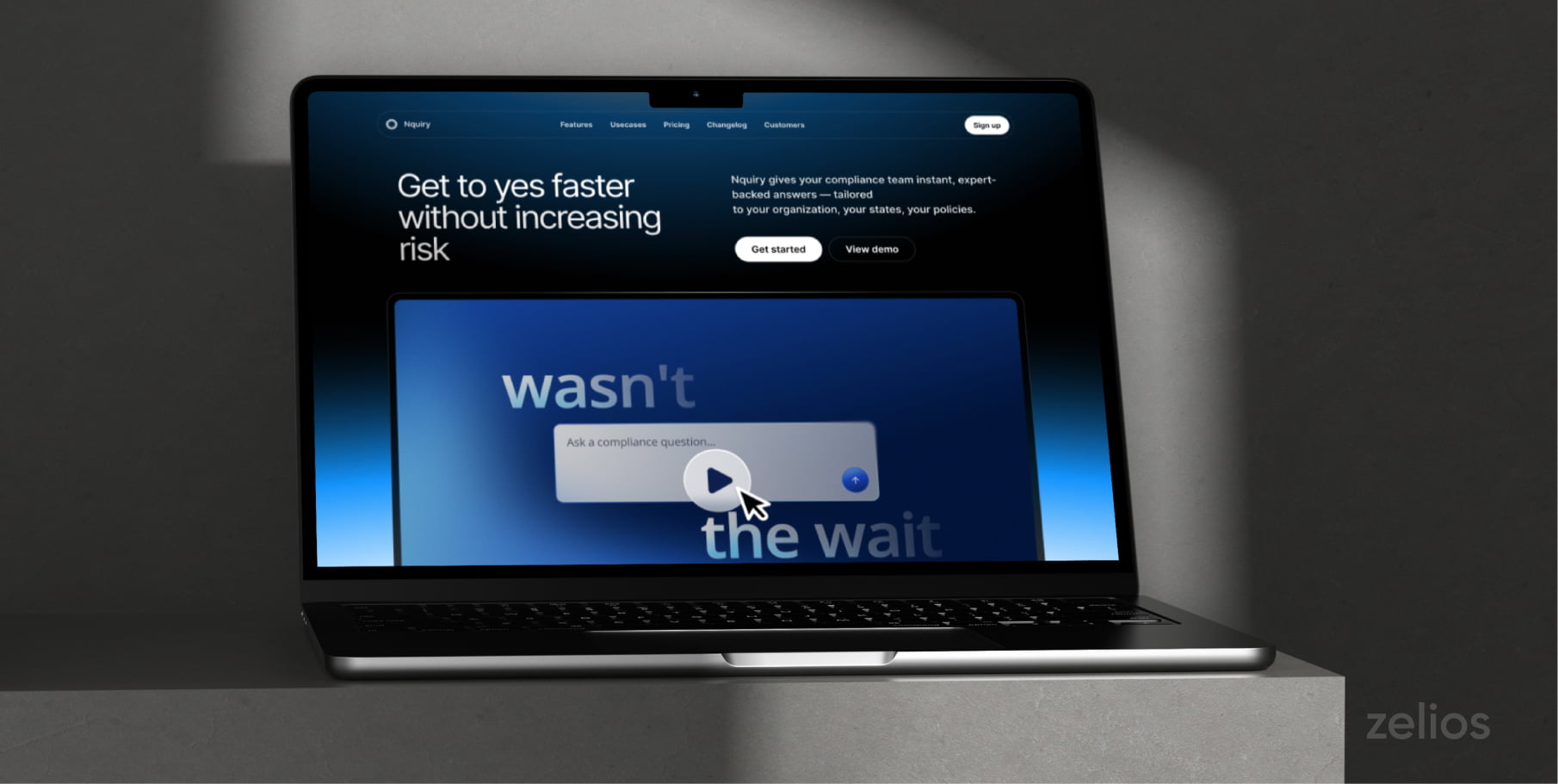

Video content can simplify explanations of complex concepts, demonstrate the value of complex products, and accelerate the sales cycle, and builds trust in complex, high-value products.
Marketing professionals and brand managers in the B2B sector are looking for fresh, practical ideas to develop or refine their video marketing strategies. In this article, I’ve compiled examples of video marketing campaigns for tech brands to inspire you.
This list includes YouTube videos that have achieved widespread reach and clearly had a significant impact on brand exposure.
1. Airtable – Built for the AI era
This video introduces Airtable’s new AI capabilities through Omni, an intelligent sidekick that turns conversational prompts into fully functional apps, automations, and custom interfaces in seconds.
Using crisp product UI visuals, bold typography, and a confident voiceover, the spot demonstrates how Airtable’s AI agents can handle real knowledge work, including:
- Generating campaign concepts from scratch
- Synthesizing customer feedback at scale
- Automating complex, multi-step workflows — without writing a single line of code.
It works because of its crystal-clear value proposition — AI that’s practical, not hype — and the emotional payoff of watching complex tasks become effortless.
Key takeaway:
Audiences who buy B2B software want to see their problems solved on screen — not a philosophy lecture about the future of work.
B2B brands can combine abstract positioning (“built for AI”) with concrete UI moments. Show the future vision, then immediately anchor it with tangible product interactions.
2. Grammarly – “Future You Thanks You”
The video racked up more than 70 million views by wrapping a clear product benefit inside an emotionally resonant narrative rather than leading with features.
It works because it shifts the value proposition from grammar correction to career growth, confidence, and clarity. The product remains present but never overwhelming, allowing the story to lead. This approach broadens appeal beyond technical prospects.
Key takeaway:
Don’t just showcase your product — dramatize the outcome of using it. Adapt the format for enterprise software by showing how small daily improvements compound into career-defining wins.
Human-centered storytelling can make even utility software feel aspirational and memorable.
3. Webflow – Introducing Webflow CMS
Using clean screen recordings, crisp motion graphics, and a minimalist visual language that mirrors the product itself, this animated explainer walks viewers through the visual content management system.
- Structured content and dynamic collection creation
- Design-code parity in a visual editing environment
- Real-time publishing and content management workflows.
It contrasts outdated, code-heavy workflows with Webflow’s drag-and-drop interface where live data automatically updates across responsive designs — no developers required.
Key takeaway:
When launching technical products, use animation to simplify complexity and demonstrate the workflow, not just the features. Showing how users move from idea to output can communicate value faster than explanations.
4. Google Cloud: The new way to cloud
Google Cloud’s brand campaign takes a high-energy approach, blending fast-cut imagery of global industries with an upbeat soundtrack and confident narration. Rather than targeting developers with technical specifications, the spot addresses C-suite and IT decision-makers across sectors.
The animation style balances abstraction with occasional product references, making it accessible without losing technical credibility. Message focuses on transformation rather than tools. Cloud adoption is framed as a cultural and competitive shift, not a procurement decision.
Key takeaway:
Simplify complex offerings into a clear transformation narrative instead of feature-heavy messaging.
When your buyers are executives, you’re not selling infrastructure — you’re selling a vision for where their organization belongs in the future.
5. Miro – The Innovation Workspace
Miro’s video showcases its AI-powered Innovation Workspace as a limitless digital canvas where teams brainstorm, prototype, align, and execute — all in one place. It uses energetic live-action and screen recordings of the platform, with AI “sidekicks” guiding users through sticky-note chaos to polished outcomes.
Key takeaway:
The most credible B2B marketing is made with your own product. Match your video style to the core product experience. If your tool enables visual collaboration, let the animation itself demonstrate that energy rather than describing it verbally.
6. Monday – More than a CRM
Monday’s video positions the platform as a flexible work operating system rather than a traditional CRM. It uses colorful UI animations, upbeat music, and fast transitions across departments and use cases, covering:
- Lead generation and pipeline tracking
- Deal management and forecasting
- Post-sale handoff and customer collaboration
- Cross-team visibility across the full revenue cycle.
It works because of its no-nonsense authenticity — everything shown is immediately usable — and the clear value proposition that one tool replaces many. Snappy editing and relatable workplace scenarios convey versatility without overwhelming the viewer.
Key takeaway:
If your product spans multiple use cases, show breadth visually. A well-positioned “more than X” campaign can reframe how buyers evaluate your solution from the first view.
7. SurveyMonkey – Introducing the New SurveyMonkey
This rebrand launch video signals a deliberate shift in how SurveyMonkey wants to be perceived — from a simple survey tool to a sophisticated insights platform built for enterprise teams. The aesthetics of the video communicate where the brand is going before a single feature is explained.
The visuals balance UI demos with abstract data graphics, reinforcing intelligence and decision-making. It works because the narrative follows transformation — old perception versus new capabilities.
Key takeaway:
Make sure the visual language of the video matches the category you’re moving into, not the one you’re leaving. Launch rebrands around timeless motivations (like curiosity) instead of feature lists to create deeper brand connection.
8. Supahub – Promotional Brand Video
Created by aZelios, this sleek explainer shows how Supahub transforms messy customer feedback into prioritized, actionable insights. Vibrant animation illustrates effortless collection, organization, and insight generation for SaaS teams.
Built around product screen recordings and motion graphic overlays, it zeroes in on the problems its target audience — product teams and founders — know well:
- Feedback scattered across emails, Slack, and spreadsheets
- No single source of truth for customer requests
- Roadmaps that are disconnected from real user input.
Key takeaway:
You don’t need a cinematic budget to make a compelling B2B product video. A focused narrative, clean UI recordings, and a clear pain-to-solution arc can outperform expensive production.
9. Deel – All-in-one global HR, IT, and Payroll feels like…
Deel uses metaphor-driven storytelling, comparing its platform to seamless, frictionless experiences. The video mixes live-action scenarios with playful transitions and product overlays.
Rather than listing features, the spot is built around emotional contrast, dramatizing the difference between:
- Managing 16 fragmented tools vs. one consolidated platform
- Chasing compliance across countries vs. having it built in
- Siloed HR, IT, and finance teams vs. seamless cross-functional workflows
It works through emotional relief — viewers feel the friction disappea r— and the clever “feels like…” framing that makes enterprise complexity relatable.
Key takeaway:
Sell the feeling, not the features. When your product solves a problem buyers have accepted as permanently painful, reframing the emotional experience of that relief is more persuasive than feature comparison.
10. Pipe – Fintech product demo / sign-up flow video
This short studio-quality demo showcases Pipe’s fintech platform with a prominent mouse cursor guiding viewers through the intuitive sign-up and product flow.
The video demystifies each step of a process that is typically unclear:
- Connecting revenue data sources to the platform
- Receiving a real-time capital offer based on ARR
- Selecting terms and completing the funding flow
- Accessing capital without dilution or debt covenants
The product becomes self-explanatory, reducing perceived complexity. This is particularly effective for fintech products that require trust.
Key takeaway:
For complex financial or compliance-heavy products, a step-by-step demo video can dramatically improve conversion rates. Transparency about process is itself a competitive advantage when competitors hide everything behind a sales call.
11. Perplexity – Perplexity Computer
The Perplexity Computer launch video positions the product not as another chatbot but as a fundamental rethinking of what a personal computer should be in the age of AI agents.
Shot with a lean, high-concept visual style, the creative frames the product as a fully agentic digital worker capable of handling entire workflows end to end.
It works through mind-blowing authenticity (isolated compute environments, multi-model orchestration) and the emotional thrill of true delegation. Production feels cutting-edge.
Key takeaway:
When your product genuinely breaks the mold, resist the temptation to use familiar B2B video conventions. Show how workflows change, not just what the product does.
12. Microsoft Copilot – Your everyday AI companion
Microsoft’s announcement video positions Copilot as the AI companion that empowers people across work and life. Beautiful animations, high-quality editing, and an uplifting soundtrack.
Using everyday workplace vignettes, the spot shows Copilot fitting seamlessly into the flow of work rather than disrupting it:
- Drafting and refining emails in Outlook
- Summarizing long meeting recordings in Teams
- Generating first-draft slide decks in PowerPoint
- Surfacing relevant data and documents on demand.
Key takeaway:
For mainstream enterprise products, adoption psychology matters as much as feature communication. Large platforms can communicate complex ecosystems by anchoring them in daily routines. Show AI as invisible assistance rather than technical capability.
13. Amplitude – Digital Analytics Platform
Using sleek motion graphics and bold data visualizations, this brand video positions Amplitude as the connective tissue between behavioral analytics and product decisions for teams.
It works because it simplifies a data-heavy platform into a logical flow. The visual hierarchy helps viewers understand the journey from data to decisions. The content speaks the language of the buyer with precision and confidence, rather than defaulting to a generic software pitch.
Key takeaway:
If your buyers are practitioners, earn their trust by demonstrating that you understand exactly what their day looks like — and exactly where your product makes it better. Show how data translates into action to make abstract value concrete.
14. Notion – Notion AI Launch Video
Notion’s video combines minimalist design, calm pacing, and UI-driven storytelling. The concept highlights AI embedded directly into writing, planning, and documentation workflows.
The campaign’s explicit creative brief centered on feeling over function, with the visuals designed to communicate:
- The joy of getting unstuck from a blank page
- The sense of possibility that comes with a capable writing partner
- Freedom from the drudgery of first drafts and formatting
- Creativity returned to the people doing the actual work
Minimalist screen recordings, satisfying clicks, and humorous audio cues show AI rewriting, organizing, and completing tasks in real time.
Key takeaway:
Mature B2B brands shouldn’t be afraid to reinvent their visual identity at product milestone moments. Launch AI features with self-deprecating humor and real workflow demos.
15. Fin AI Copilot by Intercom
Intercom’s video introduces their Fin AI Copilot as every support agent’s personal AI assistant that generates expert answers from conversation history, help centers, PDFs, Notion, and more — right inside the inbox.
It works because it addresses the unspoken fear in every support leader’s mind — “will AI make our service feel cold and broken?” — by centering the customer experience rather than the technology.
Key takeaway:
Position AI as an amplifier for human teams, not a replacement. Adapt the “personal assistant in your existing workflow” angle to reduce adoption friction.
When launching an AI product into a relationship-sensitive category like customer service, your video must proactively neutralize trust concerns.
Summing Up
The video marketing campaigns featured in this article demonstrate how a creative and professional approach enables B2B tech brands to create campaigns that are memorable, generate revenue, and build brand value.
Here are the common patterns shared by all these campaigns:
- a strong visual component
- storytelling instead of a simple list of features
- videos that are short and easy to digest
- a focus on authenticity.
If you’re debating whether to use video in your marketing campaign, these examples prove that, for B2B tech companies, video is an effective tool that can be the key to standing out from the competition, not just a “nice bonus.”
Are you an ambitious SaaS, AI or tech brand? Let’s build your video-driven success together!
Select the video type that aligns with your marketing objectives, and receive an immediate high-level estimate of the production cost.