
From our experience – figuring out a video marketing budget can feel extremely random at times. If you don’t spend enough, your videos will look like top examples – but from 2003.
If you do splurge, you might be forced to have a serious talk with your co-founder or CFO – and why a few videos cost you a fortune.
After working with hundreds of SaaS, Fintech, AI and other tech teams, we can now give our own perspective on defining a budget that would fit your goal, improve your unique funnel, and start the much needed growth.Here are 5 steps to do so, and some extra tips.
Step 1: Define the Job Your Video Needs to Do
Not every video needs to win awards – especially if it’s a series of videos you plan to do that are going to work off one another. But every video requires proper planning before the style conversation even begins.
- Are you looking to create a top of funnel content, for example – a 15-30 second video for cold ad traffic?
- Increase clarity and conversions from your homepage?
- Looking to create a demo video, to bring clarity for your product features – and reduce churn?
- Create testimonial and case studies of your previous successes?
 Tip:
Tip: Example:
A $8-10k video as the homepage anchor can boost time on page by at least 39 percent – which significantly outperforms any text-based content.A great example of this is our video for Supahub – providing a great first look at the solution, and as it’s a really light time commitment – people watch it and inevitably get hooked.
Step 2: Map It to the Funnel
A single video will rarely do all of the leg work by itself. With the biggest tech giants, we see hundreds of videos of all types across their funnels. While you don’t need to throw millions from the jump, you can start off with video systems that can start efficiently, and be able to scale further down the line as needed.
- Explainer Video can be built as a core of your video asset strategy. Depending on your budget, this can be either repurposed into cutdown clips, GIFs, and a variety of other use cases, like shorter, 15-30 second ads, or supplemented with other standalone formats.
- If you have a larger video marketing budget, creating more unique videos, with different formats at crucial conversion points would be the best option. For this, you can also build separate ads, for each major problem/need your clients have – to reach your prospects with a focused, 15 second video message.
- Great demo videos can be used by your salespeople – to educate quickly the upcoming prospects, with videos targeted exactly for their need in the product. These make for deeper and more on the topic conversations – which result in higher close rates.
- For later stages in your funnel – you can also bring in case studies and testimonial videos – making sure that the bottom of the funnel content is as engaging and valuable as the top and mid parts of the journey.
Tip: Example:
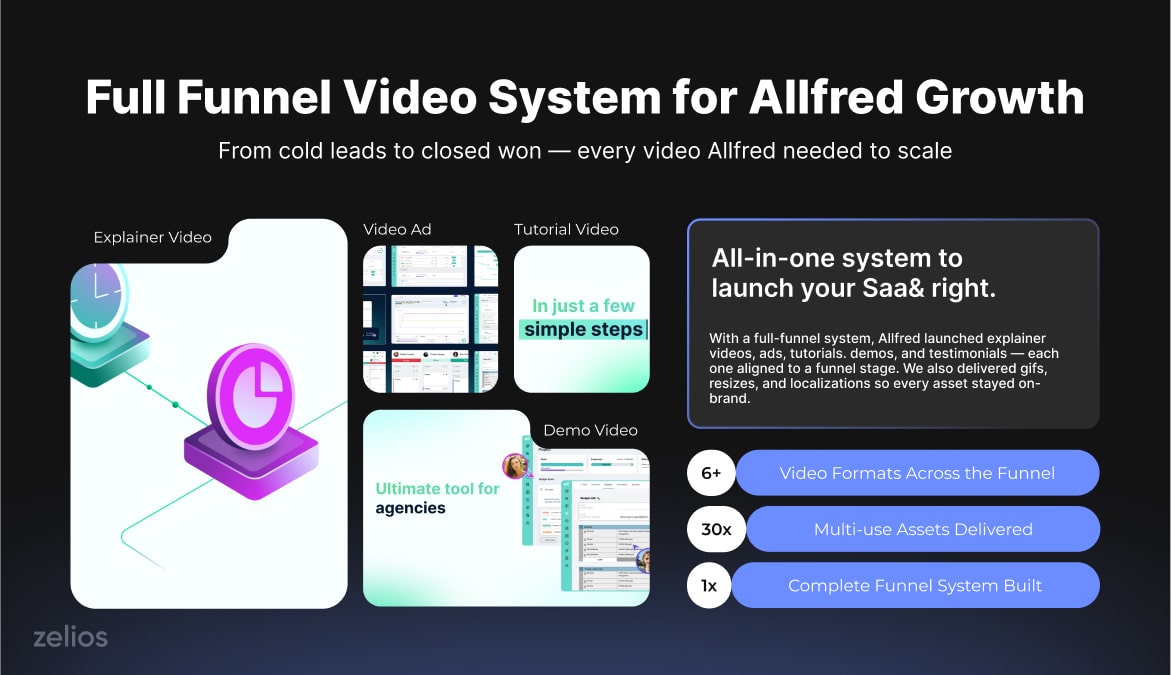
For Allfred, we built a 6-part video funnel, with 30+ different assets delivered.. That system helped them double CTR and scale faster—without needing to start from scratch every time a new video format was needed.
Step 3: Choose Your Quality Tier
There’s a real difference in the effectiveness of a more modest $2K animation, and say a strategic $15K asset.
Of course, there are many combinations and packages (that’s why we always offer to do a discovery call and build a custom solution) – all of which can either be done with the highest quality, with an efficient budget – or stand somewhere in between.
- Go for more expensive formats at the top of the funnel, while for later stages – more simplified formats can do the job just as well.
- If you are looking for the highest end, niche defining video – be prepared to pay a
- Remember: people associate your brand with the assets and your output – so putting out a lower quality set of assets might have negative consequences.
Tip: Example:
For Helio – we assisted with building an amazing hero video – a flagship for their marketing content.
Naturally, having spent a larger budget on the amazing video (which they are still using), but needing other content for additional reach – we’ve created derivative content.Reach out to us – and we will help you mix and match those different quality levels with your needs and budget in mind.
Step 4: Factor in Revisions, Formats & Usage
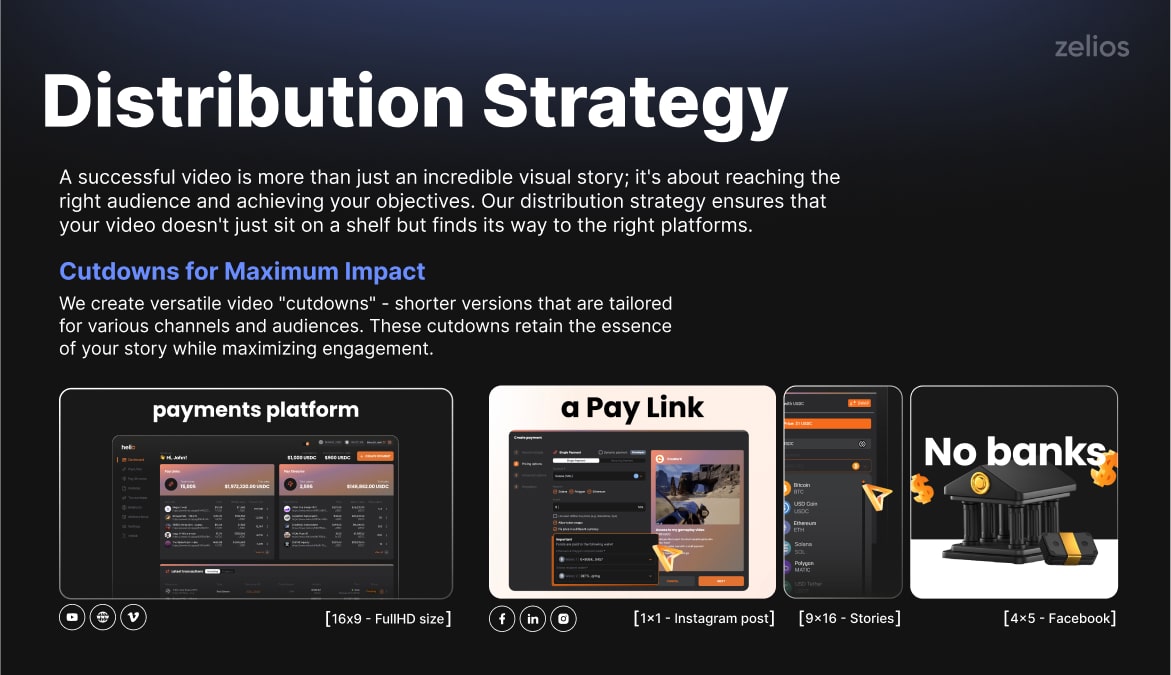
One of the most overlooked parts of coming up with a video marketing budget – is all of the extra assets, like clips, cutdowns, repurposed assets and localization.
Ask:
- The assets you create – will you need them in multiple aspect ratios? The main format is normally 16:9, with other formats like 9:16, 1:1 and 4:5 are available as extra services.
- Will you need GIFs for pitch decks, additional subtitles, or localization.
- How long are you looking for your assets to be supported? Normal practice is once the project is wrapped, that any extra revisions come at an additional cost.
Many agencies include an unlimited revisions upgrade, and also additional support for your content as you release it.
Tip: 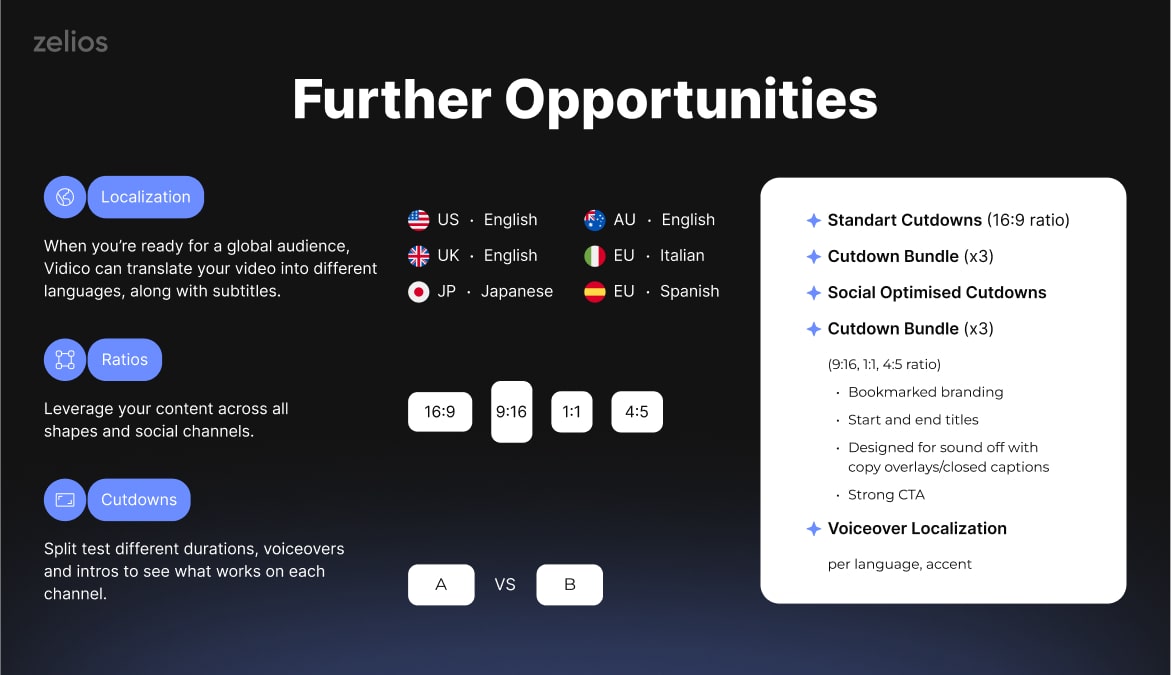
Step 5: Consider Lifetime Value, Not Just Cost
You shouldn’t treat your video content like one and done thing, that you will use for one week maximum. A strong explainer or custom product demo can last 12-24 months across ads, onboarding and outreach.
Tip: Example:
StoreTrack has received at least 12 direct clients from using the video and all additional assets. Those clients mentioned that because of how clear the video made the solution seem, it was easier to not put it away for later – and check out right away, which turned into a conversion.
Final Thought
Being budget conscious is understandable – but not making a decision to invest in increased conversion, better customer education and reach – is a detrimental decision that can cost companies leads and revenue.
And while this strategic decision is being delayed by some companies – tech giants are building hundreds of videos for their marketing engine.
If you need help with building yours – reach out to us at Zelios.