Between Tiktok, Instagram Reels, and Youtube shorts, people trust and feel engaged by short form video content.
The landscape has also shifted. AI animation tools have lowered production barriers, vertical-first formats now dominate mobile feeds, and interactive video elements have moved from being a novelty to being expected.
To help you keep up with these trends, here are eight top-tier animated video ideas. Let’s dive in.
1. Fun Fact Series
This format is underrated, and more brands should be using it.
By fun fact, we just mean a surprising stat or little-known truth about your industry accompanied by a visually engaging animation. Done well, these clips position your brand as an authority while giving viewers something genuinely interesting to share.
What makes this format effective:
- Animated infographics transform dry numbers into visual stories that actually register with viewers
- Short runtime (30-60 seconds) works perfectly for social feeds
- Low production lift once you establish a template
The strategy works well for various industries, but in particular educational and data-rich industries are perfect for it. Or, an industry where people don’t know too much about the production process, and there are neat things you can share.
2. App/UI Demos
Static screenshots don’t sell software. Dynamic content grabs the eye and gets people listening.
A good way to show off software is through an animated demo, especially showing off the UI and more visually dynamic elements of the software. While you can use a live screen recording, these tend to look a bit less visually appealing. You’ve got cursor fumbling, less dynamic movement, loading delays, and other issues with a live recording.
Why this format outperforms traditional walkthroughs:
- You control pacing and attention completely
- Brand consistency stays intact
- Complex workflows become digestible
For SaaS, fintech, or any software product, animated UI demos remain one of the highest-converting options.
3. “Versus” (Comparison) Videos
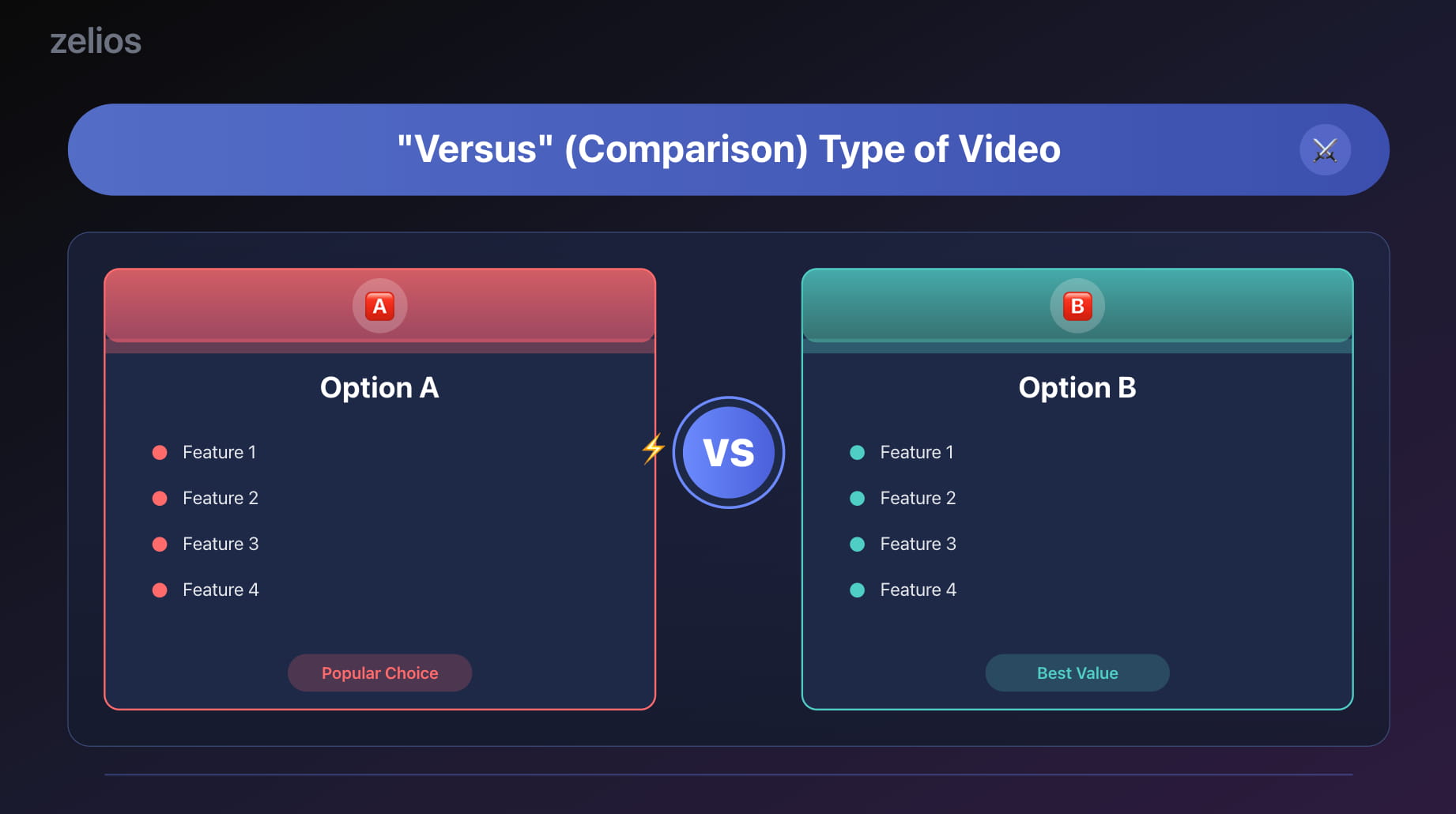
Another classic to try, “versus” videos have your product face off against a competitor, just like in old commercials. This is a natural way to show the strength of your product.
Animation makes this easy to control and visualize what it is that makes your product superior. It also lets you strip away distractions and focus on what matters in the comparison.
Why this format pulls its weight:
- Taps into how people already evaluate options
- Works for product comparisons, method breakdowns, or myth-busting content
- Performs well in paid campaigns where clarity drives conversions
Google research shows 78% of holiday shoppers who visit a store turned to search before going. Versus videos fit directly into that research phase.
4. Animated Case Study
Instead of comparing your product to another, showing a particular case study can also work well. Unfortunately, a lot of these come in the form of boring text blocks and pdfs.
What can make it better for the customer? An animation with the relevant data and insights highlighted on screen.
What to include in an animated case study:
- Starting point. Where was the client before working with you? Animate the frustration or limitation.
- Transition. What changed? This is where your product or service enters the story.
- The Results. Numbers in motion stick. A bar climbing from 12% to 47% hits harder than text on a page.
“Two minutes or less is perfect. The goal is to communicate credibility quickly, not to document every detail of a six-month engagement. ”
5. Product in Action
While another style that feels obvious, it’s actually done wrong fairly often. The most common problem is showing off features rather than results.
What people most want to see is that the product creates the outcome they want. The features are just a means to this. Short and focused stories that show a real scenario being solved is best.
What separates good from forgettable:
- Context matters. Don’t just show the feature. Show the situation where someone would need it.
- Keep it short. Fifteen to thirty seconds is often enough. If you need longer, you’re probably covering too much.
- Focus on the feeling. Animation lets you exaggerate the relief, speed, or satisfaction of using the product without being cheesy about it.
Don’t overthink it. Pick your strongest feature, put it in a relatable context, and let the animation handle the rest.
6. Data Visualization Splash
For infographic type videos, animation works wonderfully. However, you have to be careful to only use as much data as is necessary. This isn’t a research paper, but a visual highlight of what makes your product better than others.
How to approach it:
- Start with the takeaway. What’s the one thing you want viewers to remember? Build backward from there.
- Limit the data points. Three to five numbers maximum. More than that and you lose people.
- Make comparisons visual. If something is “3x larger,” show that scale difference through animation.
Data visualization takes advantage of how quickly we process visual information. Instead of asking viewers to read and interpret, you hand them the insight directly.
Select the video type that aligns with your marketing objectives, and receive an immediate high-level estimate of the production cost.
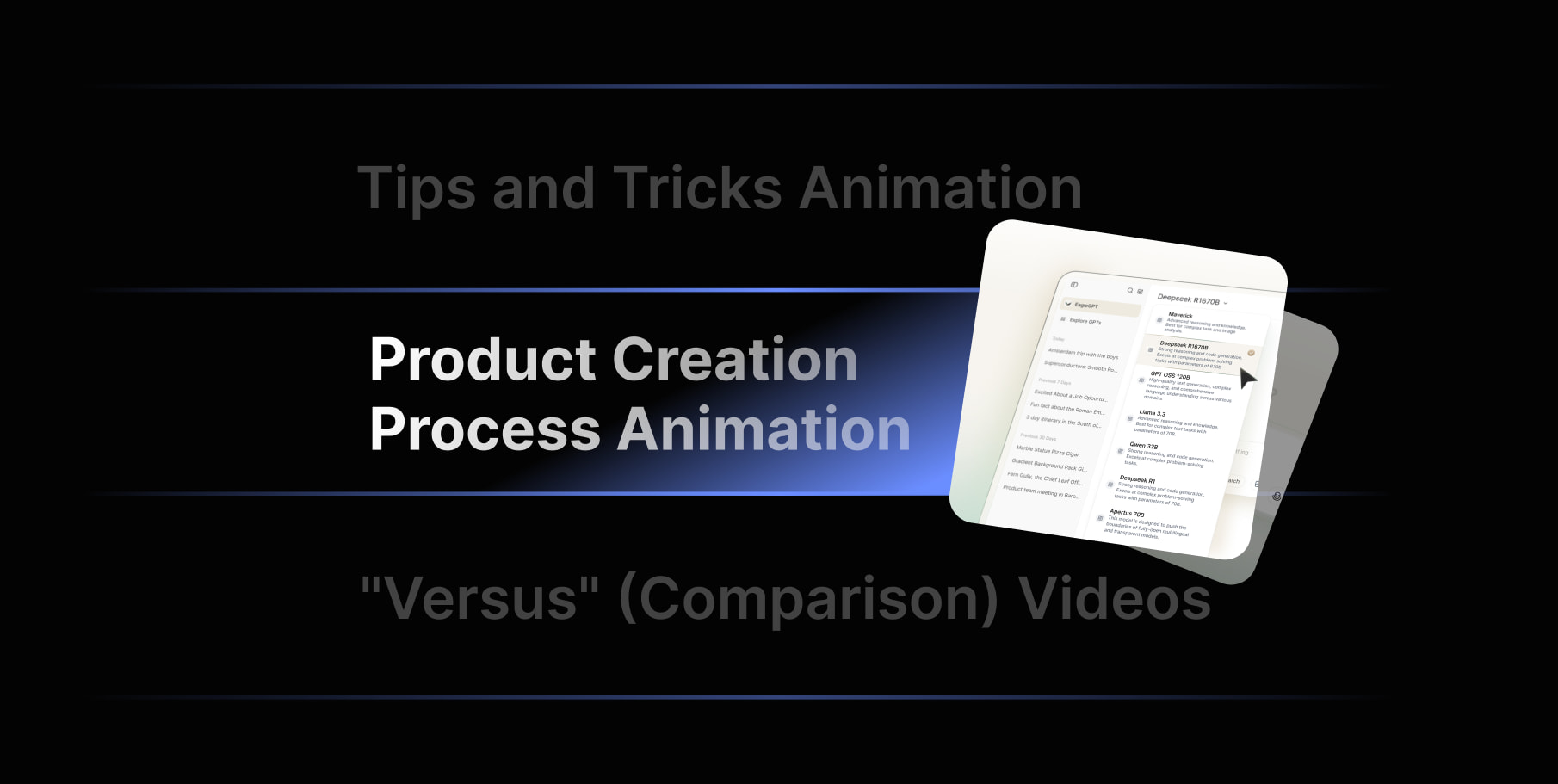
7. Product Creation Process Animation
You remember the show “How It’s Made”? Now, people get that kind of content all over Tiktok and Youtube. It’s addictive and informative! Plus, it can build brand trust by peeking behind the curtain, create a more emotional connection by seeing the workers behind the scenes, and differentiate a brand from their competitors.
What to include:
- Origin. Where do materials come from? What sparked the idea?
- Making It. Show key stages of production or development. Don’t cover every step, just the interesting ones.
- The Human Element. Even in animation, hint at the people behind the process.
This format works across industries. Food and beverage brands can show sourcing and preparation. Software companies can animate their development philosophy. Fashion labels can highlight ethical manufacturing.
8. Tips and Tricks Animation
Finally, a great choice to fall back on is the good old tips & tricks video. Essentially, a snack-sized format of delicious little tidbits of information about your product and how to use it.
For this format, it’s often good to just talk about the type of product, and not place your exact product front and center. People want information about the category, and don’t want to feel sold to.
How to get it right:
- Solve real problems. Generic advice gets ignored. Specific, actionable tips get saved.
- One tip per video. Resist the urge to pack in more.
- Brand it lightly. A logo at the end is enough. Heavy branding makes helpful content feel like an ad.
Why Animation Actually Works
As a wrap-up, let’s look over a few core advantages of animation over other video options:
- Control. Every frame communicates exactly what you intend. No bad lighting, no awkward takes, no distractions.
- Simplification. Complex ideas become clearer in animation.
- Flexibility. Animation isn’t bound by physical constraints. You can show scale, time, internal processes, and more, exactly as you’d like.
- Memorability. Distinctive visual styles stick in memory longer as they have a specific aesthetic.
The eight animated video ideas above work because they leverage these strengths. So, pick one format. Execute it well. Then expand from there.
Have a project in mind? Get started with Zelios! Our creative team would love to help you reach new heights.