This productivity platform uses video to entertain, educate, and, yes, occasionally, sell. But the order matters. Entertainment comes first. That’s what works.
Here’s how ClickUp approaches video marketing: where they show up, what they create, and what makes their strategy a success.
“ClickUp is one of the fastest-growing work management platforms, boasting over 22 million users across 400,000+ organizations.”
Where ClickUp Publishes Video Content
ClickUp isn’t betting on a single platform. They show up across multiple channels, but they’re intentional about where they post.
TikTok
Short, funny workplace sketches. Videos that joke about HR emails, project managers stuck in useless meetings, and the chaos of cross-functional teamwork. Nothing polished or corporate. Just content that makes their target audience feel seen.
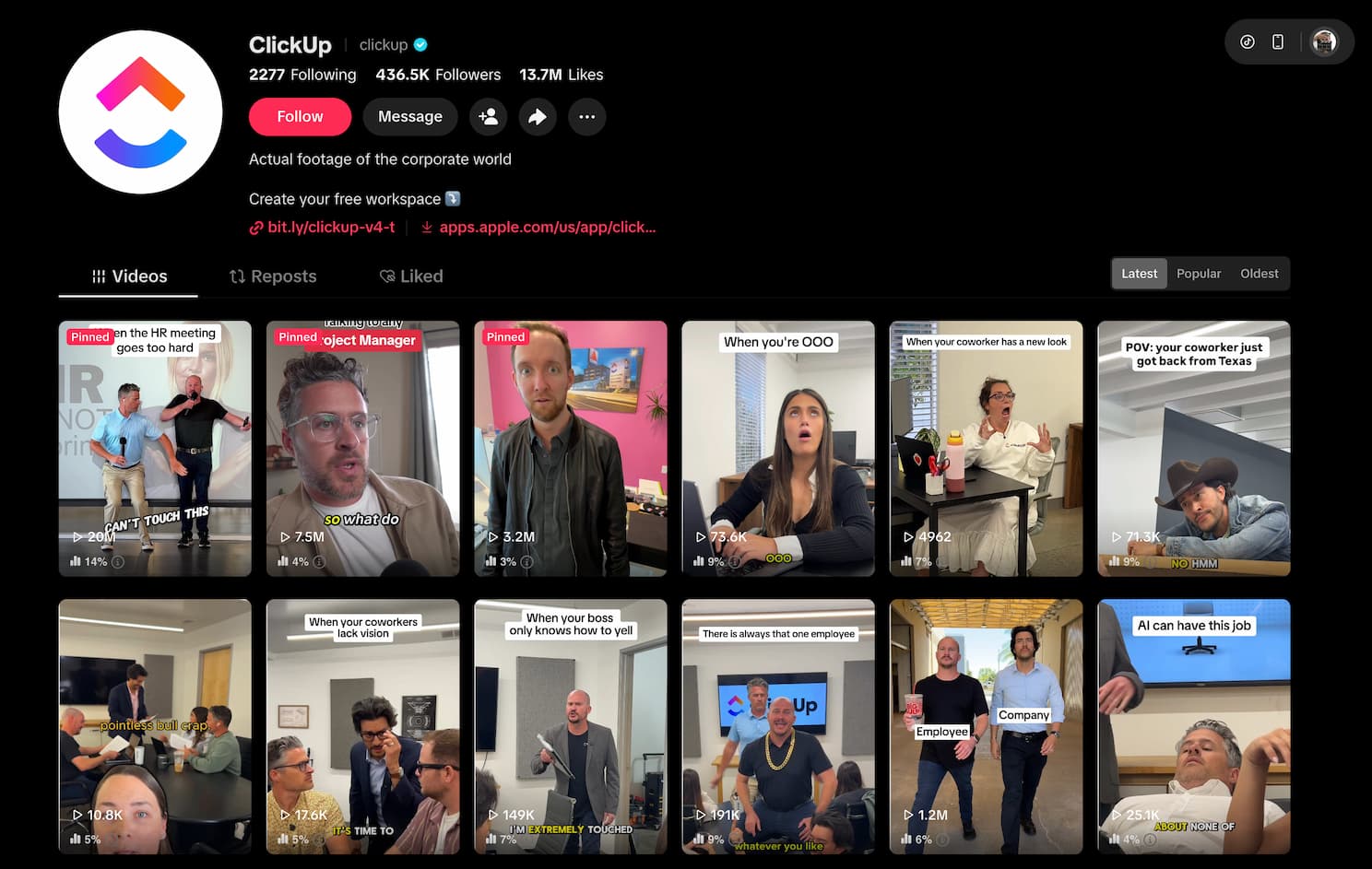
The results speak for themselves. A project manager’s video crossed nearly 20 million views. Almost none of it was paid. ClickUp’s TikTok presence is overwhelmingly organic, with investment in production and its creative team rather than ad spend.
While TikTok is where ClickUp builds awareness, LinkedIn is where they build credibility.
According to Chris Cunningham, ClickUp’s head of social marketing, LinkedIn is one of his two main social media platforms. The platform features product demos, how-tos, webinar clips, and feature walkthroughs.
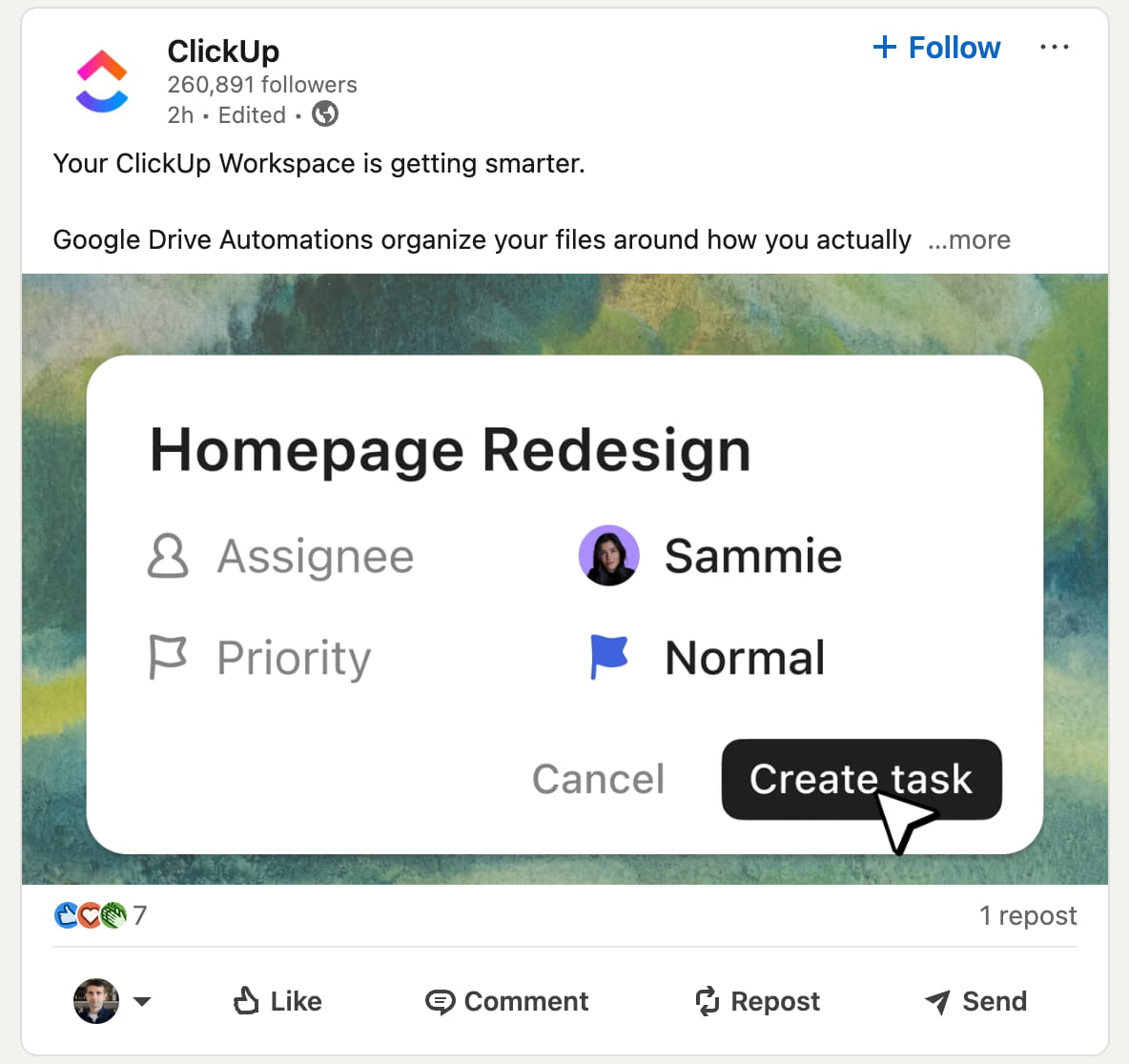
One of the best things ClickUp does on LinkedIn is engage its employees. Employees share what they’re working on. This gives the brand a face – several faces, actually – and that authenticity makes people pay attention.
YouTube
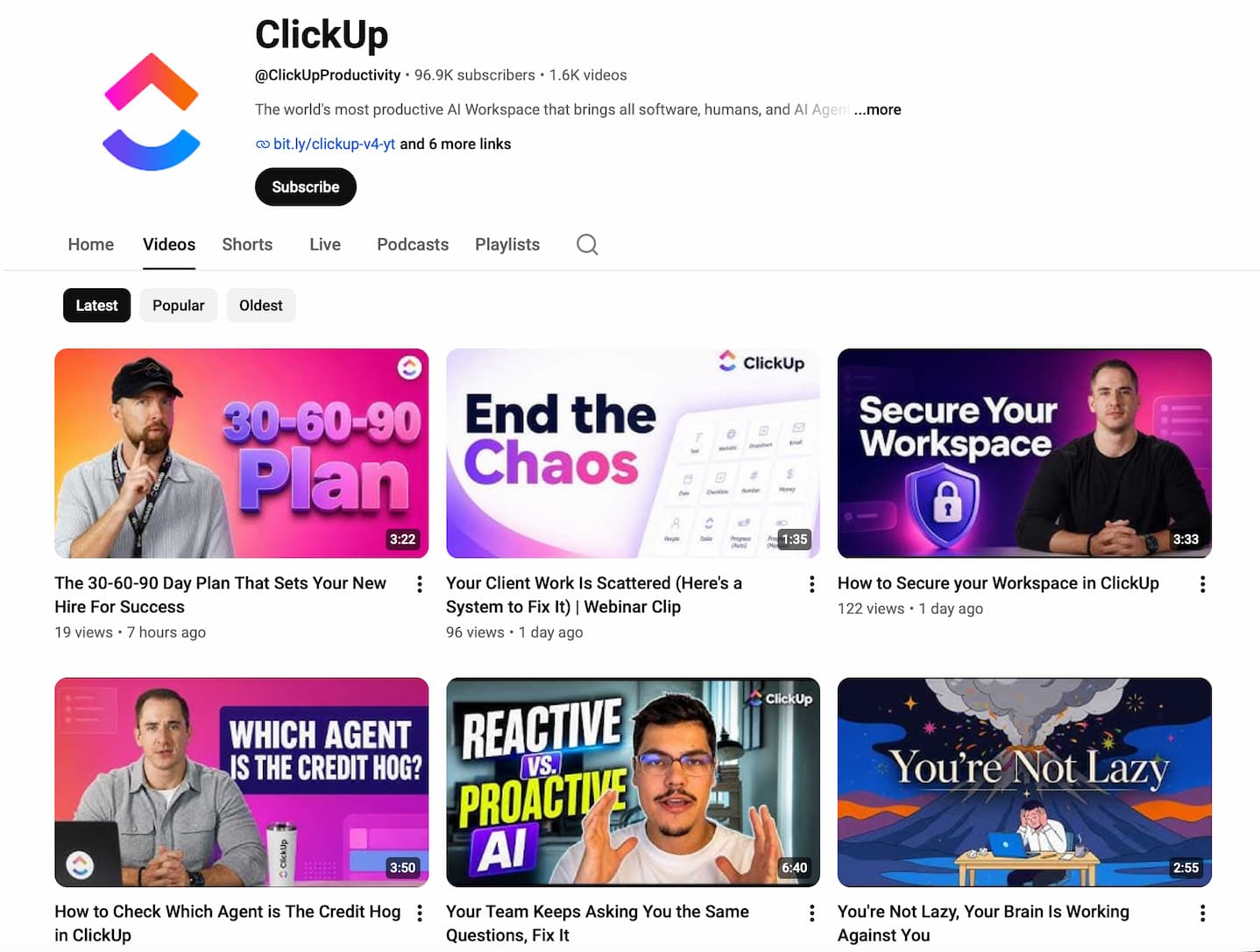
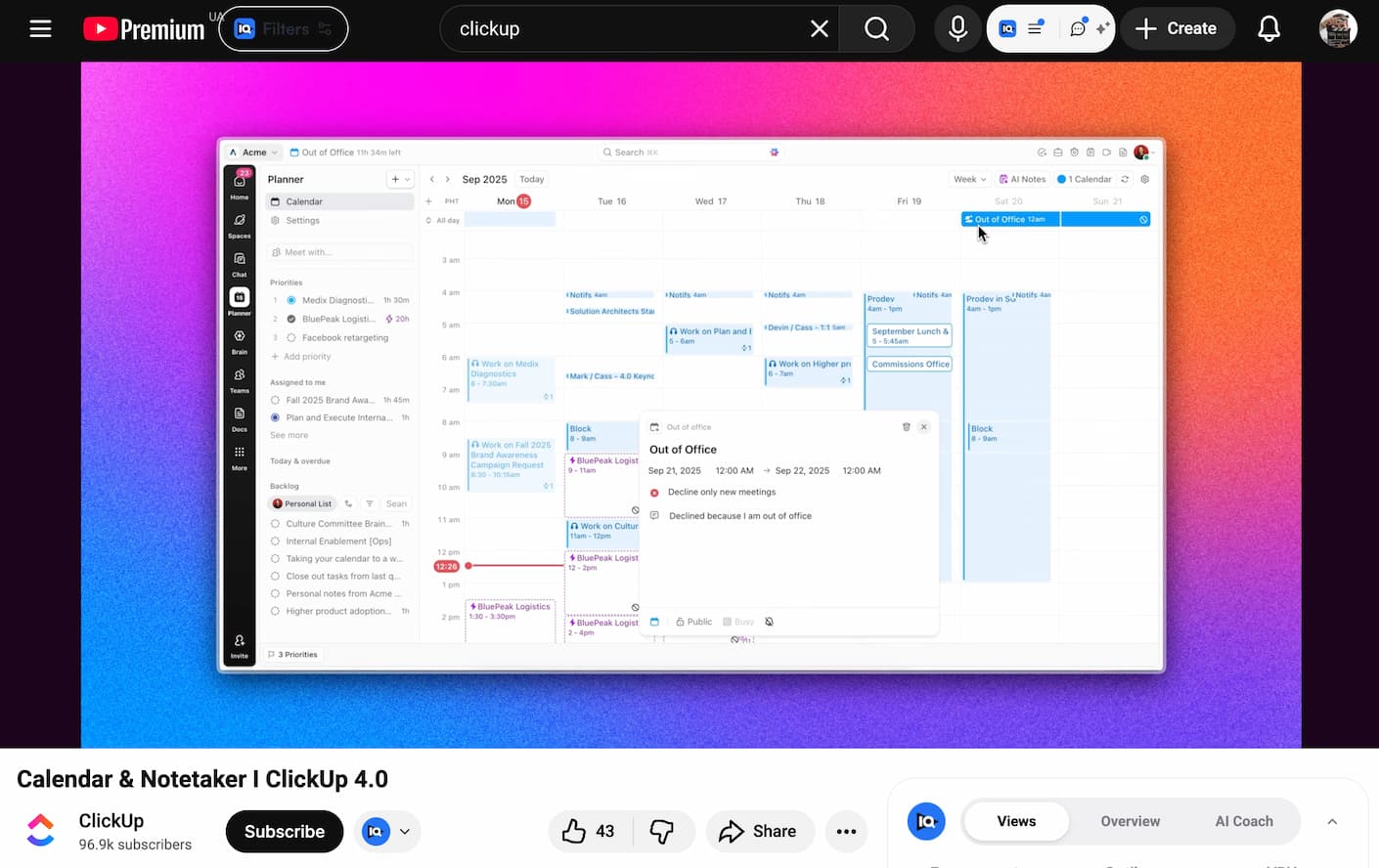
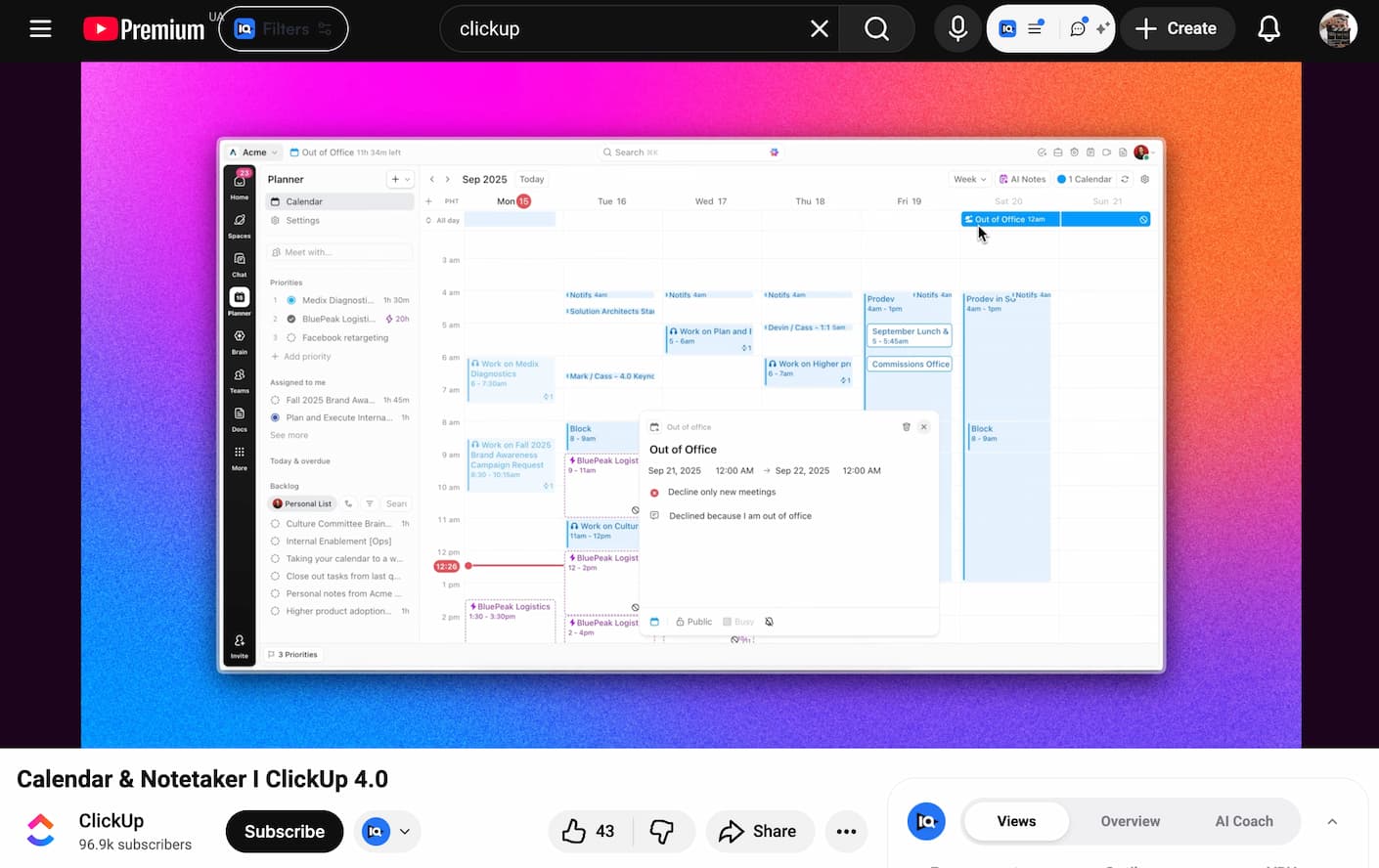
ClickUp’s official YouTube channel is its long-form home. It hosts tutorials, webinar recordings, product updates, and use-case walkthroughs for different industries.
The channel is also built into ClickUp’s onboarding experience. New users are pointed there, which means YouTube isn’t just a marketing channel; it’s part of how ClickUp helps people get value from the product faster.
Instagram and Facebook
ClickUp mainly uses Instagram Reels and Facebook as distribution channels. Most short-form TikTok content is posted on these platforms. It’s a repurposing trick that requires less effort.
When TikTok’s future looked uncertain in 2025, ClickUp focused on Instagram, Facebook, and LinkedIn. The best content strategy doesn’t depend on one platform.
X (Twitter)
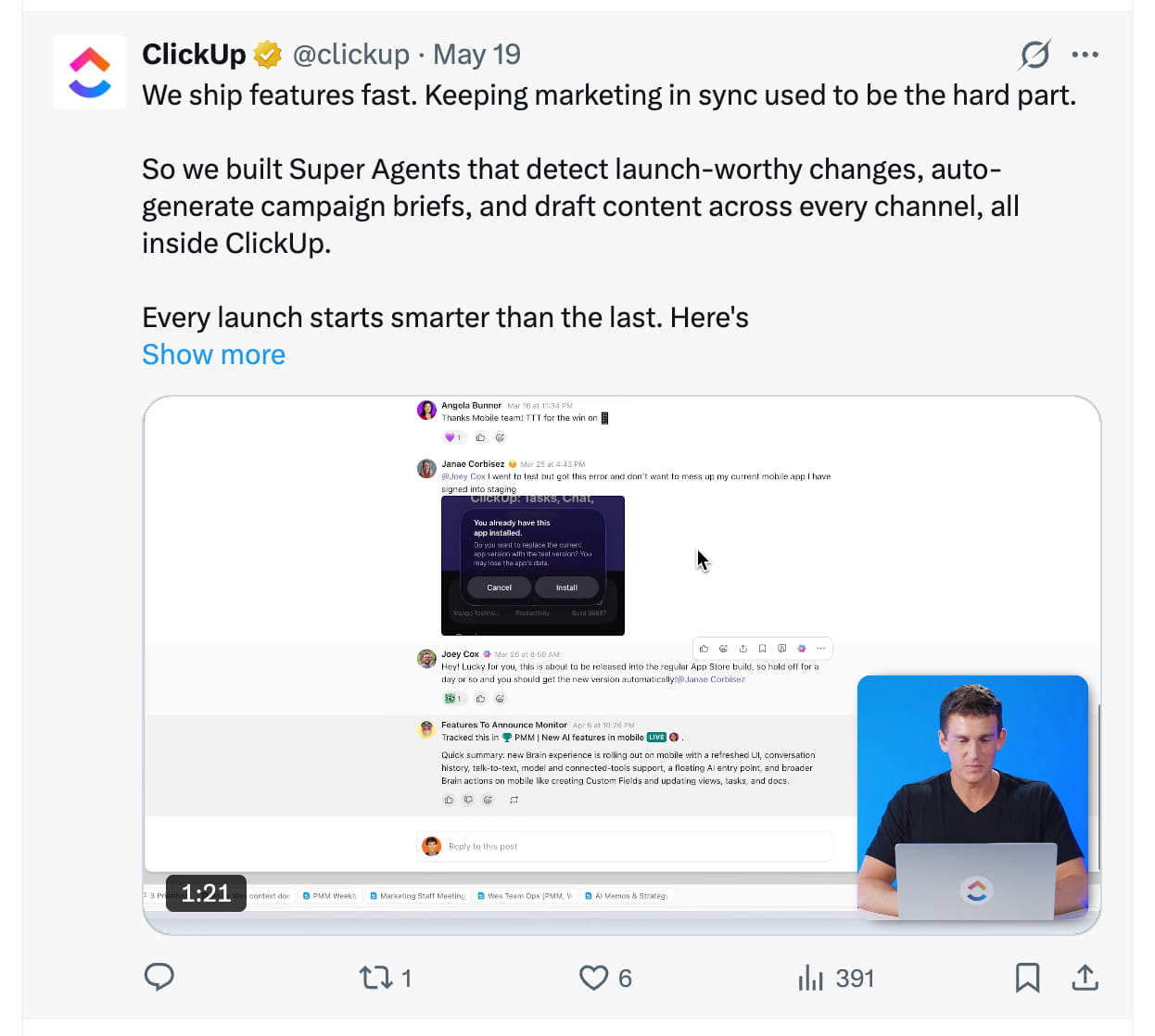
ClickUp stays active on X for real-time engagement. Updates, reposts from Chris Cunningham and CEO Zeb Evans, and conversations with their community all live here. It’s less of a video-first channel for them, but it plays a role in keeping the brand visible and responsive.
On ClickUp’s X page, you’ll find posts about conferences the team attended, reposts from Chris Cunningham and Zeb Evans, and shares of webinars, podcasts, and marketing events. It reads less like a brand account and more like a well-curated feed run by people who actually care about what they’re putting out.
X is also where ClickUp clips and reposts short videos, product highlights, behind-the-scenes moments, and clips from podcast appearances, like the Ahrefs podcast, where Chris Cunningham laid out their full social playbook. These clips extend the life of longer content and bring new audiences into the fold.
What Makes ClickUp’s Video Strategy Work
ClickUp creates a video strategy that markets your products and takes your business to success. Here’s how it works:
They Lead with Entertainment, Not Promotion
The practical result of that mindset: out of roughly 10 videos per week, only one or two are direct product ads. The rest is content that their audience genuinely wants to watch. Most B2B companies flip that ratio. ClickUp doesn’t.
Content Gets Repurposed, Not Recreated
ClickUp doesn’t create content from scratch for every platform. A longer YouTube tutorial can be cut into a TikTok. A viral short-form video gets reposted to Reels and Facebook. The core idea stays the same; the packaging changes to fit the platform.
Top-performing organic content gets amplified with paid spend, which tends to convert better than ads created purely for promotion.
Viral Content Connects to Real Business Outcomes
Here’s something most people miss: ClickUp’s funny videos aren’t just brand plays. They move deals.
When an HR-themed video went viral, a client in Singapore mentioned it during a sales conversation. The ClickUp team created custom follow-up content, and the deal closed within days.
Awareness became a pipeline. That’s not a coincidence; it’s what happens when you build content that people actually remember.
The “Rule of Three” Keeps Content Focused
Cunningham runs his content team with a simple filter: every post should deliver clarity, value, or emotion. Pick one. Do it well.
It’s a useful discipline. It stops the team from making content that ends up doing nothing. Instead focuses on providing real value.
Does ClickUp Use Video on its website?
Absolutely, and it’s woven throughout the experience. Check these out to know Clickup’s use of videos on its website:
- On-demand demos live at On-demand-demo. Visitors can jump in at their level of experience and watch guided walkthroughs of the platform.
- The video library is a comprehensive resource of tutorials contributed by the ClickUp team, community creators, and third-party educators. Use cases covered include marketing, software development, CRM, construction project management, remote work, and more. There are even tutorials in Spanish.
- ClickUp University, accessible through the onboarding hub, offers structured video courses with certificates for guests, members, and admins. It’s how ClickUp turns new sign-ups into confident users.
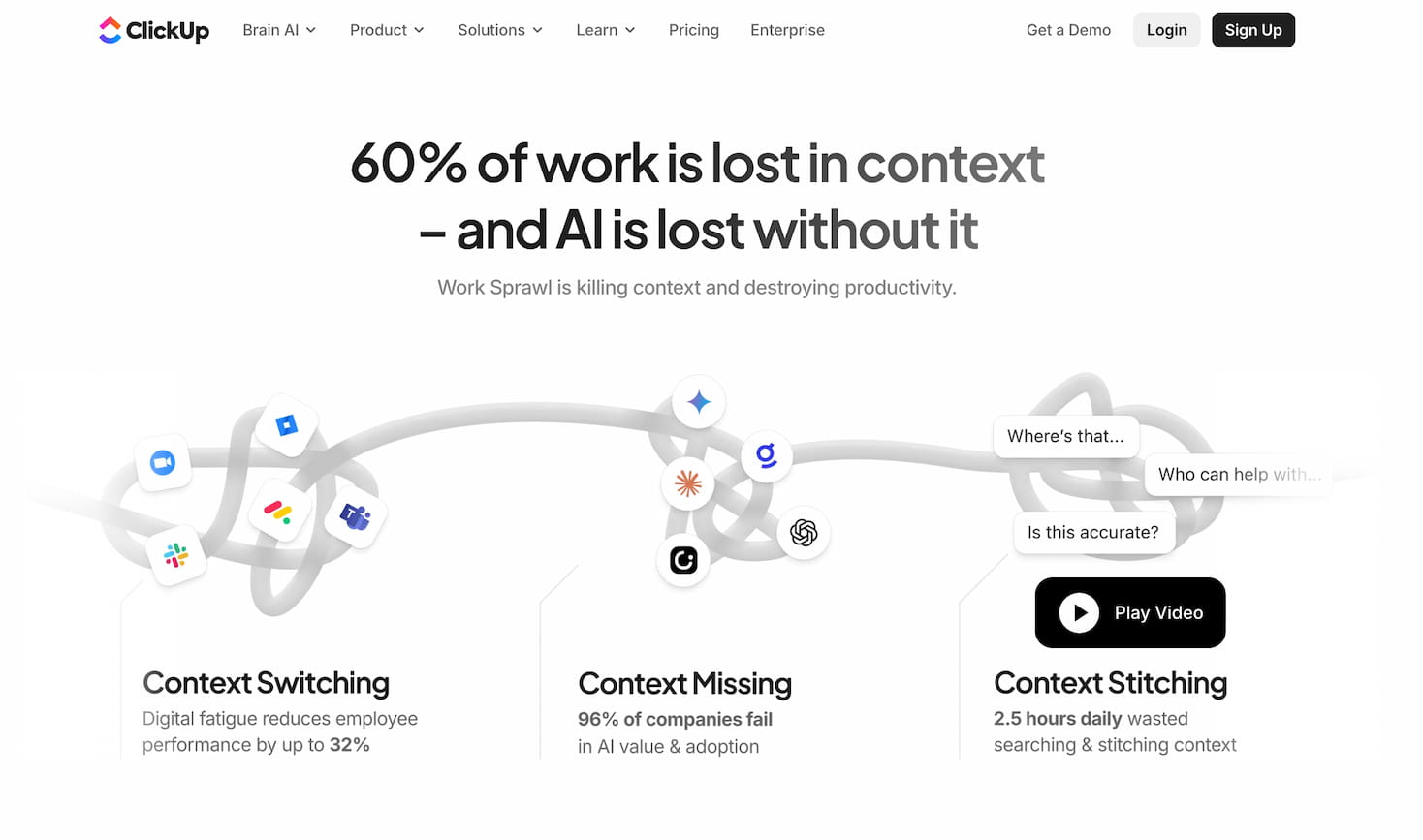
- Product pages and landing pages feature embedded video demos, often with team members and leadership walking through specific features.
- ClickUp promotes its own tool, ClickUp Clips, a built-in screen recording feature that lets users create walkthroughs, product demos, and team updates directly inside the app. It’s a smart touch: the company uses its own product to demonstrate that it works.
What Types of Videos Does ClickUp Create?
Here are the types of videos Clickup creates:
Short-Form Comedy Sketches
These are ClickUp’s signature. They run 15 to 60 seconds, feature recurring characters Luke and Adam, and poke fun at workplace moments, the passive HR email, the meeting that should have been a Slack message, and the creative team dragging a reluctant colleague in front of a camera.
The videos rarely mention ClickUp directly. That’s intentional. They’re not trying to explain the product; they’re trying to become part of how their audience thinks about work.
Worth watching: ClickUp’s viral project manager TikTok — 7.5M views
Tutorials and How-To Videos
Longer and product-focused, these live mainly on YouTube and the website. They walk users through features like automations, custom fields, dashboards, and views. Both ClickUp staff and community creators contribute, which keeps the library diverse and authentic.
Example from the video library: “Learn why Jessica switched from Trello and watch her tutorial on how to use ClickUp“
Webinars
ClickUp runs live and on-demand webinars covering use cases for specific teams: marketers, developers, sales teams, construction managers, financial services professionals, and more.
These typically run 45 to 60 minutes and are recorded and published on YouTube after the live event.
Product Demo Videos
These are more narrative-driven. One well-known example shows a fictional team trying to launch a product in a single week. The video walks through how ClickUp’s AI tools help designers, engineers, and marketers move faster and ends with a direct link to the feature shown.
It’s storytelling that drives adoption. Prospects who are close to a buying decision find these especially useful because they can see themselves in the scenario.
Brand and Culture Videos
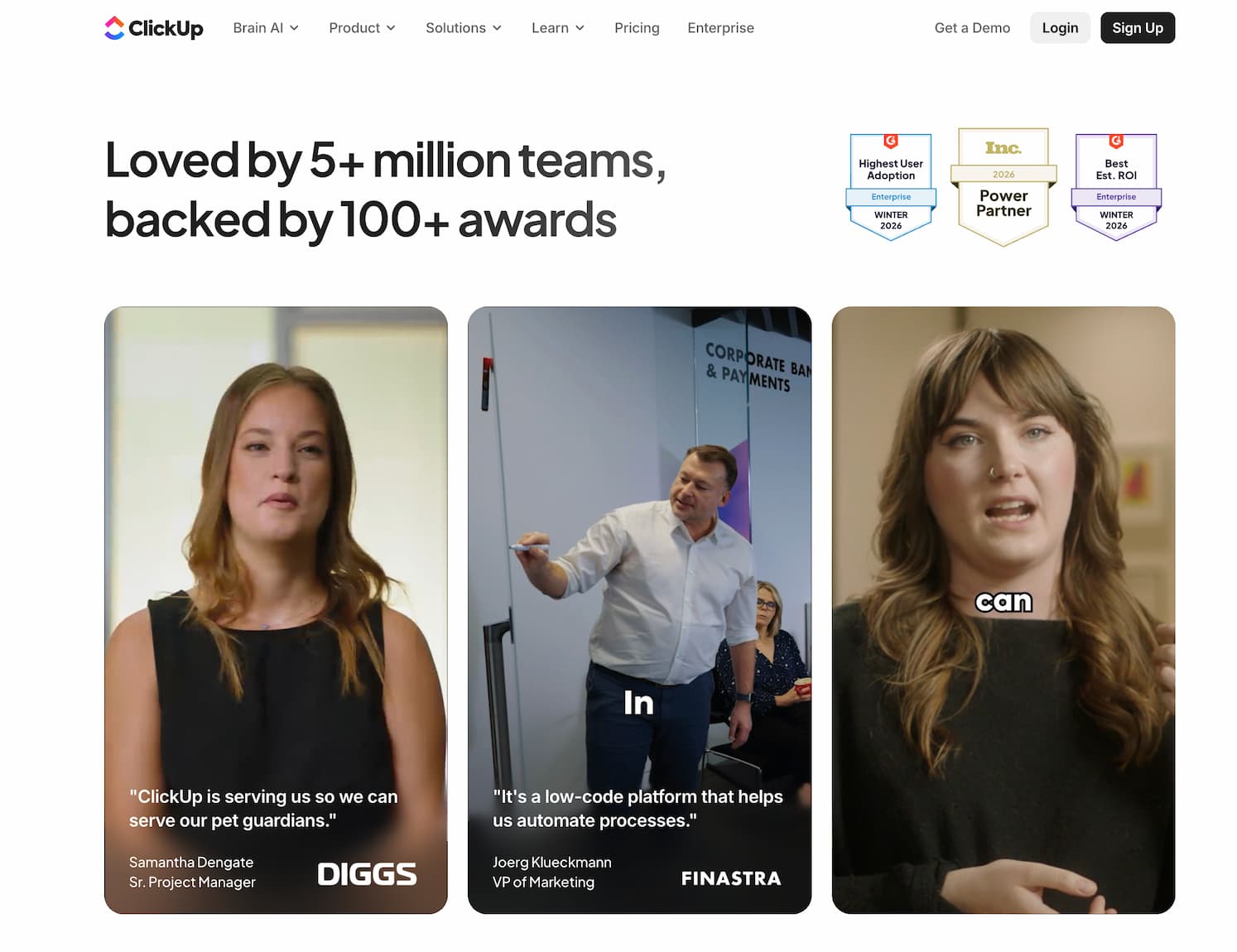
ClickUp has also made shorter brand videos, a CEO mission statement from founder Zeb Evans, a street interview in San Diego testing locals’ knowledge of the brand, a behind-the-scenes look at the San Diego Padres using ClickUp, and a culture video about why the company calls San Diego home.
YouTube Shorts
ClickUp uses Shorts to capture algorithm-driven discovery traffic and repurpose quick-hit content. They work well for feature highlights and trending workplace topics.
ClickUp’s Video Marketing Approach: The Big Picture
Pull back and look at what ClickUp has actually built, and a clear philosophy emerges.
They treat video like a media company would, not like a software company. They think in shows, not campaigns. Their content has recurring characters, a consistent tone, and a weekly production rhythm. They also measure success not just in views, but in brand recall and pipeline.
The numbers back it up. ClickUp currently generates over 200 million organic impressions per month across platforms, driven by a five-person creative team, a Monday morning writers’ room, and a willingness to make content that feels nothing like a B2B ad.
A few things brands take from their playbook:
- Know your audience. ClickUp’s videos reach a million views because they understand what a project manager’s afternoon feels like.
- Consistency. Ten videos a week. Not ten perfect videos once a quarter.
- Let organic content lead, use paid to amplify. Don’t spend money pushing content that hasn’t already proven it resonates.
- Put real people on camera. Employees, founders, and recurring talent faces build trust in a way that branded graphics never will.
- Make the website a video destination. The on-demand demo, the video library, and ClickUp University live throughout their product experience, not just on social.
The biggest takeaway, though, is simple. ClickUp didn’t succeed with video because it had a massive budget or a famous brand. They succeeded because they made content their audience actually wanted to watch. That’s a strategy any company can start with.
Conclusion
ClickUp’s video marketing strategy is proof that you don’t need a massive budget to build a brand people actually care about. What you need is a clear point of view, a team that understands its audience deeply, and the discipline to show up consistently, even when the results feel slow.
What makes ClickUp’s approach genuinely different is that they never lost sight of who they’re making content for. When they’re ready to buy, you’re the first name that comes to mind. That’s the real power of their video marketing strategy.
We take a strategic approach to support your specific needs to produce compelling videos. Contact us to find out more and get a quote!
Select the video type that aligns with your marketing objectives, and receive an immediate high-level estimate of the production cost.