


A Marketing Qualified Lead is a client-to-be, a potential customer who shows a strong intent of buying a service or product. It is a prospect who usually passes through the marketing funnel and is ready to be handed over to the sales teams for a successful conversion.
What is a Qualified Lead in Marketing?
In marketing, an MQL is a lead that moves beyond the awareness and consideration stages of the marketing funnel, through different marketing tools and techniques. This successful lead is likely to make a purchase decision and holds a huge value for the sales team.
The marketing and sales teams must be properly aligned to cater an MQL with delicate care to ensure that both teams follow a unified approach. The sales teams must know exactly when to pitch and how to engage with a Marketing Qualified Lead based on their marketing activity.
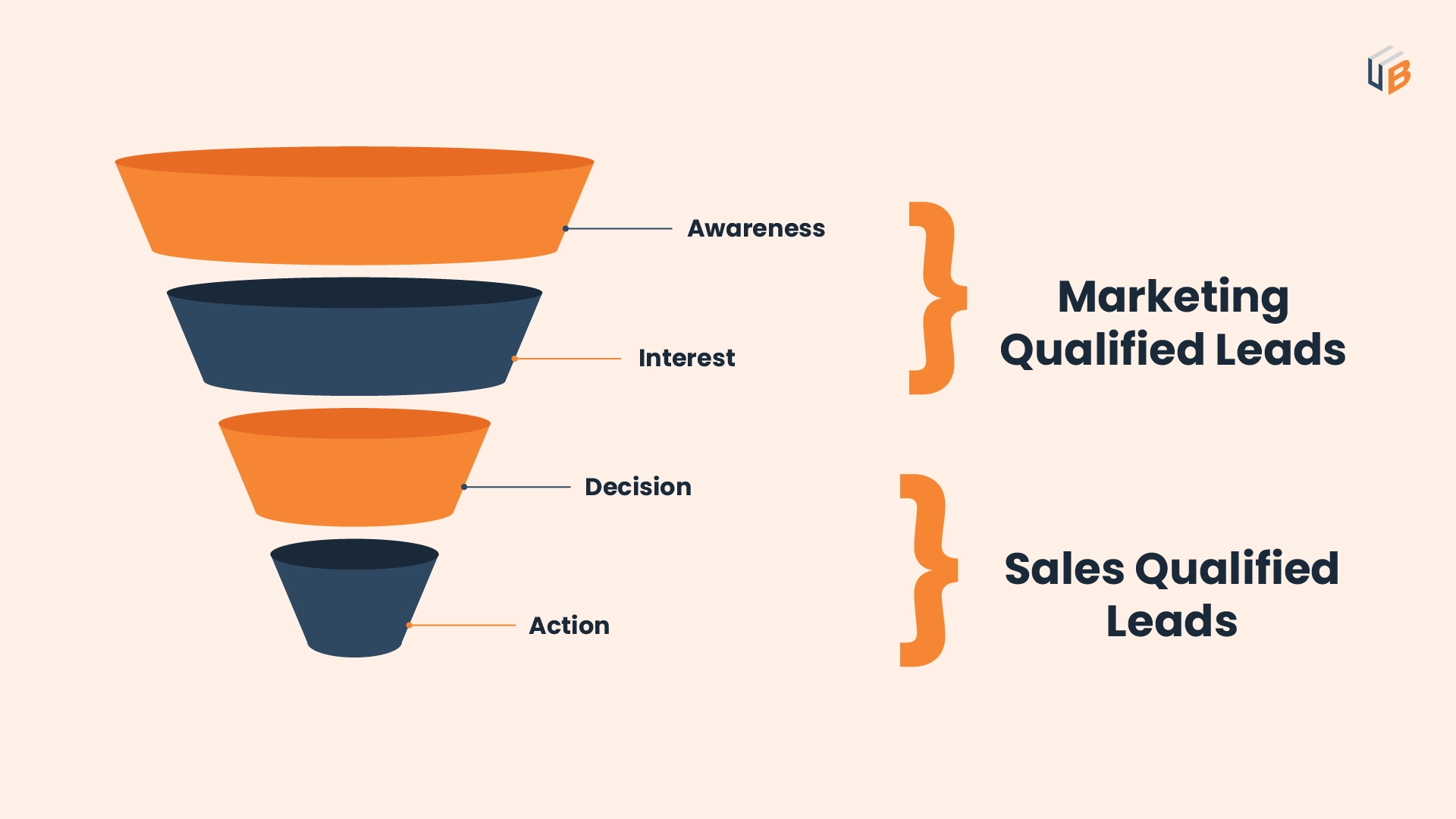
MQL vs SQL: What’s the Difference?
One of the most common points of confusion in B2B marketing is the distinction between a Marketing Qualified Lead (MQL) and a Sales Qualified Lead (SQL).
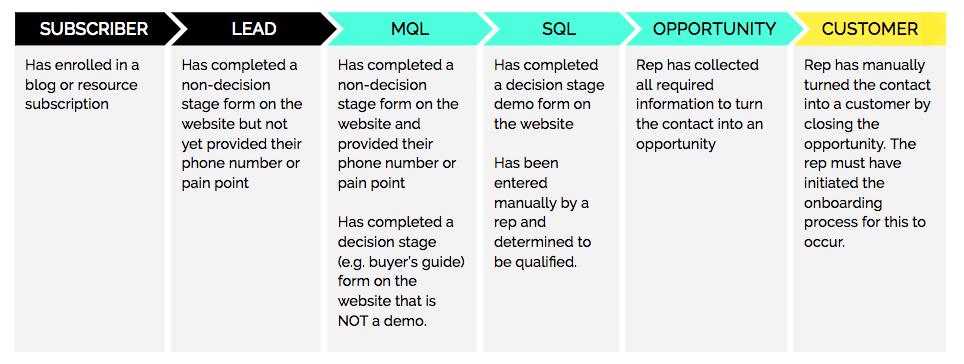
An MQL is evaluated and owned by the marketing team. The prospect has shown meaningful engagement with marketing content — visiting pricing pages, downloading resources, attending a webinar — but has not yet been directly vetted by a sales representative.
An SQL, by contrast, is a lead that the sales team has reviewed, contacted, and confirmed as a genuine purchase opportunity. The sales rep has usually had a discovery call or direct exchange and determined that the prospect has the budget, authority, need, and timeline (BANT) to buy.
The simplest way to think about it: an MQL is marketing’s endorsement that a lead is worth a sales conversation. An SQL is sales’ confirmation that the conversation is worth pursuing.
| MQL | SQL | |
|---|---|---|
| Owned by | Marketing team | Sales team |
| Qualification method | Lead scoring, behavior tracking | Direct sales review (BANT, discovery call) |
| Funnel stage | Middle of funnel | Bottom of funnel |
| Next step | Handed off to sales | Moved to proposal / demo |
Marketing Qualified Lead Example
A visitor clicks on a promotional ad on Instagram, views through the product catalog, and adds items to the cart but doesn’t buy them. This is exactly the type of behavior that flags a customer as a Marketing Qualified Lead.
Different marketing teams use various methods to score these behaviors. A customer is flagged as an MQL once they hit the score set by the marketing team, based on their specific actions and demographics.
Here are some of the examples of actions that indicate a lead as an MQL when a prospect:
- Sign up for the free-trial.
- Watch a walkthrough guide from an email link.
- Fill out a “request a quote” form.
- Add multiple products to a cart with no checkout.
- Visit the price plans several times in a week.
- Seek out more information about the features and specifications.
How Video Content Helps Qualify Marketing Leads
When a prospect watches a product demo video, a walkthrough, or an explainer, they are doing something qualitatively different from skimming a blog post. They are allocating focused time and attention to understand how a solution works. That level of engagement strongly correlates with purchase intent.
From an MQL standpoint, video interactions give marketing teams several trackable data points that text content cannot:
- Completion rate — Did the prospect watch 30% or 95% of the video? A full watch of a five-minute product demo is a very different signal than a partial view.
- Replay behavior — Rewatching a specific section (pricing, features, integrations) indicates the prospect is evaluating specific details, not just browsing.
- Video-to-form correlation — Prospects who watch a demo and then fill out a contact form within the same session are among the highest-converting MQL patterns across B2B marketing teams.
For companies that produce explainer videos, walkthrough guides, or product demos, embedding these assets across key landing pages and email sequences creates a richer behavioral data stream — one that makes MQL scoring significantly more precise.
Select the video type that aligns with your marketing objectives, and receive an immediate high-level estimate of the production cost.
