
Salesforce is a B2B software seller, a global leader in CRM. But one things that makes them stand out is their big, dynamic marketing. They host big-event broadcasts, product demos, customer stories, and a flood of short clips across their social media.
This video ecosystem is what establishes trust and engagement in the current media age. Video has surpassed audio, text, and images as the strongest source of engagement on the internet.
What platforms does Salesforce use to publish videos?
Salesforce uses a mixed approach, uploading videos onto a network of channels they own and control, but also all over social media with the goal of connection and sharing. Let’s start with their platforms first.
Owned platforms
This is where they have high-intent viewers, so they can be more focused on explanation, education, and being helpful rather than attention grabbing.
- Salesforce.com: product pages, demo landing pages, and industry pages all use extensive video to convey information.
- Salesforce+: Salesforce’s streaming hub for live events and on-demand programming. Live video grabs attention and engagement through the shared experience of watching and the ability to interact. A powerful tool.
- Salesforce Resource Center: for even more specialized and archived content, they keep a resource center which grounds trust and helps with customer service.
Social platforms
More than their media-first approach to their main platforms, it’s their social media outreach that grabs new customers and continues engagement with lapsed ones.
- YouTube for long-form demos, explainers, keynotes, playlists
- LinkedIn for B2B-native distribution: product updates, event promos, leadership content
- Instagram for short-form, culture and brand moments, and event promos
- X for clips and updates, especially around events and product news
Is video content used on the Salesforce website?
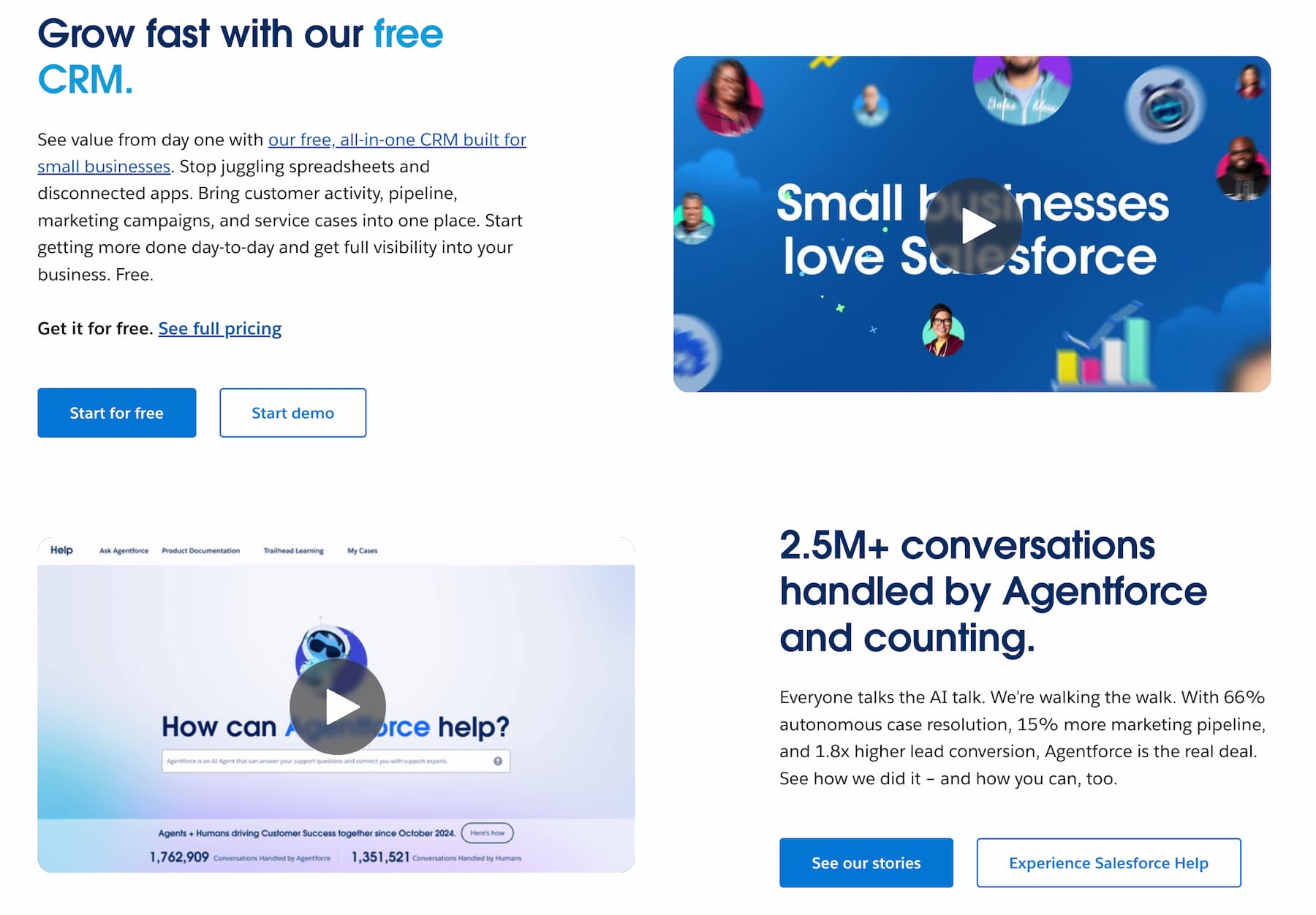
Yes, they have a highly media-first approach. On their website, their videos tend to be directly connected with a product call-to-action.
One of their most common forms of video is a product demo, where Salesforce explains benefits in text, then drives to a form and a “watch now” leading to the call-to-action.
Here’s one example from Financial Services Cloud that’s explicitly framed as a demo experience with a signup flow.
Another common video type is a customer story roundup, where they highlight the success of multiple brands using their products in their actual business.
Finally, they also host show-style content hubs on their sites, like the “Legends of Low Code” series, to provide continuing, exciting content for customers to engage with.
Key features of Salesforce’s video strategy by platform
Salesforce.com
Uses a ‘Video->next step” strategy. The video provides demonstration and proof of concept, sometimes customer use cases. Then, there’s a call-to-action on how to get started with it yourself.
This is the ‘closing the deal’ part of the content funnel, where mid-to-bottom funnel visitors who already know they have a CRM/data/AI problem and want to see how the product behaves and get more assurance this is the right product for them.
Salesforce+
This is the ‘in-between’ interface that brings people from social media toward the website and products, while still focused on providing quality content and grabbing attention.
Here Salesforce hosts:
- Its Dreamforce and other live events
- A wide series of original programming
- And other miscellaneous content
By having a broad range of offerings tailored to different niches, their strategy is to provide value to different industries, roles, and topics, cross-pollenating how potential customers come into their products and services.
YouTube
Youtube is the ‘longest-form’ of the major social media platforms, allowing for a full range of interesting content. However, that’s not to say it isn’t an attention game – you still have to hook people with catchy thumbnails and titles.
But, the longer form allows for a front-facing archive and depository of useful videos that can have a long-tail of customers coming in over time through them.
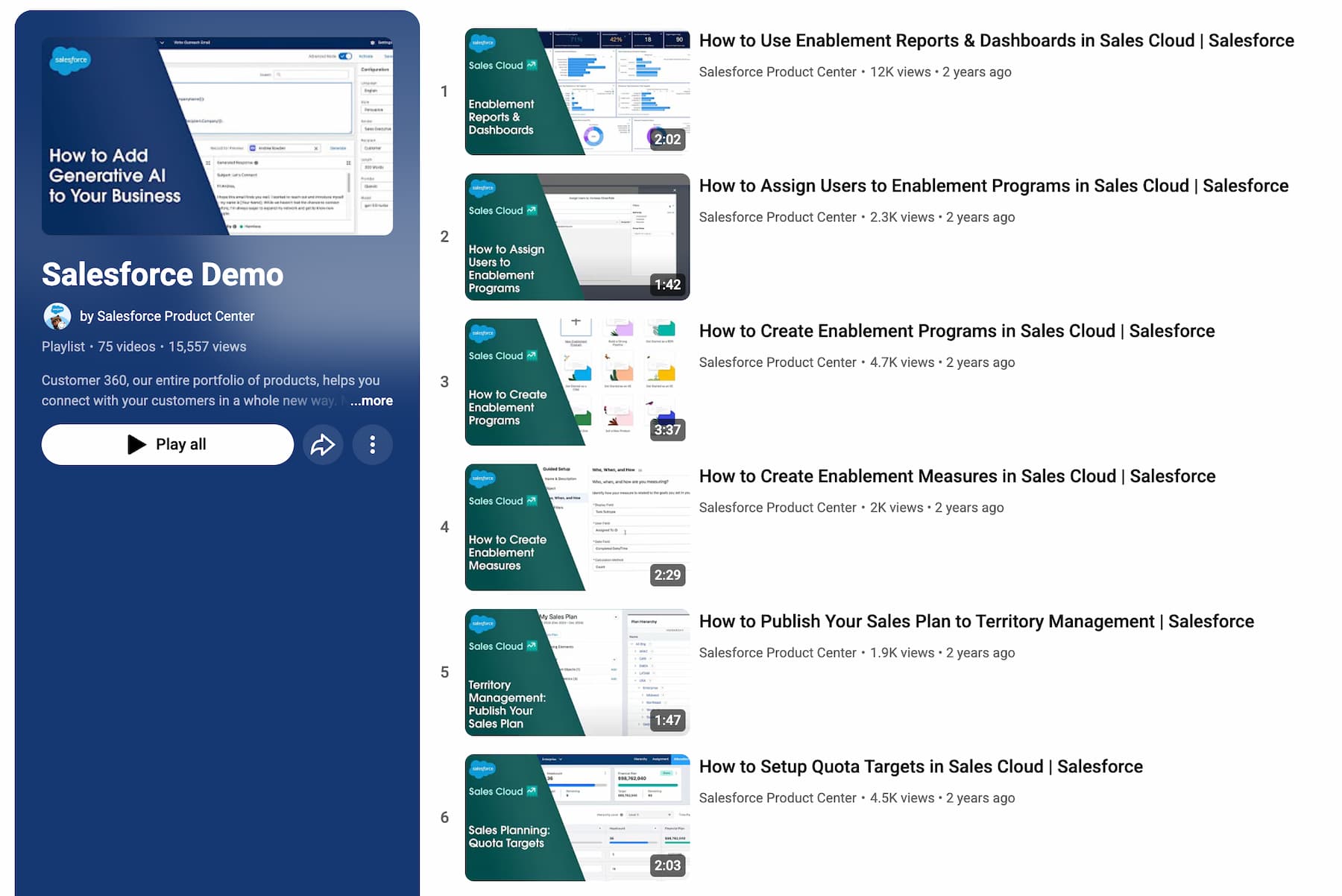
Salesforce’s YouTube use broadly covers:
- Big tentpoles (Dreamforce keynotes, industry keynotes).
- Evergreen explainers (“what is Salesforce?”, “Customer 360,” etc.).
- Playlists for all the content of one type (like the “Salesforce Demo” playlist).
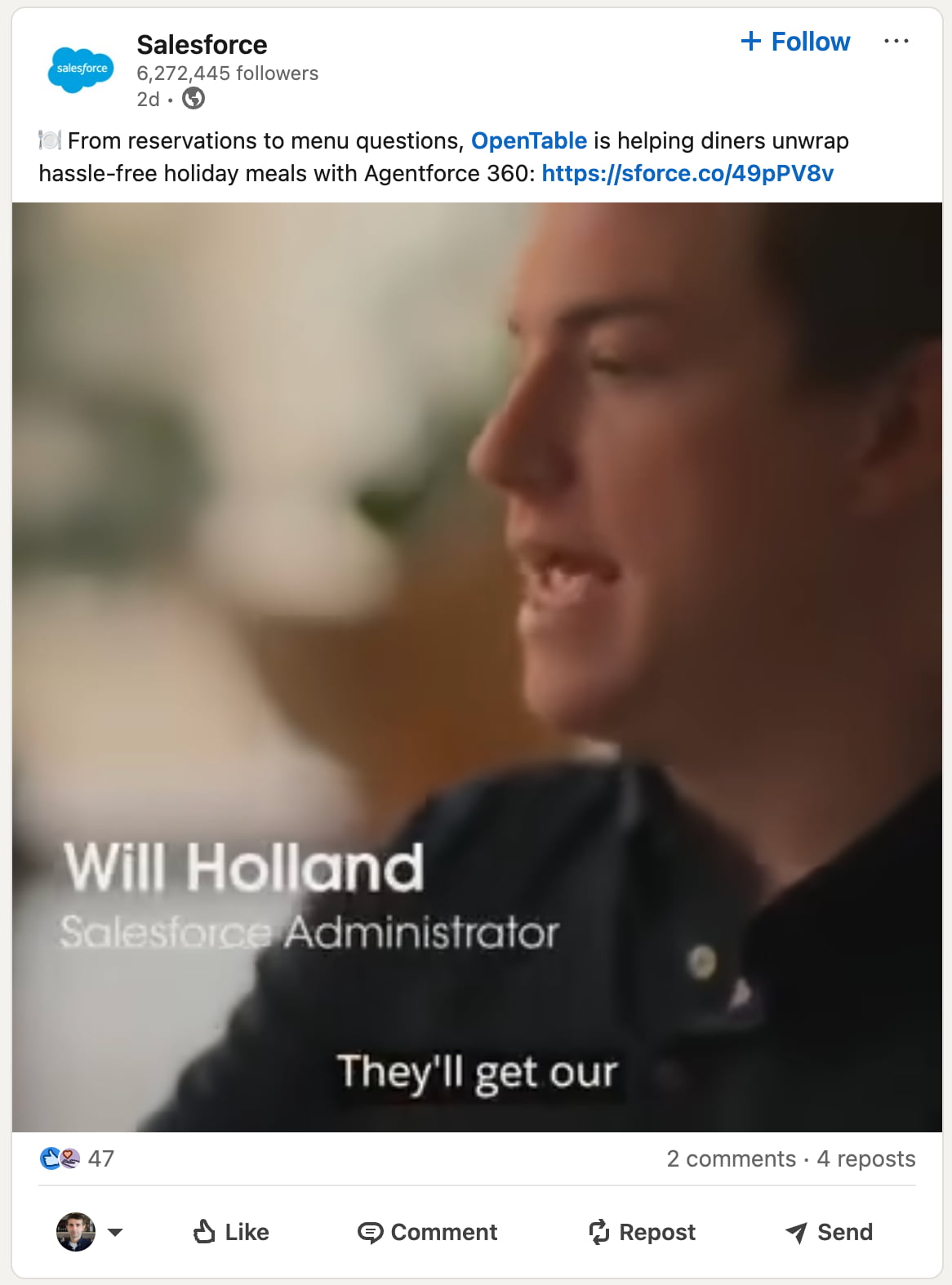
LinkedIn is one of the biggest networking platforms for B2B sales, and this type of content is expected on the platform.
Salesforce uses LinkedIn especially for:
- Product/event clips that fit professional scrolling behavior.
- Leadership and innovation framing (especially around AI, data, trust, and productivity themes).
As these more professional, business focused videos can gain traction in the more professional environment.
Instagram / X:
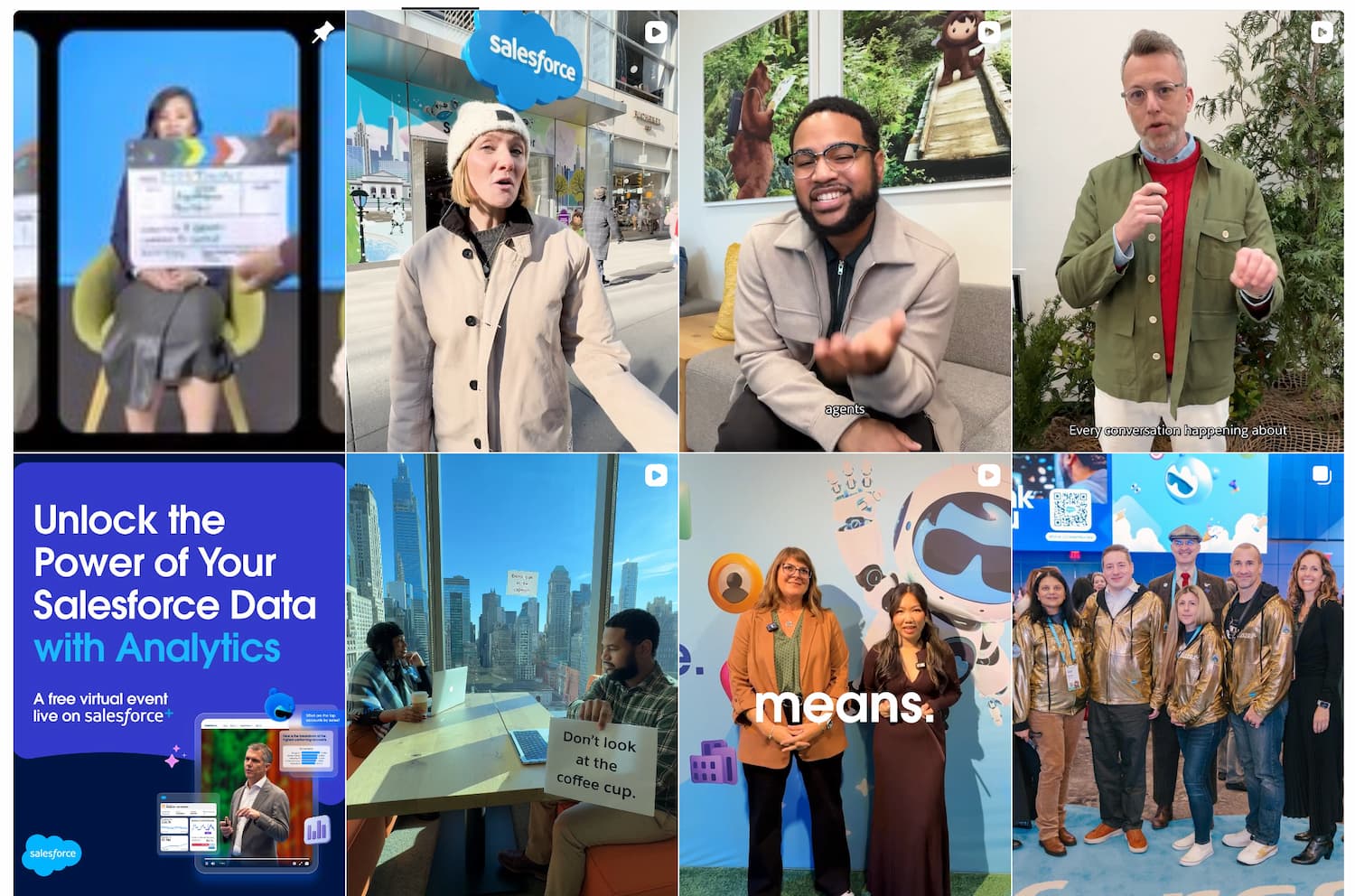
Finally, for the broad-reach social media, it’s a lot about letting people see and hear about the brand, not about specifics. Therefore, a lot of the content is simple, branded, and aesthetically pleasing.
These channels are typically used for:
- Short clips that carry the vibe of a keynote, a launch, or a community story.
- Culture and values content that makes a large enterprise brand feel human-scale.
What types of videos does Salesforce use?
There’s quite a broad set of different video types Salesforce uses, but they do tend to slot into a few specific categories:
- Product demos and platform overviews (“Customer 360” and specific clouds, for instance).
- Explainers (short “what is X?” videos, made to match SEO and for quick digestion)
- Event keynotes and sessions (Dreamforce and cloud-specific keynotes).
- Customer stories / case studies (clustered as “5 customer stories” style pages).
- Educational webinars and on-demand training (resource center and webinar pages).
- Entertainment-style series (Salesforce+ originals like short-form shows and interview formats).
Examples of Salesforce brand videos
How about a few more examples to get a sense of their style?
- YouTube – demo/overview: “Connect With Customers in a Whole New Way with the #1 AI CRM | Salesforce Customer 360 Overview Demo”
- YouTube – explainer: “What is Salesforce? | Salesforce Explained”
- YouTube – event tentpole: “Dreamforce 2023 Main Keynote”
- Salesforce.com – customer story hub: “Service That Is Built for Personalization: 5 Customer Stories”
- Salesforce.com – show-style page: “Legends of Low Code” video hub page.
Best practices you can borrow from Salesforce’s approach
- Use their media-funnel approach.
Use attention-grabbing, easy-to-digest shorts for social media, then have an in between content-driven platform like Salesforce+ that finally funnels toward your owned distribution and binge-able learning/events, instead of relying only on algorithmic reach. - Match format to intent.
Short clips pull attention; demos and case studies are better for closing an already interested party. That aligns with broader industry findings that short videos (roughly 30 seconds to 2 minutes) are often seen as most effective, but that there is long-term value to other forms of content. - Turn events into content generation.
The conference or event itself is only one level, you can use the material within it to generate video content of all sorts for social media. Keynotes, sessions, and interviews can become long-form uploads, clips, or playlists. - Use video to drive actions, not just “tell the story.”
Demo pages and webinar pages can be used to move a viewer from curiosity to action (signup, watch, learn, contact).
Summary
Salesforce operates on many layers of outreach, with a video focus. The goal is to funnel people in from the furthest forms of outreach toward the more concentrated, long-form content on the site with stronger CTAs.
Essentially, it boils down to using social channels for discovery, YouTube for niche but attention grabbing videos, then Salesforce.com for conversion, with Salesforce+ as the owned “home base” for events and original programming.
At Zelios, we specialise in creating high-quality animated content that captivates audiences and conveys clear messages. Contact us if you are looking for a reliable video production partner!
Select the video type that aligns with your marketing objectives, and receive an immediate high-level estimate of the production cost.