


A voice over is a production technique in which a speaker records audio off-screen to be layered over visuals — guiding the viewer, narrating a story, or explaining a concept without appearing on camera.
Voice Over Narration Definition
A voice over is a production technique where a voice is recorded to be played over visuals without the speaker appearing on screen. Unlike on-screen dialogue, narration is recorded separately and layered into the final video. There could be three possible scenarios for a voice over:
- First-person narration: the speaker shares personal opinions and experiences.
- Third-person narration: the speaker describes events objectively as a third-person narrator.
- Informative narration: used for tutorials, walkthroughs, documentaries, and training videos.

Voice Over Styles
The same script can feel completely different depending on how it’s delivered. Voice over style is the combination of tone, pace, pitch, and energy a voice actor uses — and choosing the right one is a creative decision, not a technical one.
The four most common voice over styles in video production are:
- Conversational — Warm, relaxed, and natural. It sounds like a person talking to you directly, not reading from a script. This style works well for explainer videos, SaaS product demos, and tutorial content where trust and clarity matter most.
- Authoritative — Confident, measured, and professional. Common in corporate videos, financial content, and healthcare communications where credibility is essential. The delivery is deliberate, and the pacing tends to be slower.
- Narrative / Storytelling — Emotionally varied, with pacing that follows the arc of the story. Used in brand films, documentaries, and case study videos. The narrator often creates intimacy or tension to keep the viewer engaged.
- Energetic / Promotional — High energy, punchy, and persuasive. Most common in video ads and social media content. The delivery is fast-paced and designed to drive action.
Choosing a style that conflicts with the visuals creates cognitive dissonance — a slow, solemn narration over an upbeat product demo, or high-energy pacing over a serious subject, will undermine the message.
Voice Over for Animation
Voice over in animation brings a new life to the characters. And in most projects, the voice over is recorded before the animation work begins. This is known as ‘prelay’ and it helps animators to use the recorded audio as a guidance point to create accurate facial expressions and lips movement.
Animated educational videos often pair voice to animation to explain complex topics in a friendly, digestible way.
How Voice Over Is Produced
Voice over production follows a consistent workflow, whether the video is animated or live-action:
- Script finalization — The voice over script is locked before recording. In animation, this is critical because animators use the recorded audio to sync mouth movement and expression. Recording before animation is called prelay; recording to match existing animation is called postlay and is more common in dubbing.
- Voice casting — The right voice actor is selected based on the script’s tone, the target audience, and the style direction. A brief, a mood board, or a reference recording is typically shared so the actor can prepare.
- Recording session — Recording takes place in a treated acoustic environment to minimize room noise and reflections. For remote productions, voice actors often record from a home studio setup and deliver WAV or AIFF files at 48kHz.
- Direction and takes — A good session produces multiple takes and alternate reads. A producer or creative director will guide the delivery: adjusting pace, emphasis, or emotional tone until the performance matches the video’s intent.
- Audio post-processing — The raw recording is cleaned, normalized, and mixed into the video alongside music and sound effects. The final voice over typically sits at a consistent level above the music bed, with subtle EQ to ensure clarity on all playback devices.
Voice Over vs Narration
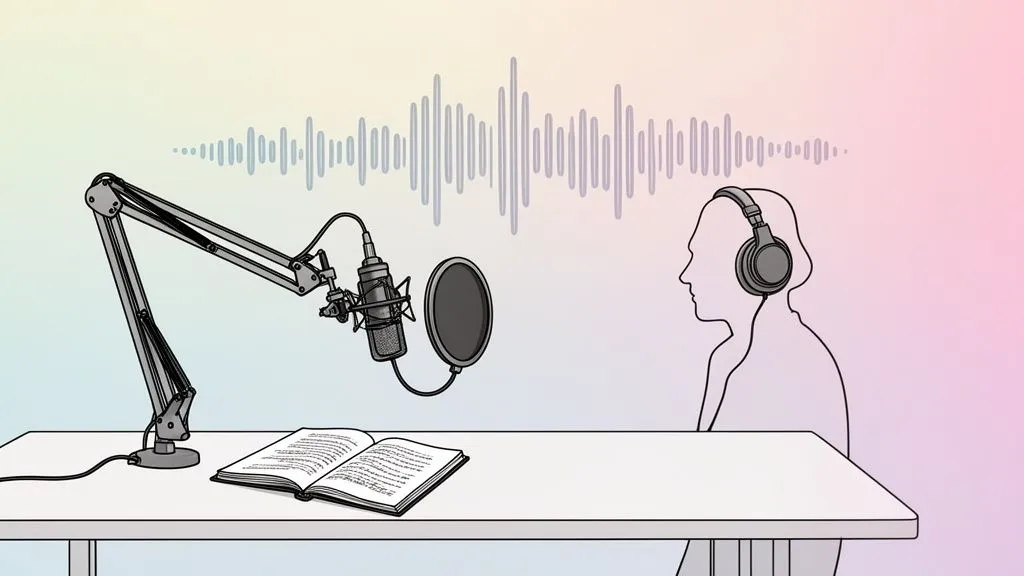
While the terms are often used interchangeably, voice over is any off-screen recorded voice in a video. For example, a voice in a commercial describing a product’s features is a voice-over.
While a narration specifically describes telling a story or providing commentary. For example, a character reflecting on past events in a film.
Role of Voice-Over Actor
Whether it’s a voice over or narration, the voice-over artist adds the perfect flavor to the audio. The tone, pitch, pace, emotions, mood, accent, everything counts in setting up the right mood.
A good voice over doesn’t just talk over visuals, it changes the perspective of how viewers feel about the video. In short, it’s the sound that makes the story stick.
Select the video type that aligns with your marketing objectives, and receive an immediate high-level estimate of the production cost.
