


A video script is a structured outline of a video’s content. It includes dialogue, visual cues, action lines, and other essential details.
During pre-production, it determines scope, budget, and timeline — longer scripts mean more scenes, more voiceover recording, and more animation work. During production, it serves as the master reference for the director, voice actor, and animator. During post-production, the editor uses it to verify pacing and ensure the final video matches the approved narrative.
What Does a Script Mean in Video Production?
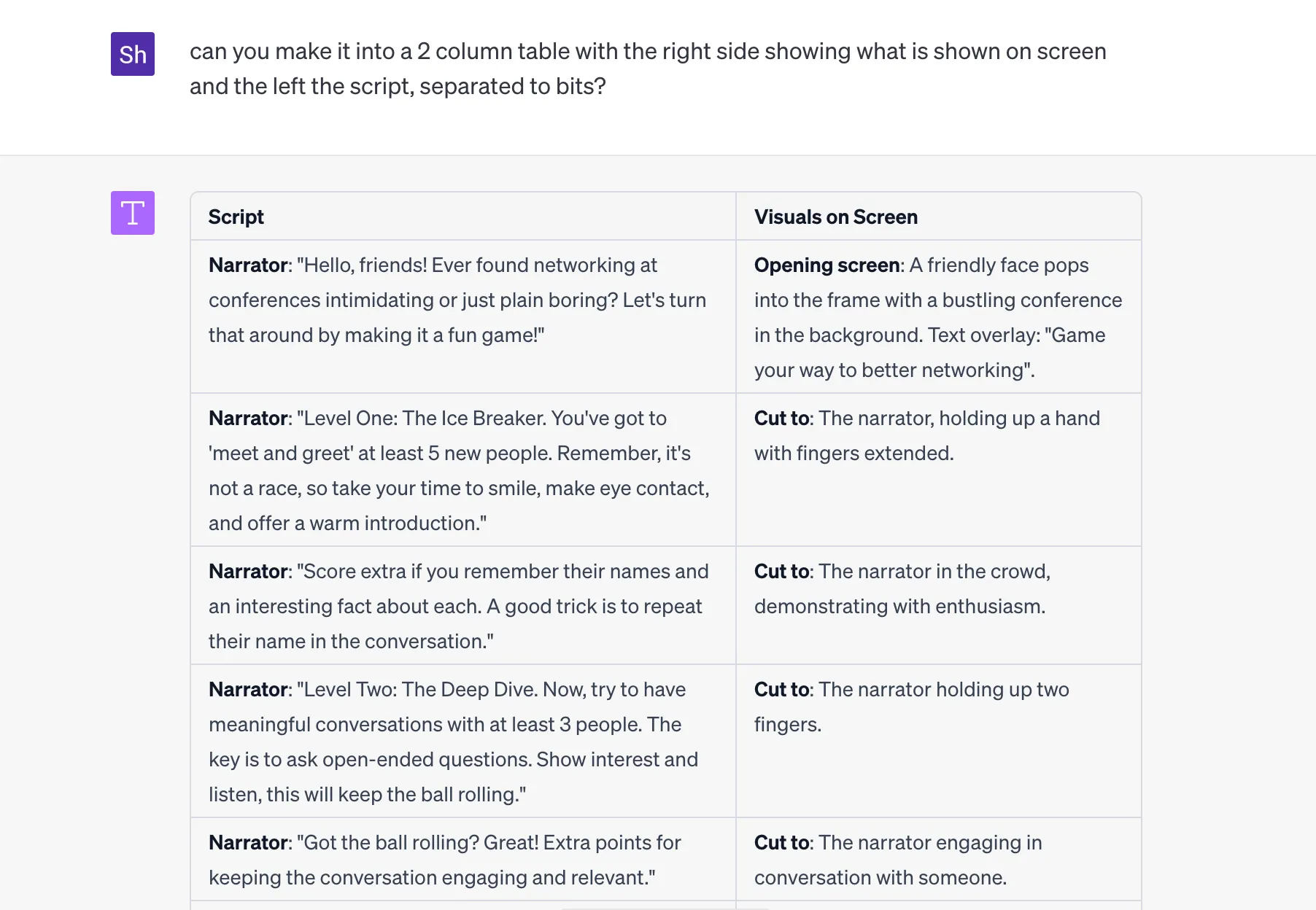
In the context of video production, a script is a written document that contains dialogues, clear directions, and scene-by-scene progression of a video. If someone asks “what is a video script?” The simplest answer is: it’s a blueprint that contains all the auditory and visual elements written in a text format.
A standard script may include:
- Dialogue between characters or voiceover narration
- Descriptions of visuals, movements, transitions, or animations
- Time markers for estimating video script length
- Notes for camera angles, sound effects, or background music
- Cues for on-screen text or graphics
Whether you’re producing a live-action commercial or planning to create an animated video from script, this document guides each creative and technical decision.
Why is It Important? Benefits of Using a Script in Video Production
Writing a script comes under the planning phase of a video production. If your planning is strong and flawless, the video will gain the expected response. Here are some of the benefits of writing a good script in video production.
- Clear direction for the team. A well-written script has a defined video message, determined target audience, and a creative call-to-action. Moreover, with clear directions, you gain more focus as a team.
- Efficient Production. Having a defined script allows for accurate time and budget planning with minimum delays and reshoots.
- Better storytelling. A structured script ensures the video flows smoothly and keeps the audience engaged.
- Easy Collaboration. It serves as the primary communication tool among all team members and with the client.
- Consistency and Accuracy. For technical or educational videos, the script guarantees that all facts and product details are communicated accurately and consistently.
Script Structure: The Three-Part Framework
Marketing and explainer video scripts follow a tighter framework than long-form narrative scripts, built around viewer attention and conversion.
- Hook (0–10 seconds). The opening must earn attention before it can communicate a message. A strong hook addresses the viewer’s problem, establishes stakes, or poses a question that compels them to keep watching. A weak hook is the most common reason a well-produced video underperforms.
- Body (10 seconds – end minus 10 seconds). This is where the core message lives — the product explanation, the brand story, or the emotional and logical case for an offer. The body should follow a single clear line of logic: one idea leading naturally to the next.
- Call to Action (final 10–15 seconds). Every marketing video script ends with a specific, singular CTA. Asking viewers to do one thing — visit a page, book a demo, download a resource — produces better results than multiple options. The CTA should reflect where the viewer is in the funnel: awareness videos invite exploration; decision-stage videos invite action.
How to Write a Video Script: 5 Production Principles
You don’t have to be a good screenwriter to write your video script, all you need is to understand your audience, define your objective of the video, and be natural with your script. Here are some of the useful tips that might help you craft a compelling video script.
- Start with a clear goal
Define what the video needs to accomplish. Is it educating, converting, entertaining, or explaining something?
- Write conversationally
Video is a spoken medium, so your script should sound natural when read aloud—not stiff or overly formal.
- Keep the visuals in mind
Describe what should appear on screen and match those visuals to each line of dialogue or narration.
- Respect timing
A typical voiceover reads about 125–150 words per minute. Use this benchmark to control your video script length.
- Review and refine
Read the script aloud, adjust pacing, and ensure every sentence contributes to the message.
Read more: “How to Write a Video Script: 10 Practical Tips from the Experts”
Conclusion
To define video script simply: it is the essential roadmap that ensures your video is delivered on time, within budget, and, most importantly, achieves its intended goal. It shapes the narrative, aligns the teams, and ensures the final video communicates its message clearly.
Select the video type that aligns with your marketing objectives, and receive an immediate high-level estimate of the production cost.
