

A video production contract is deemed an essential document for any project undertaking in videography services business. This is a legally and lawfully binding document that protects the interests of both parties because it thoroughly details all the expectations, deliverables, and commitments.
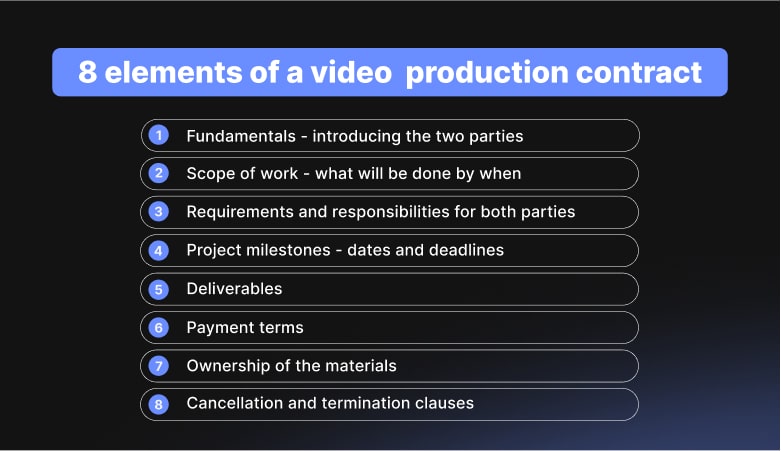
Here, we go into particular details of the ten key elements that must be included within a video production contract template for a smoother and more professional relationship with clients.

1. Services Overview
Outline of Services
Begin by outlining the scale and scope of the project. A video production agreement template would entail the services provided. This includes the pre-production, production, and post-production phases or stages. This document shall serve as an assurance instrument for either party so that each party has a reasonably clear vision of the scale of the work.
Deliverables of the Services
List down the final deliverables in every contract for videography services. These could be the film, a promotional video, or even social media content—just put it down so that the client knows what to expect from the project, so there’s no ambiguity from either party in the transaction.
2. Terms of Payment
Fee Structure
It is essential to clarify your fee structure in a basic document. This includes the compensation for videography work, broken down into total costs by milestone or phase, and your expectation of the payment schedule that will be used.
Splitting costs into several fixed milestones and using a large deposit to calculate the total project cost initially will help with cash flow and finance.
Any Late Payment Fees
Ensure that the standard contract includes penalties payable upon default to secure the videographer’s interest, even if this means making the agreement liable to interest and late delivery charges.
If you don’t have clear terms for ending the contract early, you might have a dispute. Make sure to include terms for canceling or terminating the contract, including any fees or penalties for early termination. Also, specify how outstanding payments and work already completed will be handled.

3. Timeline and Deadlines
Project Roadmap
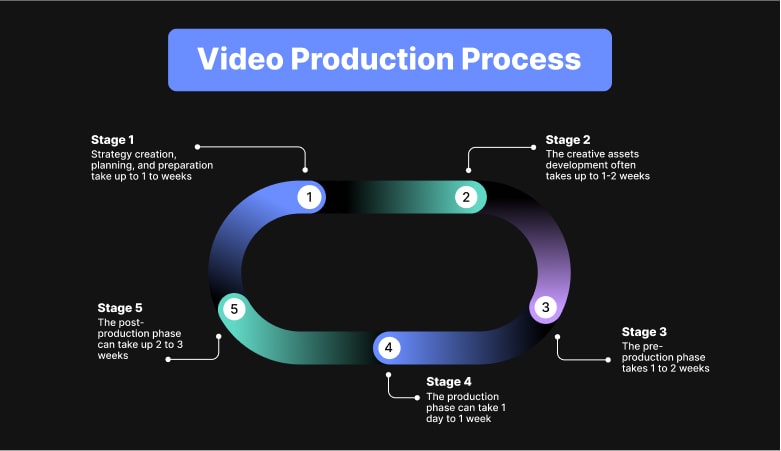
A good video production services contract must have a timeline from consultation to final delivery. It guides expectations effectively and also maintains the pace of the job.
Key Deadlines & Milestones
Identify those firm, immovable deadlines within the timeline. These could be for script approvals, shooting dates, or final edits.
Clear deadlines help keep the project on track and provide specific benchmarks for progress.
4. Revisions and Feedback
Revision Policy
Define the revision policy in your video production contract. This sets out how many revisions are within the cost and how much each additional revision will be identified.
That simple note prevents scope creep and ensures that both parties understand the exact limit of the covered service.
Feedback Method
Define the feedback process: How is the feedback expected to be submitted? What is the turn-around time for revisions?
Clarity of guidelines in this regard can make the working process smoother and save much miscommunication.
 Note:
Note: 5. Manner and Ownership
Intellectual Property Rights
Intellectual property rights clauses should be incorporated into any video production services agreement. But who owns the footage? Does the videographer hold the right to use clips in his portfolio?
Specifying all these rights not only helps prevent issues for all parties but also spares them from future disputes.
Usage Rights
Define what rights are being purchased for the final video. Where and how is this video going to be used?
Doing this in a service level agreement ensures that the client understands in clear and unambiguous terms what they are getting into and how they will use the deliverables of this project.
6. Confidentiality and Non-Disclosure Agreement NDA
Confidentiality Clause
If there is some classified information in the project, a confidentiality clause should be added to the video production company contract. Preferably, the two of you would undertake to ensure that information specified as being classified would be upheld.
NDA Non-Disclosure Agreement
You can add an NDA as a separate document to be signed by both parties or make it a part of the videographer contract agreement.
This becomes a legally binding part of the contract that binds both parties not to reveal certain information about the project and to save the proprietary information securely.
7. Termination Clause
Conditions for Termination
State the specific instances in which one party can end the contract. It may include things like when a party fails to meet the deadlines stipulated, there should be no payment, or clients may breach confidentiality.
With a well-laid termination clause in the sample contract for videography services, the stakeholders are saved from possible disputes and conflicts later on.
Refund Policy
State the refund policy in case of termination. This may include things like “What portion of the fee will be refundable?”
Clear guidelines will prevent disputes and ensure a square deal.

8. Liability and Indemnity
Liability Limitations
Define the limitations of each party’s liability, such as equipment failure, acts of God, or other factors the contractor cannot control.
Indemnity Clause
To protect the videographer from any legal claims made from having worked on this project in the future, an indemnity clause should be added to the video production company contract. It helps define the kinds of risks included and those excluded under indemnity in this section.
9. Insurance
Compulsory Insurance
For the needed coverage, you can just specify the insurance required by the project in a sample videography contract. It can vary from general liability to some particular insurance related to the current project at hand at that time.
Evidence of Insurance
Make proof of insurance a requirement in the videography contract to ensure that the concerned parties are adequately informed and covered so that risk can be reduced.
10. General Provisions
Governing Law
Identify the specific governing law that you will apply to the contract. The governing law is a type of law by which the arrangement between the concerned parties will be enforced in a court.
Entire Agreement
This is a clause in the contract that states that the entire deal is binding between the said parties. This, again, prevents either party from asserting some external agreements or understandings.
Wrap Up
A video production contract is essential and must be well-written to ensure that it provides maximum benefit to the videographer and the clients. It should effectively contribute and become an integral part of a well-done job. The above ten fundamental elements added to this document will help you get clear statements that assure your interests and form a professional relationship with the client.
Whether using a sample video production contract or writing a basic video production contract from scratch, just pay close attention to the details and follow through with all aspects.
Make sure that every document should contain these ten essential elements for a smooth, professional relationship during the production process.
By incorporating this information, you’ll breeze through any video project without unnecessary disputes and conflicting problems, ensuring that all parties are covered and expectations are clearly met.
We take a strategic approach to support your specific needs to produce compelling videos. Contact us to find out more and get a quote!
Select the video type that aligns with your marketing objectives, and receive an immediate high-level estimate of the production cost.