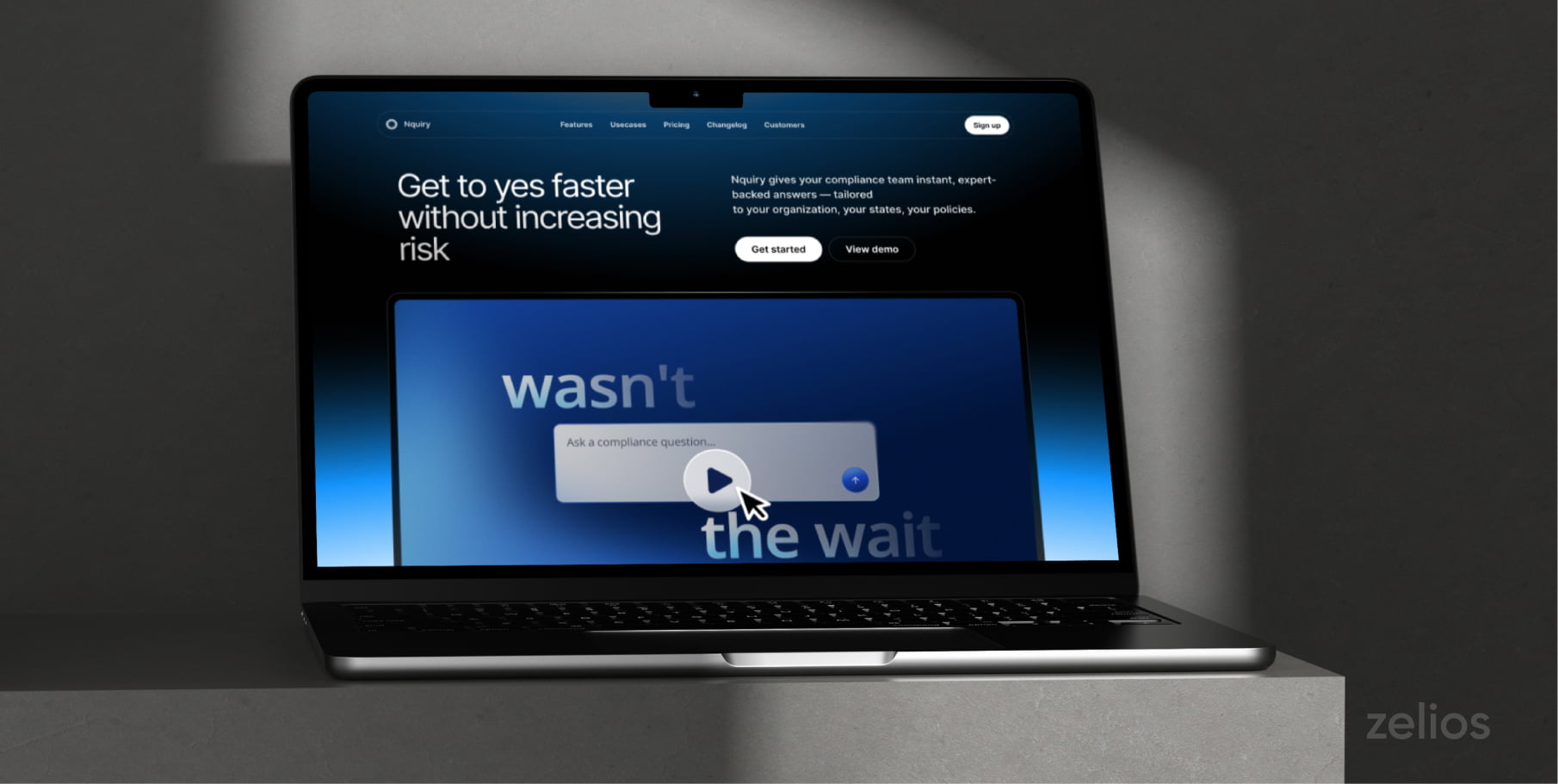

What does a tattoo artist, a great painter, and a video production company have in common?
Aside from their constant search for the next creative project, all of them — well, at least those that would like to call themselves professionals — have a tried-and-true method that can produce the outcomes you have validated and are hoping for.
We hope to walk you through the standard video production process in this article, along with tidbits about our workflow and advice on how to make the most impact.
Picking the right Vendor
Yes, we think this is the most important part of the production process. It’s easy to want to go with the cheapest option, hire a freelancer, or pick something at the lower end of the market.
But there are often hidden costs when you work with them, which you will pay in full:
- Not having a clear plan and process from their side;
- A limited understanding of your company and the industry you work in;
- Should we even talk about meeting deadlines?;
- Communication; how was your last project with a freelancer? How did you talk to them? Did they offer video calls, syncs, meetings, or other ways to talk about your feedback? There isn’t usually any communication after the first chat messages. Then you get angry and reach out because they missed the deadline and the product isn’t even close to good enough.
So, with this in mind, you’ve picked the best vendor for your needs. Let’s get creatin’

Client Briefing
A good agency will always take the time to understand your company and current goals. Are we planning a marketing campaign? Is it one video or a series of videos? Where will it be used? What is the target audience? What are 1-2 key messages you’re trying to convey?
You get the idea. It is best to fill out separate briefs for each type of video because they will have different main points, and will be produced based on those main points. Also, briefing for a single video is not the same as briefing for a video marketing campaign – you can see how different each video type is, and the difference between messages conveyed, in our case study for Allfred.io

If the brief you get as a client looks like it was thrown together quickly and without much thought, that could also be the first red flag in the process. This is because your vendor won’t have all the information they need to tell the story of your brand and connect the key message.
In the end, briefing is an important way to communicate that will quickly bring your vendor’s team up to speed and make sure that everyone is on the same page.
Creating the Video Script
Now that the brief has been completed, the next step is to write an amazing script for the video. Script is a major part of the video production process. A competent video production agency should be able to handle this process, ensuring that your team is only commenting on bits and pieces to flesh out the final product.
Now, let’s define what a production ready script is.
A production ready script is a combination of a voice over part (the text that will be read by the voice over artist), a visual description (the description of action, step by step for each frame, done by the creative director), and visual references (clips from other great videos that we use to inspire our animators and ensure that our clients understand the direction).
At Zelios, our copywriter and creative director collaborate to create the script, which is then supplemented with visuals.
We prefer to handle scripts ourselves because there are numerous factors to consider that may not be obvious to those who are doing video production for the first time.
- Script duration. People struggle to fit everything into 60 seconds. We’ve seen this many times. But that’s because we’re always looking for ways to demonstrate how great our product is, and we believe the video lacks sufficient information. However, with the assistance of our copywriter, we consistently achieve the ideal balance of brevity and information.
- Language, tone of voice. Is your brand cool? Corporate? A little sarcastic and full of love for kittens? Your video content should match your other content, and the wording for your video should be like the scripts for your blogs and other written content.
And yes, that briefing we talked about above does have a section with information that we use for scriptwriting. - Visual Description and References. As we already said, a script that is ready for production looks like a mix of voice over, visual description, and visual references. This is the hardest part if you’re not a professional video producer, which you shouldn’t be since you are working with a partner.
So let the experts do the job, while you make sure it’s on brand, and deliver your message.

As a last important point to keep in mind, is to ensure that the script is approved and finalized by all stakeholders.
You won’t believe how many notes and late suggestions come up when stakeholders see the already animated video – often for the first time.
Storyboarding & Illustrations

As soon as we have a good script, we need to picture it and start giving our written part life.
This is also a very important part of the process. We’re going to turn the written script into a visual medium that makes people feel the right way in just 60 seconds, while staying true to the brand and giving each visual some kind of meaning. Sounds easy, right?
Depending on the process in place, the next step would be to create an animatic using the storyboard. What is an animatic? Stills from the storyboard, an AI voiceover, and placeholder music. This allows you to see the storyboard in a more dynamic and coordinated state, as opposed to just the black and white static frames.
You can see this in our example – here.
Alright, we’ve approved the storyboard – the story is taking shape nicely.
The next steps are to add branding to the low-fidelity frames and create engaging illustrations based on your branding.
For this section, the design team will consult your branding kit to determine the colors, fonts, and use cases for your branding. For SaaS platforms, this is where we take your platform’s designs and UI elements and transform them into a fully functional design that will be used for animation.
Again, at this stage of video production an animatic is going to be updated to have illustration, in all of your branding’s glory.
We know – a couple of animatics might seem like a bit of an overkill, but here at Zelios, we like to have multiple quality control gates.
Adding Voiceover
Mi Me Ma Mo Muuuu! Don’t mind us, just practicing to sound like a true voice over artist here.
Now, it’s important that you pick the right voice, for the right audience.
If we are creating a B2B Trucker Logistics CRM Explainer Video, we would highly benefit from having a mature, Midwest Voice to speak about all of the benefits.
As mentioned above, we really like to use animatics with AI voice over – this also helps with picking the right actor for the job. You can play around with a few different voice overs, find the proper tonality and gender.
Video production agencies usually use a pool of proven artists that they work with, and will supply some samples for your final pick, once it comes to recording the voice over.
Once you have locked in your pick, the voice over will be done within 3-5 days, and will be used in animation.
Animation
A-ni-ma-ti-on – the spirit, the motion, the very thing that evokes emotion. Eye ball grabbing, Prospect generating, and KPI achieving.
This is where magic happens.
If all of the steps went smoothly, experienced animators will combine all the assets into a stunning combination of motion and your message.
It’s the longest step in production – and for a good reason. It takes around two weeks to get the initial draft of the full video, and then another week to put finishing touches on it.
At Zelios we like to give you just a little extra sneak peek – so we share a 15-20 second draft even before the full thing is ready. Life is about the little things, after all.
There are many ways to approach animation, including 2D and 3D, isometric and frame-by-frame, but all of them are used for one goal – to emotionally engage viewers.

Sound Design
Now, your animation looks gorgeous and is finished. What’s more is there to do?
A few finishing touches remain before your video is released. We’re talking about additional sound design, and maybe even custom music composition if you want to invest a little more in a timeless piece of content.
Furthermore, at Zelios, we like to put our sound designer to work and create a custom piece that will be blended with sound design, combining all of the most appealing sounds into a symphony of sound and animation.

Conclusion
That’s about it for this article. Clearly, this isn’t a quick process, and it takes a special set of skills to see it through to a polished end result.
Our process is designed to put our clients in the driver’s seat, where they can effortlessly offer feedback and guide us through their branding. This allows us to combine their knowledge with our expertise in video production.
Therefore, we would be pleased to speak with you during a discovery call if you are seeking a smart, fully managed process.
Select the video type that aligns with your marketing objectives, and receive an immediate high-level estimate of the production cost.