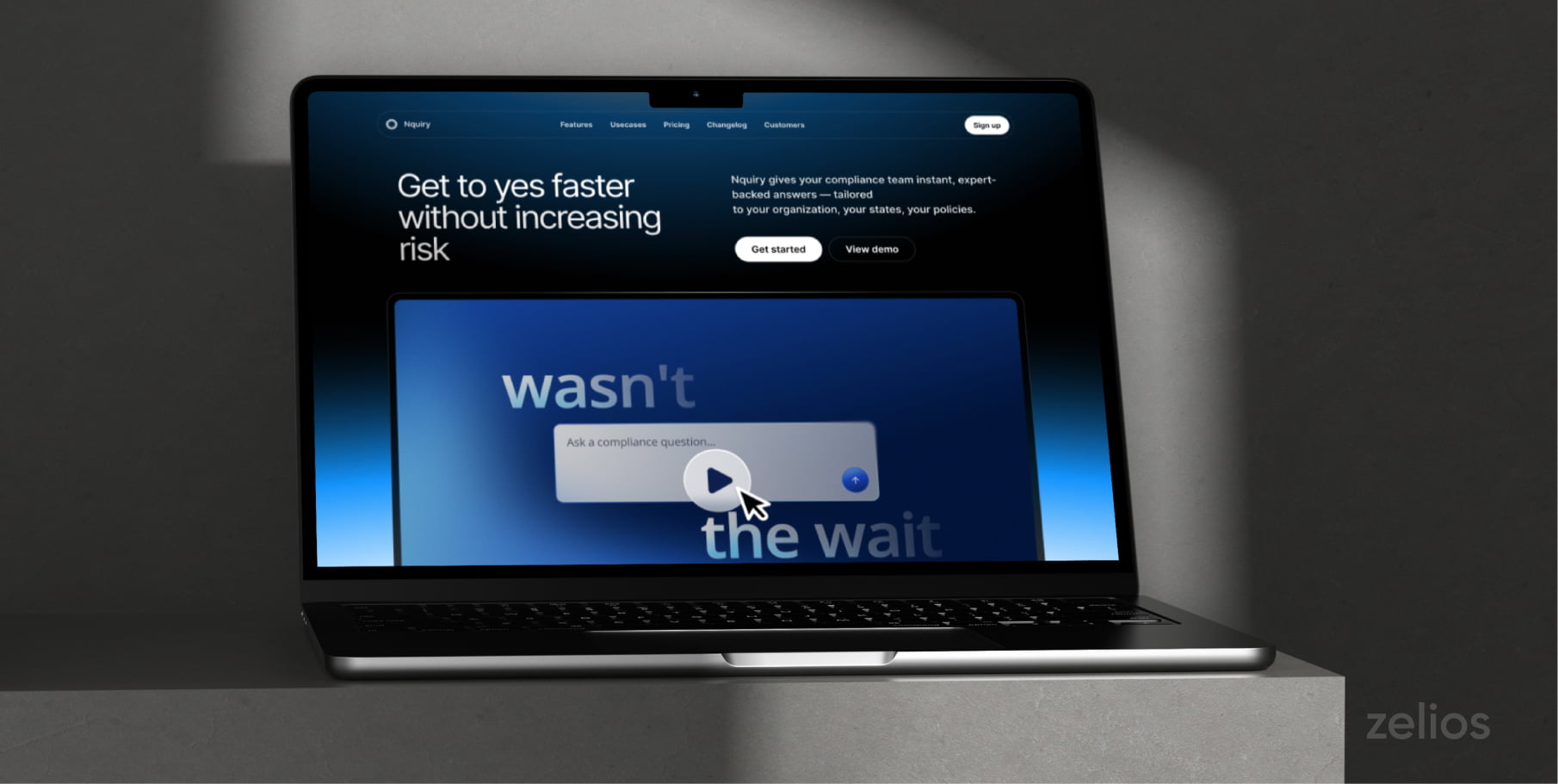
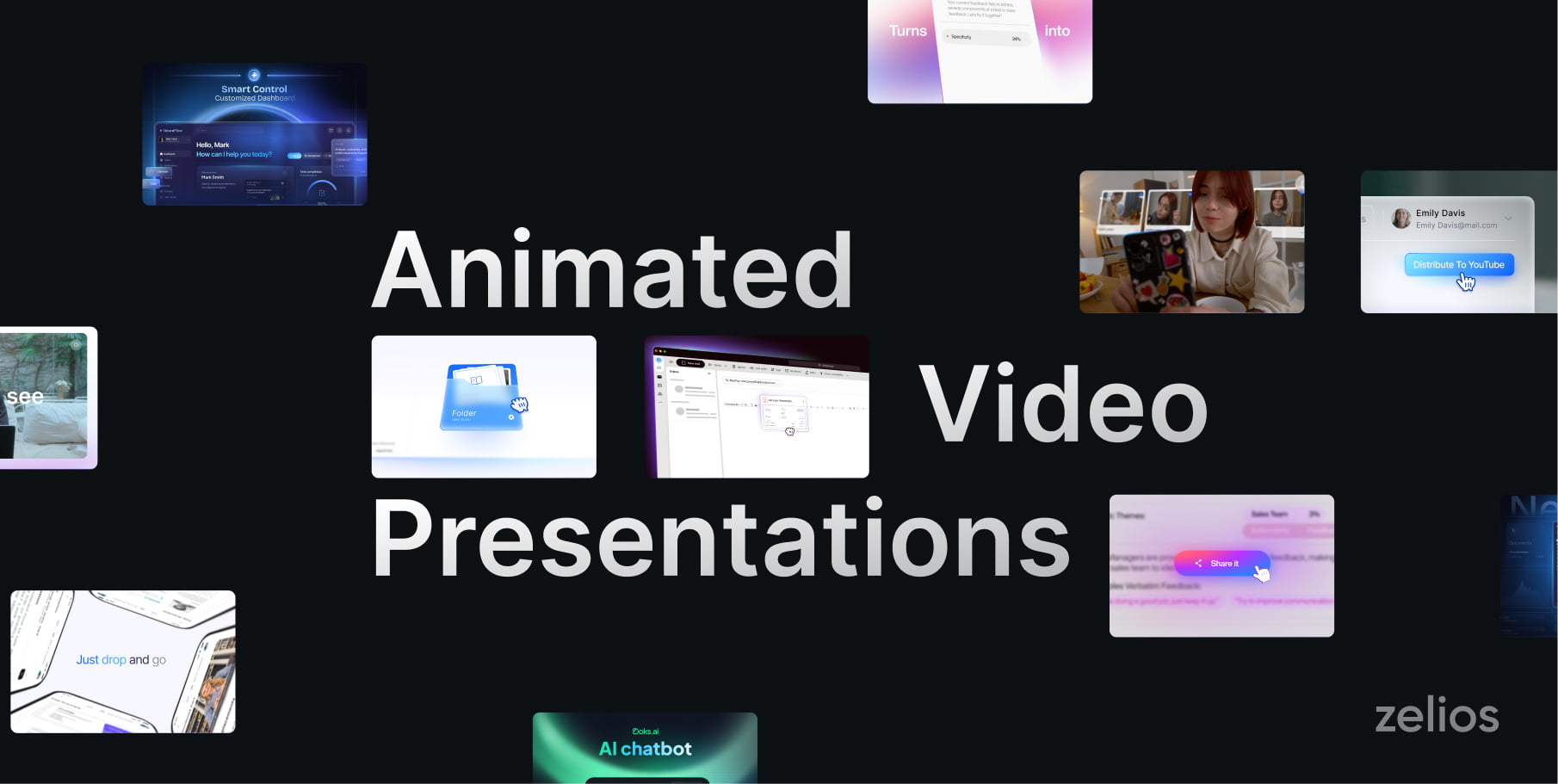
Animated video presentations not only tell a story, they also allow the audience to experience it.
The movement draws attention, the sound sets the mood and the cuts establish a pace that cannot be achieved using static slides.
What Is an Animated Video Presentation?
An animated video presentation is a video-format piece of content that uses motion graphics, character animation, UI simulation, or a combination of these techniques to communicate a message — replacing or supplementing static slides.
Unlike a slide deck, which asks the viewer to read and interpret, an animated video presentation controls the pace, directs attention, and sequences information through choreographed movement. The result is a viewing experience rather than a reading experience.
The format spans a wide range of production styles:
- Motion graphics presentations — typographic and iconographic animation, no characters; typically used for data, process flows, and concept breakdowns
- 2D character animation presentations — illustrated personas move through a scenario; best for problem-solution narratives with an emotional arc
- UI simulation presentations — screen recordings or illustrated interfaces animated to show product behavior; the dominant format in SaaS demo videos
- Mixed-media presentations — live-action footage combined with animated overlays; used when human presence builds trust but animation is needed to explain the product
Each style carries different audience expectations. The right choice depends on what the viewer needs to feel (emotional connection → character animation) versus understand (process logic → motion graphics or UI simulation).
The examples below offer a fresh, uncomplicated perspective, providing clear lessons that can be applied to your own creative video presentations.
1. SaaS Demo Video Example for Fintech Companies
The SaaS Demo Video Example by Zelios opens with a scene that starts with friction: manual onboarding gets stalled, compliance checks are scattered, and approvals take time. After that, the pace changes.
The animated flow takes the viewer through the sign-up process, Know Your Customer (KYC) and Anti-Money Laundering (AML) screening, risk scoring, and an approval timeline that shrinks from days to minutes.
2. Best SaaS Product Launch Ad Video | LangEase
The launch of ads is dependent on their focus. LangEase’s product launch video is relatable to universal marketing pain: the content becomes global, the tone changes, and revisions come in heaps.
Video starts amid chaos and translations are mismatched, last-minute edits are done, and the brand’s voice is lost in the different markets. Then the screen resets visually.
The LangEase experience appears as a piece of calm: a glossary locks the tone, a style guide is drawn on the screen, and review loops are shortened as animated tick marks unfold in order.
The reason this format works is lack of extravagance. The UI is shown just for a moment to indicate what has been changed, and then the camera goes back to the human result: the marketer meets the deadline and the campaign is shipped worldwide.
3. Best SaaS Product Demo Video | Teamble
The strong collaboration demos reveal motions rather than menus. The best demo sequences of Teamble follow two timelines – one scattered with old tools, and the other, Teamble flow, where work moves without any friction.
Tasks can be clicked once to get assigned, and dependencies can be unbroken before they break and cause a delay; changes of status are automatically reflected on the roadmap. Comments come in; avatars pile up; and approvals finish with a nice snap sound.
The real demos that win basically revolve around three “aha” moments. One minute, a block is removed instantly by a one-click approval which used to take a meeting.
Second, a visual timeline shows an at-risk dependency surfacing early.
Third, reporting is produced as a byproduct of the actual work done and not as a separate chore.
4. Top SaaS Marketing Video Example | NeuraFlow
AI automation requires evidence. NeuraFlow-type videos create the trust factor by disclosing the decision-making process.
They select a typical use case, for example, support ticket triage or lead scoring, and transform it into a visual logic chain. Inputs get in with clear labels, sentiment, urgency, value. A model node assesses, confidence scores appear, and actions are directed correspondingly.
If confidence falls, a human review layer gets into place. It’s not a fantasy; it’s the design of the system made visible.
5. Video Ad for AI / SaaS Product | Doks.AI
Documents are boring, until they come to life. The most effective Doks.AI video ad by Zelios start with the pain you can practically feel: old pages, links that don’t work, and mistrust of the documentation by developers.
Then the camera zooms in on the actions. You paste the code; a beautiful page is rendered in no time. You add a note; a drawing is made. You update a component; the whole website sees the changes in seconds.
6. Google – Welcome to the Gemini era
Movies made for large platforms require great stories. By integrating actual world tasks into a single narrative of added capability, Google’s “Welcome to the Gemini era” sets a mood. The theme is steady, a little help UI feature that blends into different settings, from artistry to study to schedule.
The live action depicts feelings; the UI overlays ensure understanding. The clip does not focus on any one screen for too long.
It shows the wide area with assurance and repeatedly comes back to the human aspects, such as accessibility and education, in order to assign purpose to the technology.
7. Introducing Google Vids – Google Workspace
Fear of creation is a very real thing. “Introducing Google Vids” confronts this issue bluntly. The first thing the viewer sees in the video is a white screen, and then a brief pause that is very familiar.
After that, the software creates a structured storyboard from the input. Scenes fit perfectly together. Lines of the script are better.
The actor giving the voiceover is heard and replaced. The additional footage is placed in the editing sequence very smoothly.
The teamwork part is where the confidence comes: several pointers move together, questions are answered, and changes come together without any problem.
Why Animated Video Presentations Outperform Static Slides
- Attention without effort. Static slides require the viewer to read, process, and keep up — all while listening to a presenter. Animated video removes that cognitive split. Motion naturally draws the eye, and a well-paced voiceover guides attention sequentially through each idea. The viewer doesn’t have to work to follow along.
- Compression of complex ideas. A process that takes three slides to explain — with arrows, callout boxes, and a presenter walking through each step — can be shown in twelve seconds of animation. This isn’t simplification; it’s translation. The same information, rendered in a medium that matches how the idea actually moves.
- Emotional register. Music, pacing, and character design create a tone that text and bullets cannot. An animated presentation can feel urgent, calm, playful, or authoritative — and that feeling shapes how the viewer evaluates the product before they’ve consciously processed a single feature claim.
- Consistency across every use case. A single master cut becomes a landing page hero, a sales outreach embed, an onboarding flow trigger, and a social ad with one edit pass. Static slides can’t do that — each channel requires a new version built from scratch. The animated presentation is an asset with a long production tail.
- Measurable influence on conversion. Video on a landing page increases time-on-page, which signals content relevance to search engines and extends the decision window for potential buyers. A presentation that surfaces objections, demonstrates outcomes, and ends with a clear CTA turns passive viewers into qualified leads.
Conclusion
The most effective animated video presentations aren’t impressive because of the animation itself. They’re effective because the motion serves a clear argument: There is a problem worth solving; here is proof that it is solved; and here is what to do next.
This logic applies to every example on this page, whether it’s a two-minute SaaS demo or a platform launch from one of the world’s largest tech companies. The production budget changes. The structure doesn’t.
If you’re considering an animated presentation for your product or trying to create one that won’t end up as a forgettable corporate video, let’s talk. We’ve built video presentations for fintech platforms, AI tools, collaboration software, and developer products. We know what needs to happen in the first ten seconds.
We are a leading animated explainer video agency that connects brands and people through bespoke video content. Let’s talk about your project!
Select the video type that aligns with your marketing objectives, and receive an immediate high-level estimate of the production cost.