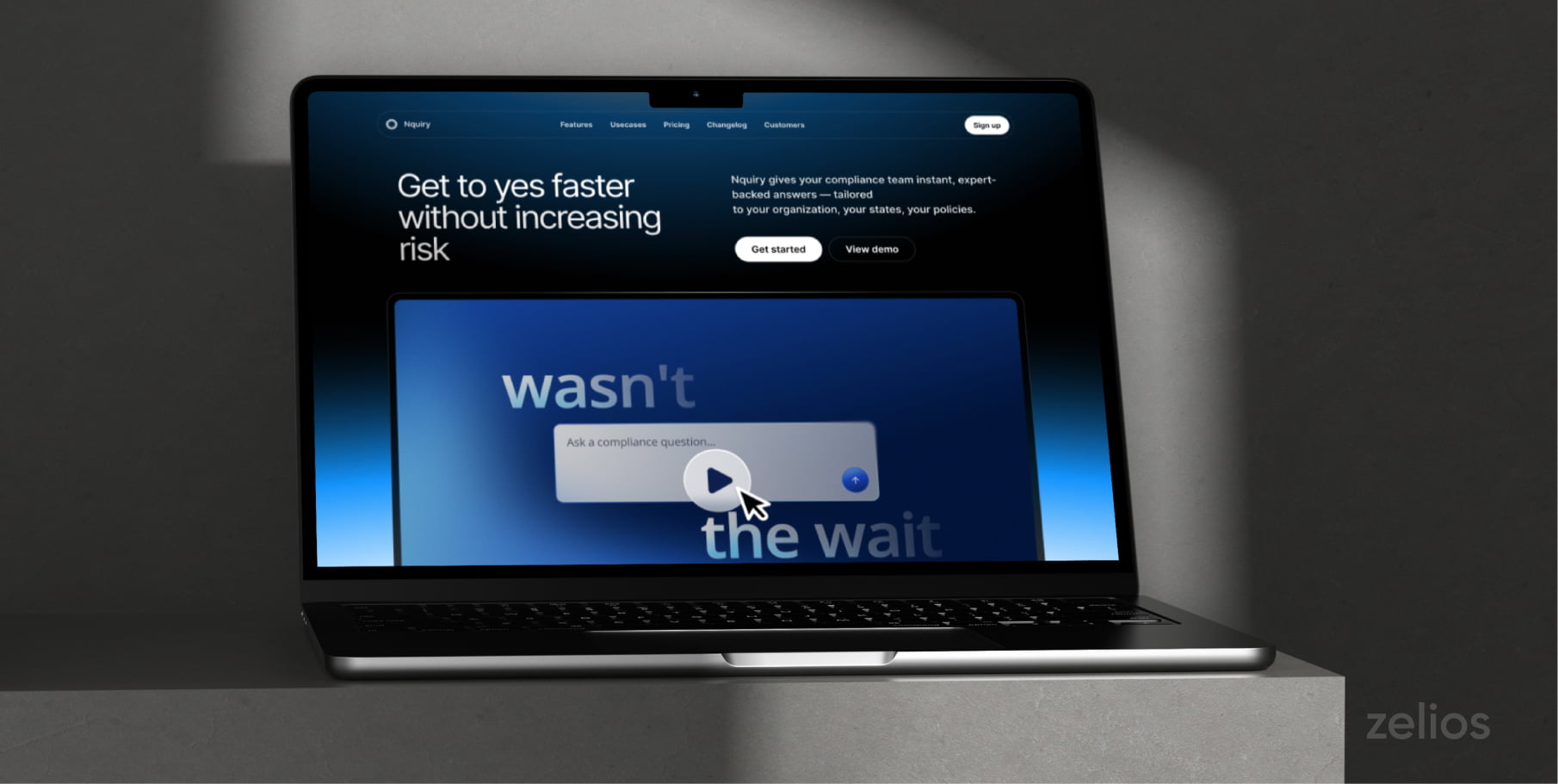

In this article, we will discuss how to make a product review video. So, let’s begin by discussing what definition is:
A product video is a filmed overview and analysis of your product, usually featuring actors or employees.
Product video review is a powerful tool for any B2B company that wants to showcase its offerings and value propositions. And there are more than a few benefits of having an amazing product review video.
-
91% of people have watched an explainer video to learn more about a product or service.
-
45% of businesses make ‘product’ videos. According to data from Wistia, the “product video” is the most commonly made marketing video.
-
89% of businesses use video as a marketing tool – a slight reduction from recent years but still an overwhelming majority. — Wyzowl
-
91% of video marketers say it helps increase traffic, 90% say it helps generate leads, and 87% say it helps increase sales.
-
Close to 50% of online users search for product videos before making a purchase. — Think with Google
Planning Your Product Review Video
Before starting the actual production of the video, it’s best to start with planning out your review video strategically. First off, start with defining your objective – is it showcasing your new product, comparing features with competitors?
Identify these objectives, as well as the target audience, so you make sure your video hits all of the important points.
Product Video Review Format and Structure
A well-structured product review video is always the winner, so here’s a rough structure that has been tested and works relatively well:
- Introduction
If you are creating a video for a larger audience, you can begin by showing an overview of the product and why it was created – this will ensure that you have the viewers’ attention and set the stage for the next steps. - Product Overview
Now, we’re getting into the meat of the matter: providing all of the details about features, use cases, and real-world scenarios. After watching this section, the viewer should have a thorough understanding of your product. - Final CTA
This is the section where you should include your CTAs and explain why you are the best in the industry.
So that’s it for the structure. It’s always best to avoid forcing it and instead allow it to happen naturally. Don’t be afraid to change things up and implement your own ideas. This will ensure that your video stands out.
Craft the Perfect Script for Your Product Video
Shall we say more about how important creating an engaging product review script is? If you are looking to get on the project with a mediocre AI generated script – you are in for a disappointment, to say the least.
So here are a few important points to keep your script nice and effective.
Keep it Conversational
Your 1-2 minute script is not an opportunity to become the next Shakespeare. Make sure to use simple and conversational language in your video, as this will increase accessibility. With this in mind, there are numerous useful tools for ensuring that you are not making a mistake. For example, keep your language at 5th grade level.
For this, you can use the Hemingway Editor:

Structure Your Script
Don’t jump around; instead, ensure that your script follows to established frameworks. If you want something simple and punchy, Problem Agitate Solution is always a good choice.
Furthermore, incorporating real-world examples and demonstrating how your product solves them will significantly increase the impact of your messaging.
If you’re selling a rug that can be washed with any stain imaginable, make sure your video demonstrates this fully, so go ahead and mess up that rug.
Incorporate Visuals
Plan for graphics and supporting visuals, as these will help you emphasize your points even more. Remember that not everyone is an audial person who can understand just a narration, and your video may be used in situations where no VO is heard.
If you want to know how to make a product review video, first make sure your video is accessible.
Edit and Refine:
Once you have completed the draft, make sure to share it with your peers.
Typically, video production companies offer full production, so they can handle the script.
So, if you follow these guidelines, you will ensure that your script provides the strong foundations that your video requires.
Start the Production Process
So, now that we’ve completed a great script, let’s talk about filming and production. Needless to say, you’ll need the best equipment to ensure high-quality results, which can then be used in post-production or editing. Hiring a film crew provides you with a high-quality camera (mirrorless or DSLR), tripod, and external microphone.
Lighting is also important, and in our experience, poor or uneven lighting will cause a great deal of inconvenience during the production stage.

Of course, sound is very important, so you should probably hire a professional actor and use high-quality equipment. This will allow you to have the best quality possible, as poor sound is a major turn-off for many viewers.
Now, once we’ve collected all of our footage, let’s head to the cutting room and begin editing everything into an engaging video.
Video production companies use professional software such as Adobe AE, Final Cut Pro, and DaVinci Resolve for advanced features such as color grading and sound effects.
During the editing process, the primary goal should be to ensure that the overall flow of the piece feels seamless, organic, and engaging. Use transitions, b-roll footage, and animation to explain certain points in greater detail.
Obviously, you must ensure that your branding, such as the company logo, is prominently displayed throughout the video to reinforce your brand identity.
 Note:
Note: Integrating Product Demos
When discussing Product Review and Demo Videos in B2B SaaS environments, it is critical to showcase the product, even if it does not exist in physical form. For this, a thorough walkthrough of the product’s interface and UI works wonders, allowing potential customers to fully comprehend the product and what it is all about.
For this, the formula is also rather simple:
- Identify the most important features and capabilities of the product.
- This video can use a combination of screen recordings, filmed footage and narration. At Zelios agency, we like to fully redesign and animate the product screens, as this allows us to create stunning animation. One of the best product review video example is our work for Univer:
- Show practical applications of the feature in real world scenarios.
Bonus: Don’t be afraid to show the product’s limitations or drawbacks. Your product will never be able to cater to everyone, but you will be able to build credibility with those whom you are specifically targeting.
Finally, if possible, incorporate any client testimonials you have.
Promoting and Distributing
Now that you’ve created and polished your fantastic video, it’s time to make sure it takes flight and spreads your message.
A smart distribution strategy will allow it to spread through various mediums, reaching out to those who may be interested.
Social Media
If you want to promote your video, social media platforms such as Linkedin (especially useful in our B2B space), Twitter, and Facebook can be extremely effective. Share your video on these platforms, optimize the description and hashtags, and encourage any customers or product supporters to reshare within their networks.
Email Marketing
Good old email marketing. Use your previous clients and new email list to promote your product review video. Make sure your email is engaging and highlights the key benefits of your product. Of course, include a direct link and set it up to track clicks and visits.
Video Hosting Platforms
Of course, upload it to major platforms like YouTube, Vimeo, or Wistia, and optimize all of the descriptions to improve discoverability.
Also, ask your viewers to subscribe to your channel and click the bell button to get notifications.
Maintain consistency in sharing your product review videos. Sharing it across multiple platforms will increase its reach and draw more attention.
Here’s a tip from my experience: Before you finalise the video, show it to a few people who are not familiar with the product. If they can easily understand the product’s purpose and benefits, you’re on the right track.

Measuring Success
That is precisely why we will measure and track: you cannot improve what you do not measure.
Metrics to Track:
- View Count
It may be natural for us to look at the views and conclude that because we did not receive a large number of views, the video failed.But this is not exactly the case.Your video may not receive millions of views, particularly in business-to-business environments where solutions are not designed for broad audiences.However, this is why it is critical to monitor one of the following metrics: conversion rates. - Engagement Rate
Even if you have 50 views and 15 people are discussing the product, this should be a huge success in your book.These comments appear for people’s connections, implying that they work in the same industry and may be experiencing similar issues.This allows you to expand your reach and connect your ICPs to your product. - Click-Through Rate (CTR)
If you did include some tracking into your links, you will be able to see how many people were engaged after watching your video. - Conversion Rate
Finally, you’ll want to know how many of those who watched and clicked the link turned into paying customers.
The stakeholders will undoubtedly want to know if the investment paid off. You’ll need to do some math to calculate the ROI.
ROI = (Revenue or Leads Generated – Production Costs) / Production Costs * 100%
Of course, include the metrics that will be specifically tailored to your company’s needs.
Best Practices and Examples
Deuter Alpine Backpack
In our first Example, Deuter combines bold colours, real life use cases and filmed footage for you to feel and appreciate their newest addition – Guide Lite 22 SL.
Especially with the footage of the back pack being rotated in 360, showing different focus points and improvements, and then seeing this realized in a real life environment, just sells the product in a really great way.
And, the only way to better understand this product, apart from watching to video, is to actually buy one and go around hiking.
IKEA Place
IKEA is at it again, with their unmatched scandinavian charm and improvements to your quality of life, now in a form of a neat augmented reality app, for your to visualize your living space.. Hell, how better to sell the product, than to show how the graphics from the AR solution for furniture they are providing, interacts with the real life environnement, swiping the leaves of the nearby plant.
This video is great at what it does, by selling the the process and guiding the users through an easy to follow step by step process.
With this practical demonstration, we think more than a few people downloaded the app straight away to created their dream space.
Lego Life
With their app targeting a younger demographic, video does the most in making sure the language is straightforward, simple, while engaging music and visuals do the heavy lifting. Lego Life is portrayed as fun and creative space – safe for children to explore, make new connections and connect with fellow lego lovers. With fun challenges which are highlighted with mix of fun and stylized graphic elements, combined with real life footage, just makes it that much more appealing.
Why Work with Zelios?
This brings us to our final point: why try to create the video yourself when you can hire a team with experience producing multiple videos?
We at Zelios Agency are a no-nonsense team that focuses on the B2B SaaS industry to achieve great results and communicate your message.
Outsourcing your video production strategy and marketing allows you to focus on the core of your business while benefiting from an experienced creative team and a streamlined process.
Select the video type that aligns with your marketing objectives, and receive an immediate high-level estimate of the production cost.